

Published Jul 26, 2026 | 7:00 AM ⚊ Updated Jul 26, 2026 | 7:00 AM

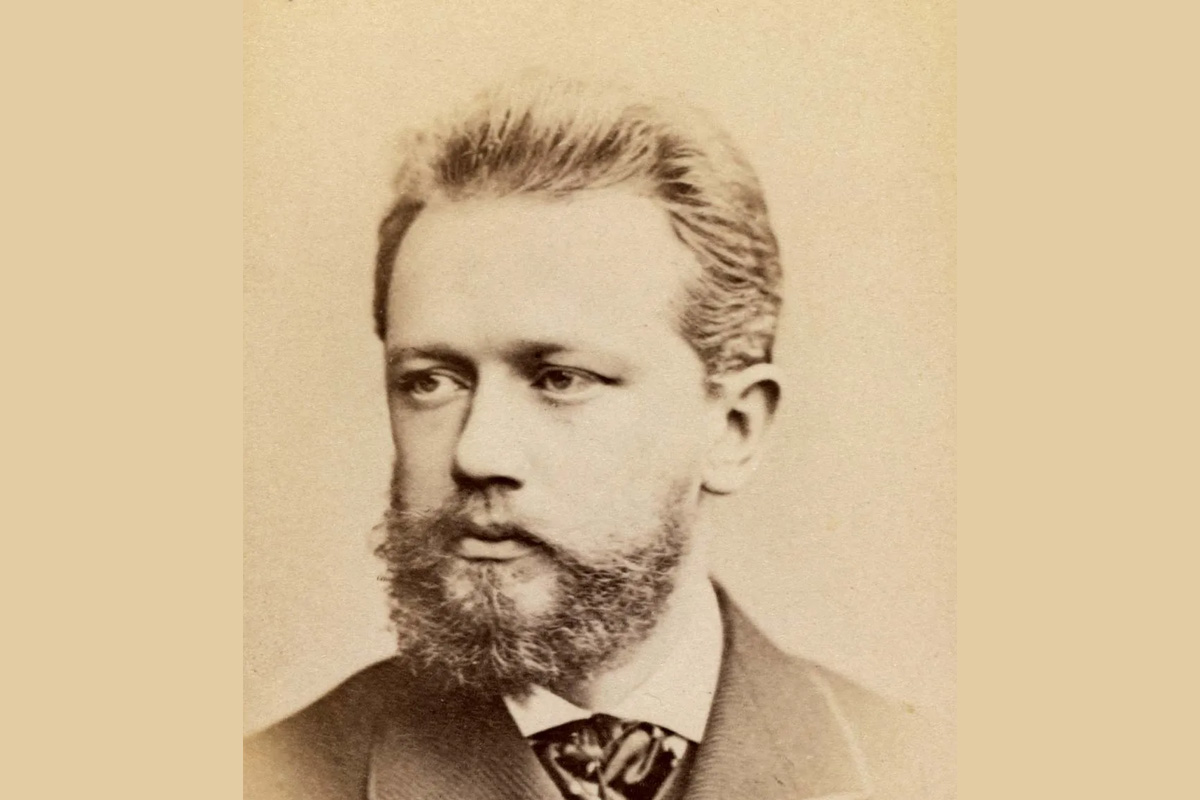
Pyotr Ilyich Tchaikovsky

Synopsis: Dubbed the fragile “glass child” by his nanny, Tchaikovsky was at the start of his career an unhappy clerk. His ascent from there to becoming the genius behind Swan Lake, The Nutcracker, and the haunting Pathétique Symphony is almost as rich as the music he left behind.
“Music is an incomparably more powerful means and is a subtler language for expressing the thousand different moments of the soul’s moods.”
— Pyotr Ilyich Tchaikovsky
Talk of Pyotr Ilyich Tchaikovsky, and Swan Lake or The Nutcracker immediately spring to mind. The Russian composer and conductor is internationally renowned for his two brilliant ballets as well as for Sleeping Beauty.
But the rise of Tchaikovsky the musical genius was fraught with unexpected twists and turns. A disillusioned clerk went on to turn into Russia’s greatest Romantic composer.
Tchaikovsky did not seriously study Beethoven until the age of 20. Inspired and fascinated by Mozart, the Russian felt deeply indebted to the Austrian maestro, noting that Mozart ‘made me love music above all things in the world.’
“My musical talent was discussed at dinner. Papa insists it’s not too late to become an artiste. But even if I do have some talent, it’s probably too late for me to develop it. They have made a civil servant out of me and a bad one at that,” Tchaikovsky remembered observing at what would turn out to be the launch of his voyage as a musical composer. This was in 1858, when the soon-to-be musical giant was employed as a minor civil servant in the Ministry of Justice and lugging around a very tormented and dissatisfied soul that was yearning to plunge into the depths of the musical world.
His musical style was infused with Russian folk tunes and Slavic fairytales, imparting it with a dynamic authenticity.
The compositions of Tchaikovsky are considered by many critics and historians of music to be a masterful blend of strictly Western European symphonic forms with the emotional richness and melody of Russian folk music.
Tchaikovsky’s arrival into prominence is intertwined with the ascent and integration of Western Classical Musical culture into the Russian power establishment with the founding of the Moscow Conservatory in 1866, the second one in Russia. Let us explore the life-journey and apotheosis of such a remarkable and ingenious musical composer who continues to be synonymous with Classical Ballets.
Tchaikovsky was born on April 25, 1840 in Imperial Russia in the town of Votkinsk into a landowning bourgeois family with a military tradition. His father Ilya Petrovitch Tchaikovsky was a Lieutenant in the Army holding mining engineering qualifications and was a manager of metal works. Both his parents were musically and artistically inclined and encouraged Pyotr to pursue musical education by enrolling him for piano lessons at the tender age of five.
Pyotr’s parents exposed him to music by bel canto masters Bellini and Rossini and the legendary Wolfgang Amadeus Mozart. His musical talent became apparent when he started writing his own compositions with his younger sister Alexandra during his early childhood years. Tchaikovsky revealed his emotional sensitivities, which would significantly mark his musical compositions early on, prompting his nanny to term him the ‘Glass Child’.
The Tchaikovsky family moved to the then Imperial Capital of St. Petersburg sometime in the late 1840s and enrolled the young Pyotr in a boarding school from where he graduated and pursued studies in law at the School of Jurisprudence to qualify as a lawyer. In 1859, on his successful graduation, he assumed the position of a Clerk in the Ministry of Justice, though his heart and soul were squarely in the world of melodies.
After convincing his father, Pyotr enrolled at the newly opened St. Petersburg Conservatoire under the direction of composer and concert pianist Anton Rubinstein (1829-1894). This Conservatoire was the first of its kind in Imperial Russia and hence an innovative and ingenious venture. Soon, Pyotr Tchaikovsky was privileged to be part of the ‘inner circle’ of the ‘charmed set’ of St. Petersburg elites that included aristocrats, poets, writers and novelists.
Tchaikovsky made his bold and audacious debut as a classical composer with his first symphony (Symphony Op. 13) Winter Daydreams in 1866 while working at the Moscow Conservatoire during his first couple of years. He defined this as the means to “express that for which there are no words, but which forces itself out of the soul, impatiently waiting to be uttered”.
In 1868, Tchaikovsky wrote his first opera The Voyevoda, based on the play Dream on the Volga by Alexander Ostrovsky, which is highly intense in emotional terms.
Tchaikovsky’s first ‘fantasy’ overture Romeo and Juliet premiered in Moscow in 1870 and in St. Petersburg in 1872. The piece is about 18 minutes in duration. The theme of unrequited or tragic love attracted him in this Shakespearean play, and he would later adapt similar tales into celebrated operas: Alexander Pushkin’s Eugene Onegin and The Queen of Spades.
In successive years, Tchaikovsky composed Swan Lake, which was commissioned by the Director of the Moscow Imperial Theatre. His second ballet The Sleeping Beauty was composed in 1889 and remained his favourite ballet and was an instant hit.
Around this time, Tchaikovsky forged the fabled friendship with his patron Nadezhda von Meck, a widow of a wealthy railroad magnate whose generosity and largesse were highly appreciated. Von Meck and Tchaikovsky never met at her insistence, and yet they exchanged over 1,200 letters over a period of 14 years. This stipulation of anonymity elicited a response from Tchaikovsky who wrote back, “You are afraid that you will not find in me those ideal qualities that your imagination has attributed to me. And you are quite right.”
She had studied music and was a skilled pianist who had employed a 17-year-old Claude Debussy to teach music to her children and who composed his Piano Trio in G major (L. 5/L. 3) while working for the von Meck family. Nadezhda von Meck granted Tchaikovsky a generous allowance of 6000 rubles when the annual salary for him would have been 300-400 rubles, which liberated him from any financial obligations and offered him liberty to pursue his passion for music.
Any look at his classical repertoire would be incomplete without the mention of the ballet The Nutcracker that premiered in 1892 at the Imperial Mariinsky Theater in St. Petersburg and was based on ETA Hoffmann’s story, The Nutcracker and the Mouse King, which was a Christmas fairytale production. The Nutcracker has a jovial, heartening ballet music which creates an ambience of fantasy for Christmas celebrations in the setting of the ‘Land of Sweets’. The ballet Nutcracker opened to mixed reviews but was acclaimed as a classic by the 20th century, with several adaptations across the world.
A sombre farewell: The Pathétique
Finally, we draw the curtains with the Grande Finale or Coda Grandioso, which means the grand and majestic concluding piece of music with its impressive and noble tunes and rhythm.
In the case of Pyotr Tchaikovsky, it was the Pathétique Symphony that was his final composition and premiered in 1893. He died nine days after the premiere at the age of 53.
Interestingly, Tchaikovsky describes the intent and spirit of the composition in a letter dated 1892 to his friend Vladimir Davydov, to whom he dedicated the work:
“The ultimate essence of the plan of the symphony is LIFE. First part: all impulsive passion, confidence, thirst for activity. Must be short. (Finale DEATH — result of collapse.) Second part love; third disappointments; fourth ends dying away (also short).”
The music is sombre and dark and tends to march into oblivion with a sense of despair. The ‘finale’ of the composition is gloomy and has been defined as the antithesis of Beethoven’s victorious finales. Tchaikovsky had commented that “Without exaggeration, I have put my whole soul into this work.”
It was a fitting epitaph to one of the greatest composers of all time.
Also Read:
150 years of performance: Swan Lake, the triumph of a classical ballet and its composer
Mozart at 270: Celebrating the myth and music of a wizard
Gaana — chronicling history as it happens: Genre of music with Chennai’s soul
(Edited by R Rajesh Kumar.)



