

Published Aug 20, 2026 | 12:06 PM ⚊ Updated Aug 20, 2026 | 12:07 PM

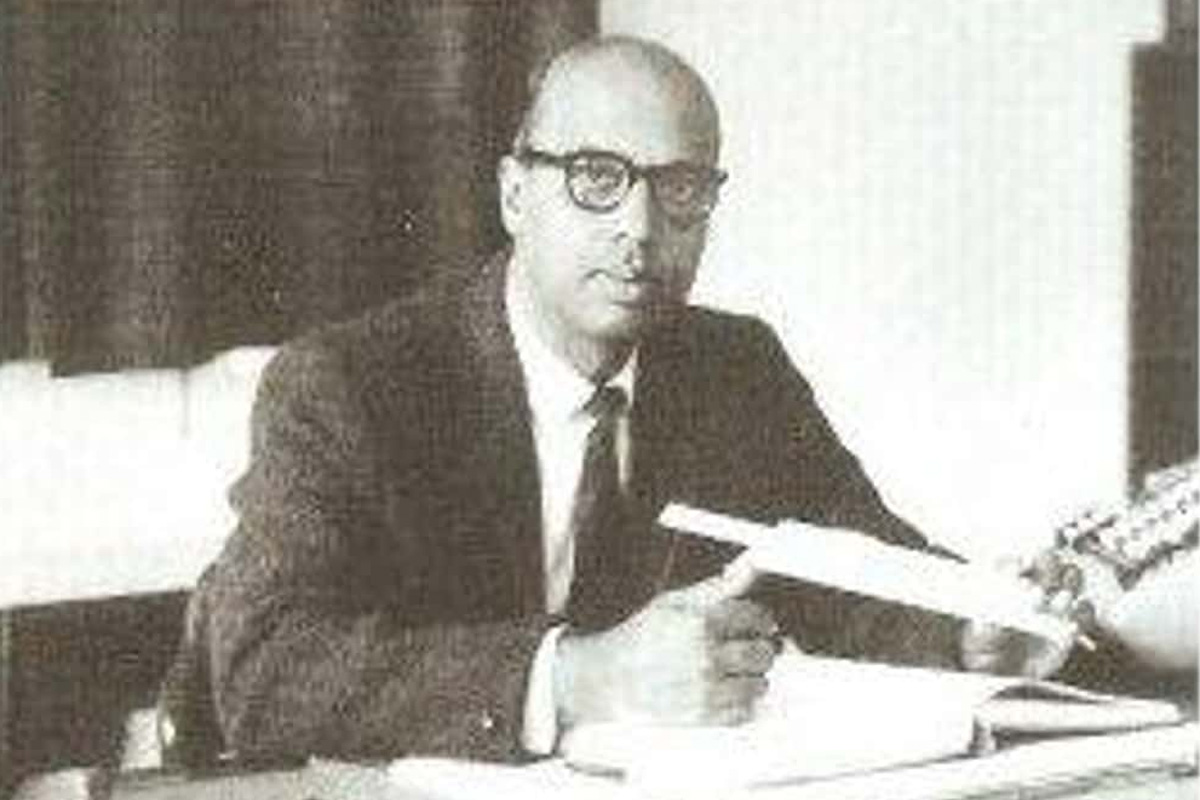

Synopsis: The centenary year of Dr M K Vainu Bappu, regarded as the father of modern Indian astronomy, has begun, celebrating his contributions to astrophysics and infrastructure building. From his early work at Hyderabad’s Nizamiah Observatory to establishing major facilities at Kavalur and the Indian Institute of Astrophysics, his legacy remains significant.
August 10 marked the beginning of the centenary year of Dr MK Vainu Bappu, often referred to as the ‘father of modern Indian Astronomy and Astrophysics’.
Considered one of the most brilliant astronomers of the 20th century, Dr Bappu is the only Indian after whom a Comet (Bappu-Bok Newkirk) and an Asteroid are named.
He died young at the age of 57, but in that short lifespan, Dr Manali Kallat Vainu Bappu made an immense contribution to astronomy. He was instrumental in establishing the now-famous Indian Institute of Astrophysics (IIA), Bengaluru. In addition, he was responsible for starting a string of Astronomy facilities, including the one at Kavalur, Tamil Nadu, which was later named after him.
The IIA, Bengaluru, has launched the centenary year celebrations (2026-27) with a special exhibition on Bappu’s life and a lecture by Kris Gopalakrishnan, co-founder of Infosys. Curated events and lectures have been planned over the year.
Also Read: Telangana’s map is already shifting, even before the delimitation law is written
Born in Chennai in 1927, Vainu Bappu moved to Hyderabad as a small kid because his father, an astronomer, found employment in the Nizamiah Observatory. His interest in astronomy was kindled as a young boy when he accompanied his father, MK Bappu, to the Observatory. He got his first exposure to astronomy by handling telescopes and watching the skies through the small telescope. Life wouldn’t be the same for him from then on.
In the late 1940s and 1950s, Vainu Bappu made his first significant observations from the Nizamiah Observatory. His work caught international attention, and he moved on to leave a big mark in the field.
The Nizamiah Observatory had been set up by Nawab Zafar Yar Jung Bahadur, a rich nobleman and an amateur astronomer, in 1901. This was his stomping ground in early days.
Bappu obtained his Bachelor’s (1946) and Master’s in Science(1949) from the Nizam College, Hyderabad, which was then under the Madras University and transitioned to the Osmania University post-Independence.
Vainu Bappu published his first scientific paper based on his observations of variable stars ( the starry objects in the sky that showed differences in brightness periodically) made from the Nizamiah Observatory in the journal Current Science in 1946-47 as a Master’s student.
He moved to the US to pursue higher studies at Harvard University in 1949, thanks to a scholarship from the Nizam who ruled Hyderabad State and the recommendation of Harvard Professor Harlow Shapley.
After finishing his PhD and despite getting lucrative offers in the US, Dr Bappu decided to return to India. During the 1950s, India had only a couple of small observatories.
In 1959, he took over the responsibility of developing the biggest solar observatory in Kodaikanal. He was just 32 and full of ideas and passion. His work led to the establishment of the 38 cm telescope facility in Kavalur in Tamil Nadu in 1967. The observatory was expanded, and junior astronomers joined. Several important projects were pursued, and important findings on the rings of Uranus were made from here under his leadership. Four years later, in 1971, Dr Vainu Bappu succeeded in persuading the Indira Gandhi Government to establish an autonomous institute for Astronomy and thus was born the Indian Institute of Astrophysics in Bangalore.
The remarkable work of Dr Vainu Bappu soon attracted global attention. He quickly rose to head the International Astronomical Union.
Fate, however, snatched him away at the peak of his career in 1982.
As the President of the IAU, he was on his way to Greece to address the important General Assembly meeting. En route, he suffered a severe heart attack and had to undergo emergency surgery in Munich, Germany. Unfortunately, he developed complications and died a few days before the event in 1982.
The small but growing Astronomy community in the country took it as a challenge to complete the ambitious project of setting up the 2.34 metre telescope at Kavalur. In 1986, the then Prime Minister, Rajiv Gandhi, inaugurated the facility, which was fittingly named the Vainu Bappu Observatory.
In the world of Astronomy, the versatile Indian astronomer is remembered for many contributions, especially the Wilson-Bappu effect. In terms of application, it finds utility in two major areas. First, it helps in determining the distance to the class of stars called late-type stars. Second, it gave a fillip to the study of the chromosphere of these stars. The work was a joint effort with Olin Chandwick Wilson at the Hale Telescope in Mount Palomar, California, in the US.
Also Read: Delhi’s Jantar Mantar: From stargazing to platforming dissent
The fate of the over 100-year-old observatory continues to hang in the balance. Though not in functional mode for more than a couple of decades, efforts to revive it keep echoing in government announcements and intent, with the latest being in 2023.
The historical observatory was started by Zafar Jung Bahadur and named Nizamiah Observatory after the Sixth Nizam, Mir Mahboob Ali Khan.
The Nizam took over in 1907, after Zafar Jung passed. Between 1908-14, the observatory was headed by Arthur B Chatwood, who moved the location to Begumpet from the original Phisal Banda. He was succeeded by Robert J Peacock.
In 1918, when the Osmania University was established by the Seventh Nizam, Mir Osman Ali Khan, the Optical Observatory was made part of the Astronomy department. TP Bhaskaran took over and led till 1944. It came to the limelight during the tenure of Prof KD Abhayankar, who headed the department for nearly two decades from the late 1960s to the 1980s. Prof Abhayankar was also instrumental in establishing the Rangapur Observatory, about 55 kms from the city.
Located on the campus of the Centre for Economic and Social Studies (CESS), a State Government entity, the over 100-year-old heritage structure and one of the oldest astronomical observatories of the country bears a dilapidated and desolate look now.
(M Somasekhar is a senior journalist based in Hyderabad.)



