
Published Nov 22, 2026 | 6:00 AM ⚊ Updated Nov 22, 2026 | 6:00 AM

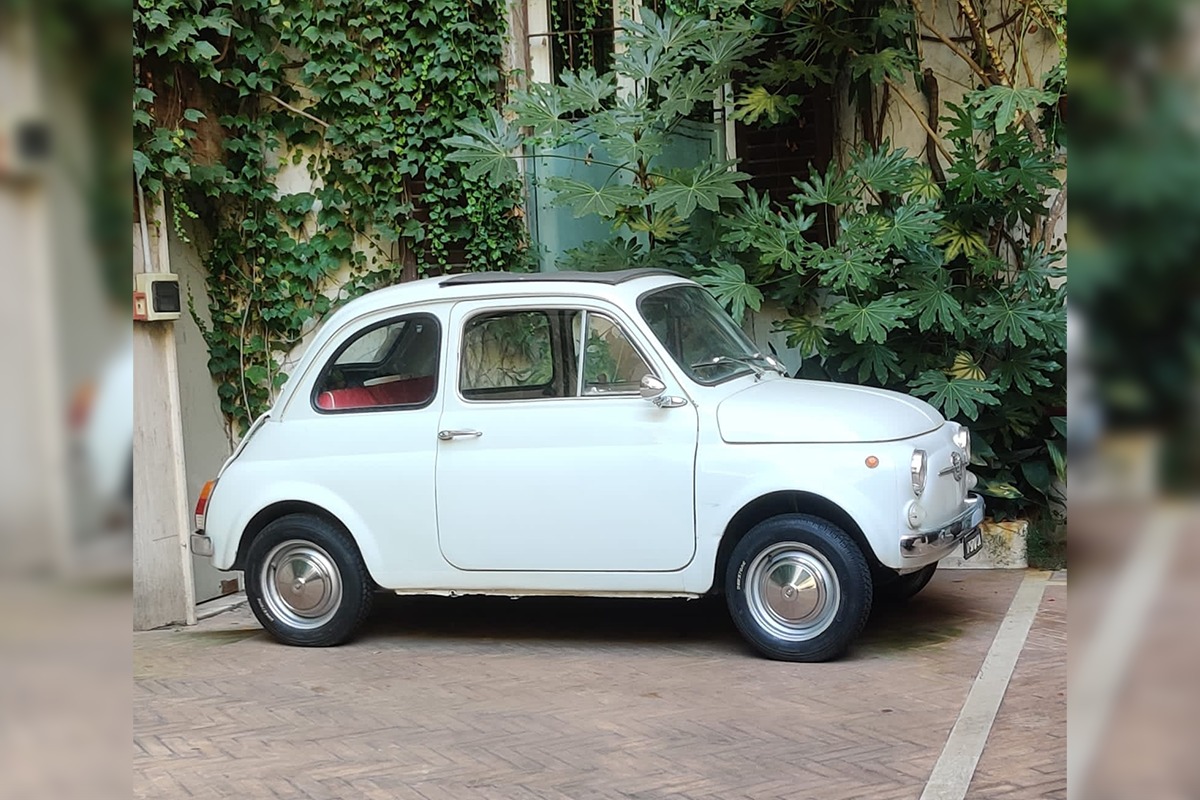
A Fiat Cinquecento. (Credit: John Kurien)

I doubt that anyone in India in the early 1970s ever earned a driving licence behind the wheel of a Fiat Cinquecento (Fiat 500). I did, and in Trivandrum, of all places.
Behind that unlikely fact lies a tale I have turned over for years, because its full shape became visible only much later.
India in those years had drawn the curtains on itself. Imported cars attracted a customs duty that I remember as between 100 and 150 per cent of cost.
Our Indian roads belonged to the Ambassador and the Premier Padmini, as sturdy and unchanging as the bureaucracy that protected them. Foreign exchange was rationed, and permissions were labyrinthine. For an ordinary citizen, importing a private car was not merely difficult; it was unthinkable.
I was working then at a fishing cooperative, part of a community development project twenty-five kilometres north of Trivandrum.
A colleague, an Italian nurse named Lauretta Farina, had been there since 1966. She was a remarkable figure in that landscape: one of very few people in Kerala, Italian or otherwise, who wore a saree, rode a Lambretta scooter through village lanes and Trivandrum city, and spoke fluent Malayalam.
Her work among marginalised fishing families had made her well known, not only in the villages but also in the offices of the state Fisheries Department. That is how she came to be called upon, one day in late 1972, for an unusual assignment.
A group of elderly Italian visitors, VVIPs according to the protocol office, which would say no more, was touring Kerala. They spoke no English, so Lauretta was the obvious person to accompany them. Would she? She hesitated at first, but on learning that they came from the same part of northern Italy as her own hometown, Caravaggio, she agreed.
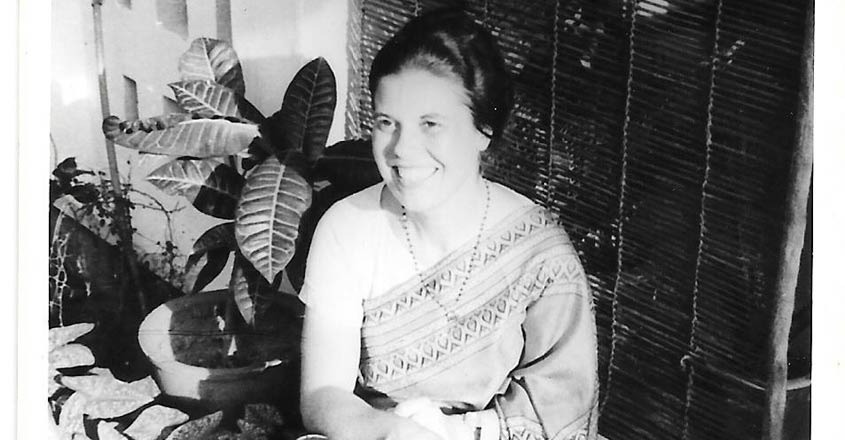
Lauretta Farina, who was known as the ‘Chechi of Marianad’.
The visitors turned out to be, like most northern Italians, warm, curious and determined people, genuinely interested in what she was doing in this distant land. When they heard about her work, they insisted on visiting the fishing village before beginning their official tour, to the mild discomfort of the security personnel.
Last-minute “lightning calls” were made to New Delhi. Approval came back, and the convoy set off north from Trivandrum on the coastal road, the last ten kilometres of it untarred and very bumpy, but a road full of character as it skirted the swaying coconut palms and the yellow sands that fringe the Arabian Sea.
After the village visit, as they stood in the compound with the smell of fish and salt air around them, the woman in the group asked whether the scooter was Lauretta’s only means of transport on such a bumpy road. It came out naturally, as these things do in conversation.
There was a car, a gift from Fiat in recognition of her work in India: a brand-new 1972 Fiat 500. An application to import it was pending, but given the restrictions, the exorbitant customs duty and the lack of any valid foreign exchange grounds, it seemed out of the question that permission would ever be granted. So, her sister had started using the car in Caravaggio.
The woman listened, nodded, and said little. The tour went on, the visitors returned to New Delhi, and Lauretta heard nothing more from them.
A few months later, in 1973, a registered letter arrived from the Chief Controller of Imports and Exports. In the measured jargon of the bureaucracy, it informed her that her application to import one used Fiat 500 had been approved, and it set out the steps to follow.
By early 1974 the car arrived in Cochin by ship, and I was sent, with a colleague, to take delivery. The customs duty came to ten thousand rupees, just over twelve hundred US dollars at the time, which was slightly more than what the new car had originally cost in Italy.
The clearing agent advised us, with the world-weary candour of a man who had seen this many times, not to make a fuss with the customs officers if parts were missing. Things went missing at the docks. It was best to take delivery quietly and sort things out in the city.
One windscreen wiper was gone.
We were directed to an automobile parts agency not far from the docks, one of those establishments that thrive in the shadow of every large harbour: discreet, and well stocked with items of uncertain provenance. The owner shook his head when we described what we needed. Very unlikely, he said, that he would have parts for a Fiat 500. It was almost unknown in India.
He went into the back to check.
A long while later he returned. As luck would have it, he said, they did have one wiper. It fitted perfectly. We paid two thousand rupees and drove south to Trivandrum, about two hundred kilometres away.
The little car, with its air-cooled rear engine, hummed along at twenty kilometres to the litre, a remarkable figure in 1974, the year after the oil shock had doubled petrol prices. My colleague and I said little about the wiper. Some transactions are best left unremarked upon.
The car served Lauretta and the fisheries project faithfully for years on those coastal roads. It was a rare sight in Trivandrum, and everyone wanted to know about it: what it cost and how much mileage it gave.
When we drove it along the coast, children ran after it shouting “Aama car” (turtle car). In the interior villages it was “Motta car” (egg car). How ecology and livelihoods shape perceptions!
Only years later did I learn who the VIP visitors had been. The elderly visitors, who had asked so attentively about the scooter, came from a small town near Turin, Italy. Their daughter Sonia was then the young wife of an Indian Airlines pilot named Rajiv Gandhi.
And Rajiv’s mother was Indira Gandhi, the then Prime Minister of India.
A word, quietly spoken in the right place, can move a great deal of paperwork. I have often thought since about the invisible architecture of influence, and how it works on the small details of ordinary lives without leaving a trace. The file simply moved.
I got my driving license in July 1974. Driving a Fiat 500. In Trivandrum. For years I told this only as a story about a car. But with Sonia Gandhi’s memoir, Belonging: A Journey of Love, now out and so full of her parents, it seems a story worth telling.
Also Read:
The Sea speaks Malayalam: The 122 words that sailed back with Vasco da Gama from Calicut
Gandhi and Ivan Illich: What two barefoot prophets saw coming
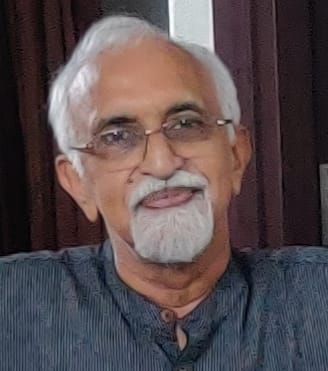
(John Kurien is a reflective development practitioner who has spent five decades with fishing communities in Kerala and several Asian countries. He was a Professor at the Centre for Development Studies, Thiruvananthapuram.)



