

Published Nov 05, 2026 | 7:25 PM ⚊ Updated Nov 05, 2026 | 7:25 PM

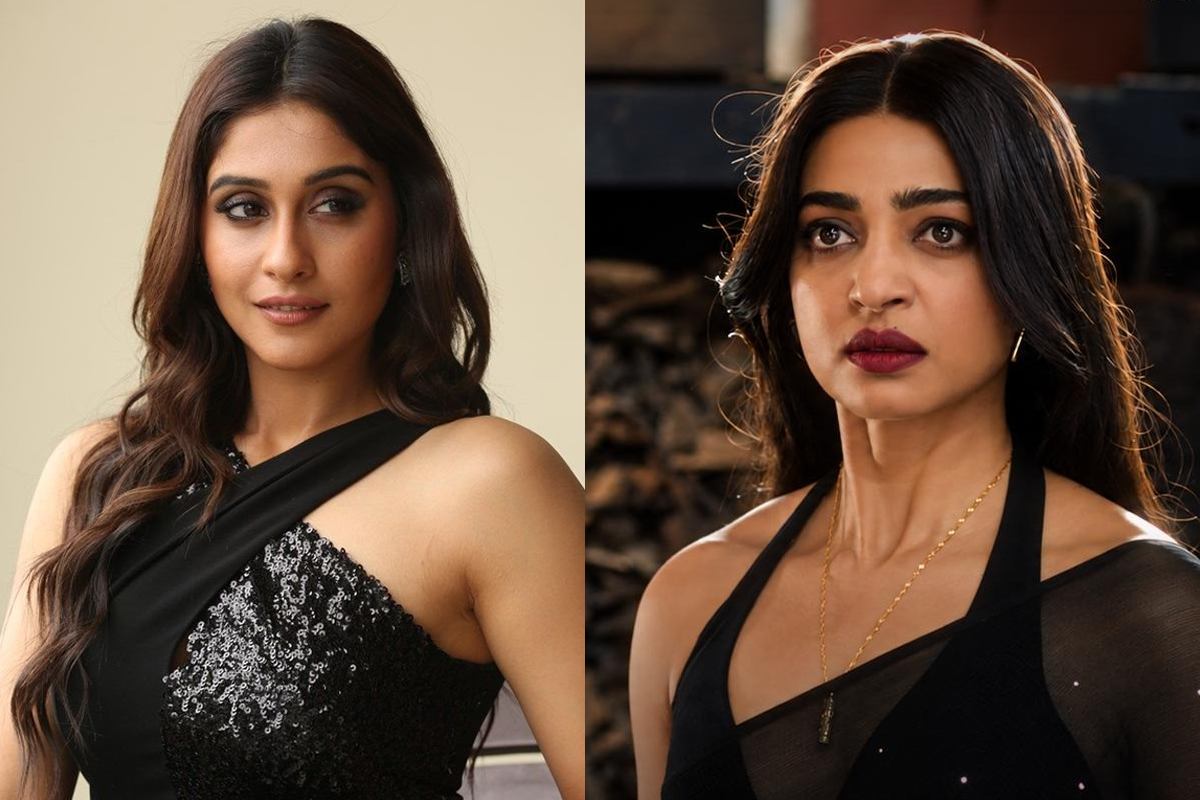
Regina Cassandra (Left) and Radhika Apte (Right).

Actress Regina Cassandra has weighed in on the treatment of women in the South Indian film industry just days after Radhika Apte’s remarks about patriarchy in Telugu cinema went viral.
Welcoming actresses speaking out about uncomfortable experiences, Regina, though, questioned the manner in which such discussions were being carried out, while warning against creating a North-South divide.
She also recounted how she had been sidelined during the promotions of her Hindi film Kesari Chapter 2, adding a fresh dimension to the discussion.
Regina’s comments on the portrayal of women in Telugu cinema followed remarks by actresses Janhvi Kapoor and Radhika Apte about their experiences in the South Indian film industry.
In an interview with India Today, Regina said she was glad that actresses were coming forward to speak about their uncomfortable experiences. However, she questioned the way the issue was being framed, particularly when actors from North India spoke about working conditions in South Indian cinema.
Regina argued that actresses who feel uncomfortable with a particular scene, character portrayal or the working environment should exercise their right to refuse or walk out of a project rather than feeling compelled to continue.
“At the end of the day, if they feel uncomfortable, please walk out of the film. I don’t think we should be put in a place where we say we didn’t have a choice. This is not about a man or a woman. As a woman, I will obviously take the side of a woman, but I don’t think either of them is in a position where they cannot walk out of a film,” she said.
Regina also highlighted the differences in working practices between the Hindi and South Indian film industries.
Recalling her experiences on film sets in the South, she said that actresses sometimes receive scenes only on the morning of the shoot, while some productions provide the complete script in advance.
She contrasted this with the working arrangements in Mumbai, where call sheets generally contain detailed information about shooting schedules, scene numbers, technicians, cast members and other production details.
According to Regina, such practices are not always followed as systematically on South Indian film sets.
When it came to Janhvi Kapoor, Regina felt the Peddi star could have raised her concerns more firmly during the making of her film, while acknowledging that women should feel empowered to speak about uncomfortable experiences. Many viewers had criticised the manner of Janhvi’s introduction in the film.
“Could I have done more? Could I have been more vigilant? Could I have made a bigger scene? A hundred per cent, yes. Was it problematic? Was it extreme objectification? Did it even propagate sexual assault narratively? Yes… It was a violating experience in a way,” Janhvi had later said on Koffee with Karan 9.
However, Regina also warned that such remarks could deepen the divide between the Hindi and South Indian film industries.
“I have a big issue with when a North Indian actor talks about South Indian cinema like that because you’re making a North-South divide without even realising it, and that’s absolutely wrong. There are other ways of handling this,” she said.
She added that the issue was particularly concerning for South Indian actresses who already face certain perceptions and stigma when they work in the Hindi film industry.
Regina also brought up her own experience with Dharma Productions, which produced the 2025 Hindi film Kesari Chapter 2: The Untold Story of Jallianwala Bagh, starring Akshay Kumar.
In the film, Regina played Parvathy Nair, the wife of Akshay Kumar’s character, C Sankaran Nair. She alleged that despite having a significant role, she was not given due recognition during the film’s promotional campaign.
Drawing a comparison with the discussion about objectification and the treatment of actresses, Regina questioned why her contribution to the film was not acknowledged.
She pointed out that Karan Johar, whose production house, Dharma Productions, was behind the film, had hosted the conversation in which Janhvi Kapoor spoke about her experience of objectification. Regina questioned the production house’s decision to leave her out of the promotions.
“The same Karan Johar, through Dharma Productions, made a film with me called Kesari 2 and decided not to promote me. Now, what am I supposed to call that? Is that objectification because I am a South Indian? To this day, I don’t know why my name was not included,” she said.
Regina further alleged that a song released from the film featured her throughout, but she was neither tagged in the promotional post nor informed about its release.
She said she had not received an explanation for being excluded from the promotional activities.
The actress maintained that women should speak up about their experiences.
Radhika Apte’s remarks on patriarchy in Telugu cinema
The debate gained renewed attention after Radhika Apte spoke about her experience working in Telugu cinema during a promotional interaction for her recently released Netflix series Akka, in which she stars alongside Keerthy Suresh.
During an interview with Zoom, Radhika was asked about the most challenging role she had played. Recalling a Telugu film, she said that her character was required to marry her maternal uncle (mama) in the film.
“There was a Telugu film I did where I had to marry my mama in the film. That was the most challenging film. Everything about it, I hated,” she recalled.
“It was a very patriarchal situation and place. For me, that was the toughest thing,” she said.
Although she did not name the film or her co-star, social media users speculated that she was referring to Boyapati Srinu’s 2014 Telugu film Legend, in which she starred opposite Nandamuri Balakrishna. At the time of the film’s release, Balakrishna was 54, while Radhika was 29.
Her remarks subsequently triggered considerable discussion online. Some social media users supported her criticism of the industry’s treatment of women, while others questioned her decision to speak about the experience years after the film’s release. An old promotional interview in which she had praised Balakrishna’s conduct on the sets of Legend also resurfaced.
In another recent interview with News18, Radhika also questioned the casting practices followed by sections of the South Indian film industry.
She suggested that North Indian actresses were often preferred for South Indian films because of their fairer skin complexion, despite the availability of talented local actresses.
“I think the reason a lot of North Indian actresses were cast was that they were fair-skinned, and I find it appalling,” she said.
She further argued that South Indian actresses, who understand the language and cultural context, should receive more opportunities in films produced in their own industries rather than casting actresses from Mumbai whose voices are subsequently dubbed.
Also Read:
La Grande Illusion: Why the greatest war films are the ones that reject battle
‘Dorothy’: The boundaries of caste, gender and the violence of patriarchy
(Edited by R Rajesh Kumar.)



