
While the core plot of 'Leo' is fresh and remarkably different, some elements are strikingly similar to Lokesh Kanagaraj's previous works.


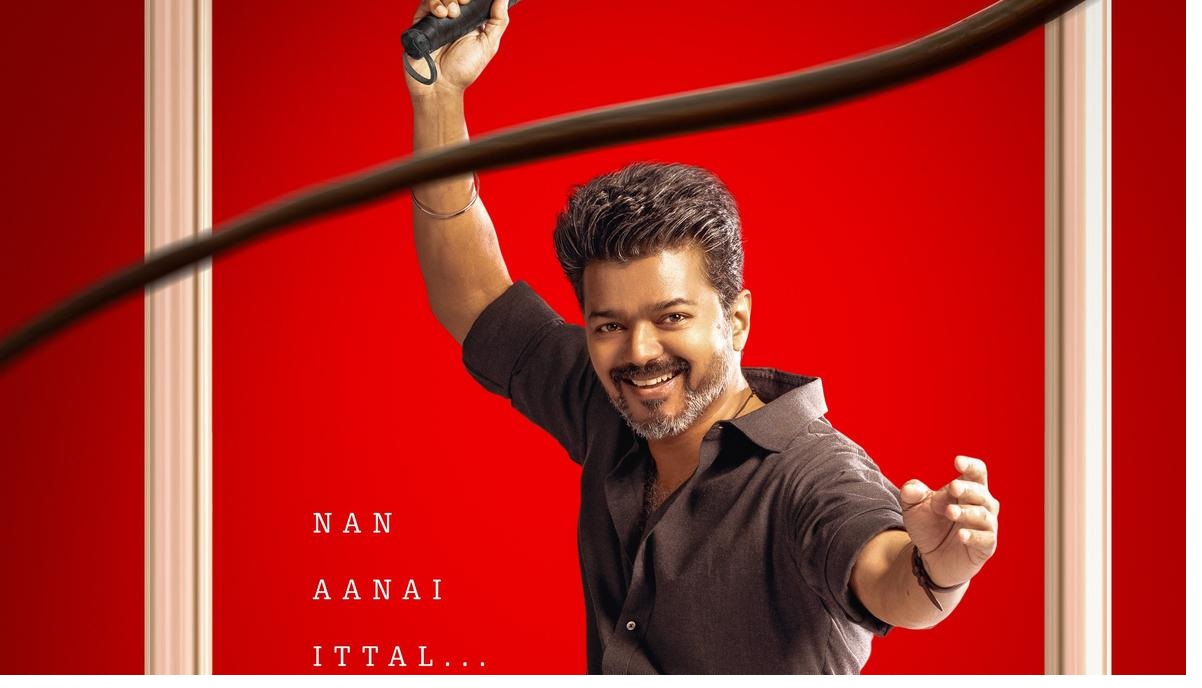
A poster of Vijay-starrer 'Leo'. (X)
Leo (Tamil)
Director Lokesh Kanagaraj, who has consistently delivered superhits until now, delivers a neat and fairly engaging entertainer in Leo.
It takes time for you to warm up to the plot of Leo, which has quite a bit of explosive action to offer. But once you do, you are likely to find the proceedings quite interesting and entertaining.
Parthiban (Vijay), an animal lover who owns a cafe in a small town in Himachal Pradesh, leads a peaceful life with his wife Sathya (Trisha), daughter Chintu, and son Siddhu (Mathew Thomas).
As luck would have it, a group of criminals from Tamil Nadu, who are on the run from the law, arrive in the small snow-capped town where Parthiban resides.
Short on money, the criminals look to rob any establishment that appears to be isolated. Among them is a psychopath (Sandy) who will not hesitate to kill his victims.
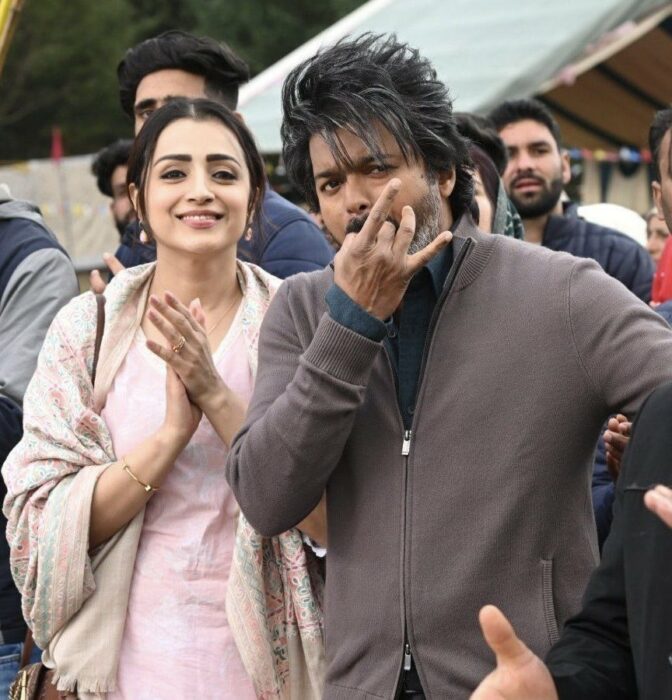
A still from the film ‘Leo’. (trishtrashers/ X)
Trouble arrives at Parthiban’s cafe one night when he is with his daughter. Feeling relaxed, Parthiban chooses to dance to a Tamil song in his cafe, even as a female employee goes about the business of shutting down the cafe for the night.
The Tamil song draws the attention of the psychopath who saunters into the restaurant and demands a beverage. He realises that this is a shop that he can loot.
One thing leads to another and before long, the psychopath is joined by his colleagues. Parthiban pleads with them to exit the shop but they don’t oblige. The situation only worsens.
At one point, to protect the female employee and his child, Parthiban ends up killing the criminals.
Initially arrested, Parthiban is then freed by the law as his act of killing all the criminals is considered self-defence. Parthiban and his family breathe a sigh of relief and look to pick up their lives and move on.
But then, little do they know that the problem they have dealt with is nothing compared to the problems they have just invited.

On the sets of ‘Leo’. (trishtrashers/ X)
Leo‘s core plot is fresh and remarkably different from other films by Lokesh Kanagaraj. However, some elements and sequences in the film are strikingly similar to sequences witnessed in some of the director’s other films.
For instance, ruthless gangsters looking to enter the home of Parthiban in this film remind you of a sequence in Kaithi (2019) where Arjun Das and his colleagues enter and take control of the police commissioner’s office.
But, despite the similarities, the latest outing is still engaging because of Lokesh Kanagaraj’s improvisations and the innovative methods he employs to narrate the story.
Take, for instance, the fight sequence in the cafe in the first half. One would typically expect a pulsating background score to accompany the explosive action sequence on screen.
Instead, Lokesh Kanagaraj pleasantly surprises you by having the highly enjoyable “Thamara Poovukum Thannikkum..” number from director Bharathiraja’s film Pasumpon (1995) in the background as Vijay takes on the baddies.
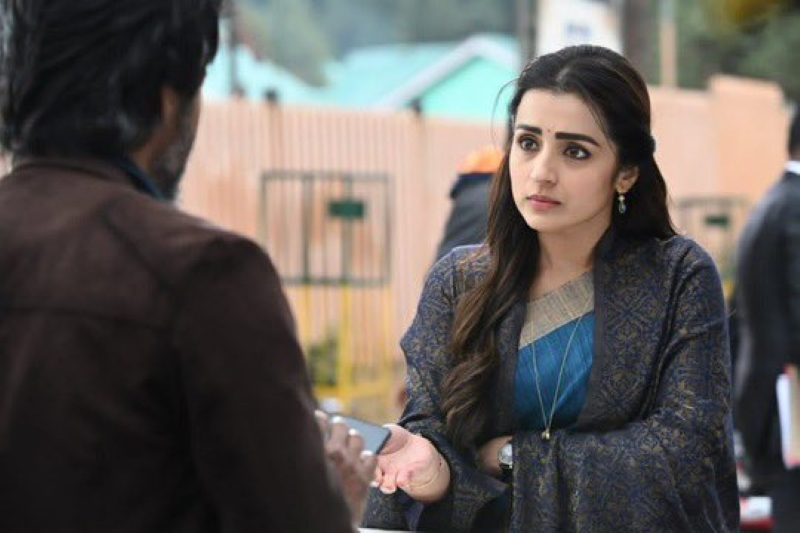
Trisha Krishnan in ‘Leo’. (trishtrashers/ X)
One reason why the film works is because of the handsome contributions made by its cast.
Director Gautham Vasudev Menon shows what a class act he is in this film too, playing the role of forest ranger Joshy with absolute conviction.
Trisha has no trouble portraying the character of Sathya. She slips into the role with absolute ease and owns it with her effortless performance.
Actor Vijay isn’t convincing in the first few minutes as Parthiban, but he soon gets into the groove and delivers a neat performance.
One reason why Vijay looks more impressive as Leo than as Parthiban is because of the strange hairstyle that he sports as Parthiban.
Sanjay Dutt has a limited role, but he delivers a commendable performance as does Arjun, who looks as fit as ever.
George Mariyan, despite a small role, comes up with a great performance as the cop who is about to retire in 60 days.
George Mariyan’s performance is significant because the character he plays in the film — Napoleon — is the only legitimate character that connects this film to Lokesh’s Cinematic Universe (LCU).
True, the film also has a connection to Kamal Haasan-starrer Vikram (2022), but the sequence that connects the film to Vikram appears forced and comes across more as an afterthought.
Both Manoj Paramahamsa’s camera work and Anirudh Ravichander’s scintillating scores are bloody sweet and add immense value to the film.
Leo might not be Lokesh Kanagaraj’s best film, but it certainly is an entertainer that is bound to leave common audiences satisfied and Vijay’s fans immensely pleased.
(Views expressed here are personal.)




Feb 26, 2026
Jan 27, 2026

Jan 17, 2026
Jan 13, 2026
Jan 10, 2026


