

Published Oct 27, 2026 | 6:08 PM ⚊ Updated Oct 27, 2026 | 6:32 PM

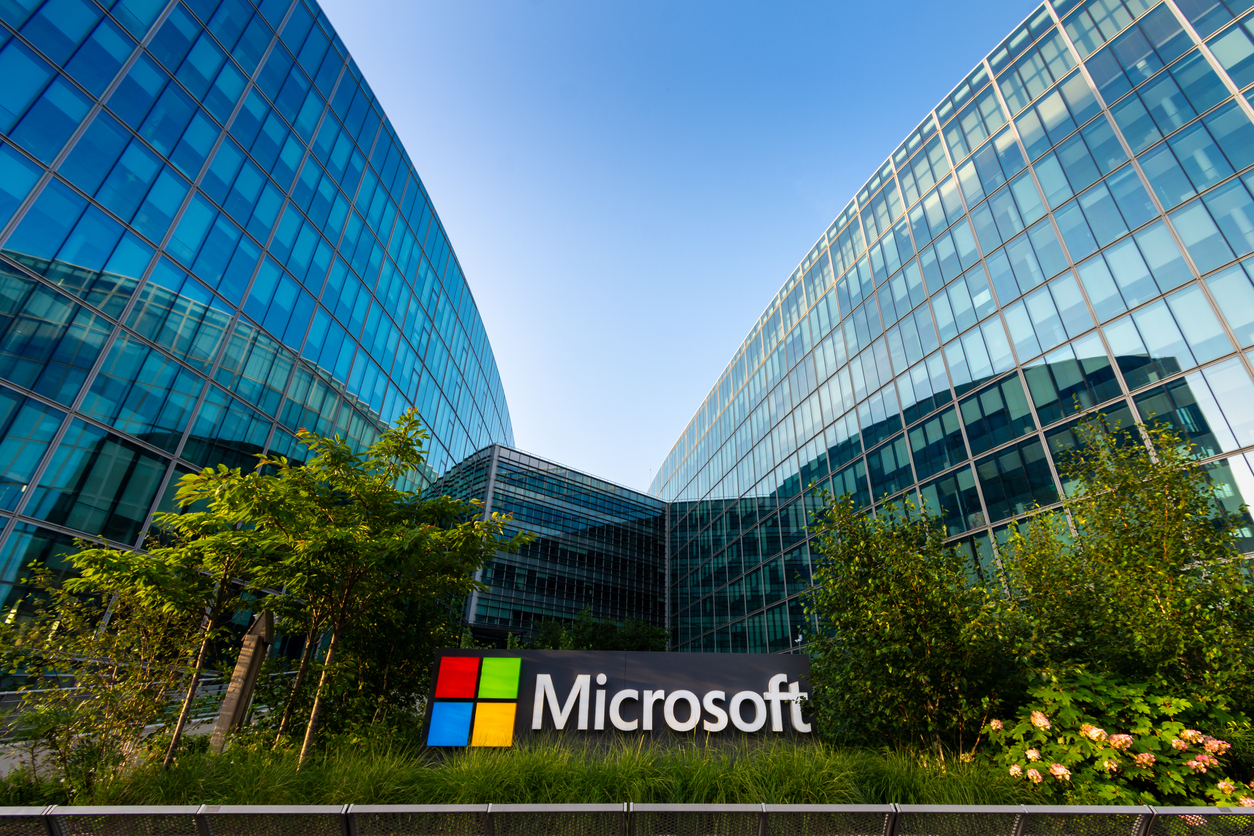
Facade of the French headquarters of Microsoft. (Photo | iStock)

Call it the big bang that gives an indication of the AI-driven tech universe set to come into being.
Microsoft late on Monday IST offered buyouts to 60,000 members of its almost 220,000-strong workforce. The emails soon landed in the inboxes of 27% of its employees.
The language the tech giant couched the offer in was “participatory”.
The company announced in a post that employees from “participating teams in Canada, India, the United Kingdom and the United States at level 70 (Vice President) and below” were eligible to avail themselves of the “time-limited, voluntary program”. The offer gave them the “opportunity to leave Microsoft with financial support and career planning resources”.
In other words, after giving up their till-now-secure careers, they will be assisted in embarking on a career hunt trek, with Microsoft delivering the “career planning resources” that will light their way. Rich? You tell us.
Amy Coleman, Microsoft’s Chief People Officer, who drafted the email, was not done.
She added that “eligible employees will receive an email with a link to their Voluntary Exit Offer details within the next few hours”, while stressing that this “voluntary Exit Offer is new for us”.
If you thought this was the last of it, think again. A “we’ll learn from it” was left dangling.
The implication for those reading between the lines was straightforward: this isn’t the last mail from us. Our next mail will bring new learnings sprinkled on top.
There were no blanket terms on offer. Instead, as they always are in the corporate world, the terms were customised for each employee based on their level, country and tenure.
An Indian employee who received the mail vented on the subreddit DevelopersIndia: “I feel like why the hell did I do so much hard work. Just to end up in this mess of a job market at a bloated company? I feel like I am gonna puke.”
“Guys, I feel desperate. What’s next? I’ve three years of experience. That’s it. No family business, six months of spending money, nothing more. I can do DSA (Data Structures and Algorithms), but who needs that? Feels like it’s the most irrelevant skill I ever acquired. What to do?” he continued.
The employee also voiced the fear of others who received the mail but were considering turning down the buyout offer.
“…Email means you’re on the layoff list. By hook or by crook, we (Microsoft) will get rid of you,” he observed pithily in the post that was subsequently pulled down.
The teams that received the mail are from the AI Experiences, Copilot, Xbox, Windows, Devices, finance and human resources divisions. Those in sales, marketing, cybersecurity, quantum computing and data centres, along with a few engineering teams, were left untouched, a source from Microsoft said.
The offer must be accepted by December 1, with December 31 being the last day at Microsoft for employees who take it.
Microsoft said it expected only a small percentage of employees to accept the buyout. In April, it had offered buyouts to 8,750 long-tenured employees in the US. Thirty per cent accepted the offer. Less than three months later, Microsoft went on to lay off a further 4,800 of its staff in July.
Microsoft’s employee strength had remained at about 228,000 for many years. In 2026, the first voluntary exit offer and other exits brought the number down to 223,000. The 4,800-employee reduction in July brought the strength to under 220,000.
“Microsoft’s headcount has been flat for five years at around 220,000 employees. The revenue has surged over those same five years, from $198 billion to $332 billion,” wrote Jason Calacanis, a well-known internet investor and tech podcaster.
The revenue of $332 billion in the 2025-26 fiscal year represents an 18% upswing from the previous year. Microsoft’s profits galloped by an even more impressive 31% during the same period, to $134 billion.
“I’m guessing 6,000 people take the buyout. Microsoft revenue per employee is going to double from $900,000 to $2 million,” Calacanis noted, while drawing out the profit motive.
Ironically, Microsoft’s founder Bill Gates has been warning the world about the disruption AI could unleash and how, over the next 20 years, it could tear society apart. But here’s his very own Microsoft lighting the biggest match yet.
With the AI race on, Microsoft has told investors that the biggest chunk of its $190-billion spend in 2026 will go into building data centres and the chips to drive them.
Brad Groux, a Texas-based CEO at Digital Meld and agentic educator, called it a canary-in-the-coal-mine moment for the AI industry.
“These aren’t buyouts because Microsoft found efficiencies with AI; they are buyouts because they (the AI industry) spend trillions (collectively) building the best tools the world has ever seen, and no one knows how to use them,” he wrote.
Merill Fernando, an ex-Microsoft Entra Program Manager, agreed the AI bet was the main trigger but for a different reason.
“I see the hurt it’s causing my ex-colleagues, their families and their kids. Layoffs, forced relocations, PIPs (Performance Improvement Plans). It’s brutal, and I don’t want to brush past that.
“But here’s my honest take. Microsoft needs fewer people. Microsoft already has everything else. The customers. The infrastructure. The scale… Right now OpenAI and Anthropic are shipping at a pace Microsoft can’t match. Microsoft has to change to survive,” he wrote, adding that he had seen layers upon layers and silos everywhere.
The Microsoft buyout news comes during a week when two big banks, Barclays and American Express, announced job cuts. Italy’s insurance giant Generali also had layoff news to share. India’s top six listed IT companies, it emerged meanwhile, have already shed 24,500 jobs this year.
With jobs in the software sector that powered the Indian economy in recent times seemingly endangered, Sharan Hegde on X wondered about the potential impact it could have on the Indian real estate market.
“American tech companies have made billions by employing cheap labour in India. But now that AI is entering the picture, it feels like we’re being left behind,” he posted.
“Property prices have shot up on the back of high-paying IT jobs. In 2022, just 11% of homes sold in Bangalore cost over ₹1.5 crore. Today, that figure is 62%,” Hegde added, warning that taking a home loan might be a very risky affair going forward.
But beyond the potential impact on the housing market lies the question of how a drop in IT-sector hiring could affect India’s job market, at a time when 40% of college pass-outs are not finding jobs, according to Azim Premji’s State of Working India report.
Is the government reading the tea leaves and doing something about it?
Also Read:
‘No hikes’: Sridhar Vembu’s grim software jobs outlook and AI productivity prediction spark debate
A Bhasmasura we built: Can Artificial Intelligence go after its makers?
Code Red on the Web: How 70% of the internet suddenly came under threat
Netflix’s biggest layoffs ever: Is shareholder value to blame?
(Compiled and edited by R Rajesh Kumar.)



