

Published Jul 31, 2026 | 10:00 AM ⚊ Updated Jul 31, 2026 | 10:04 AM

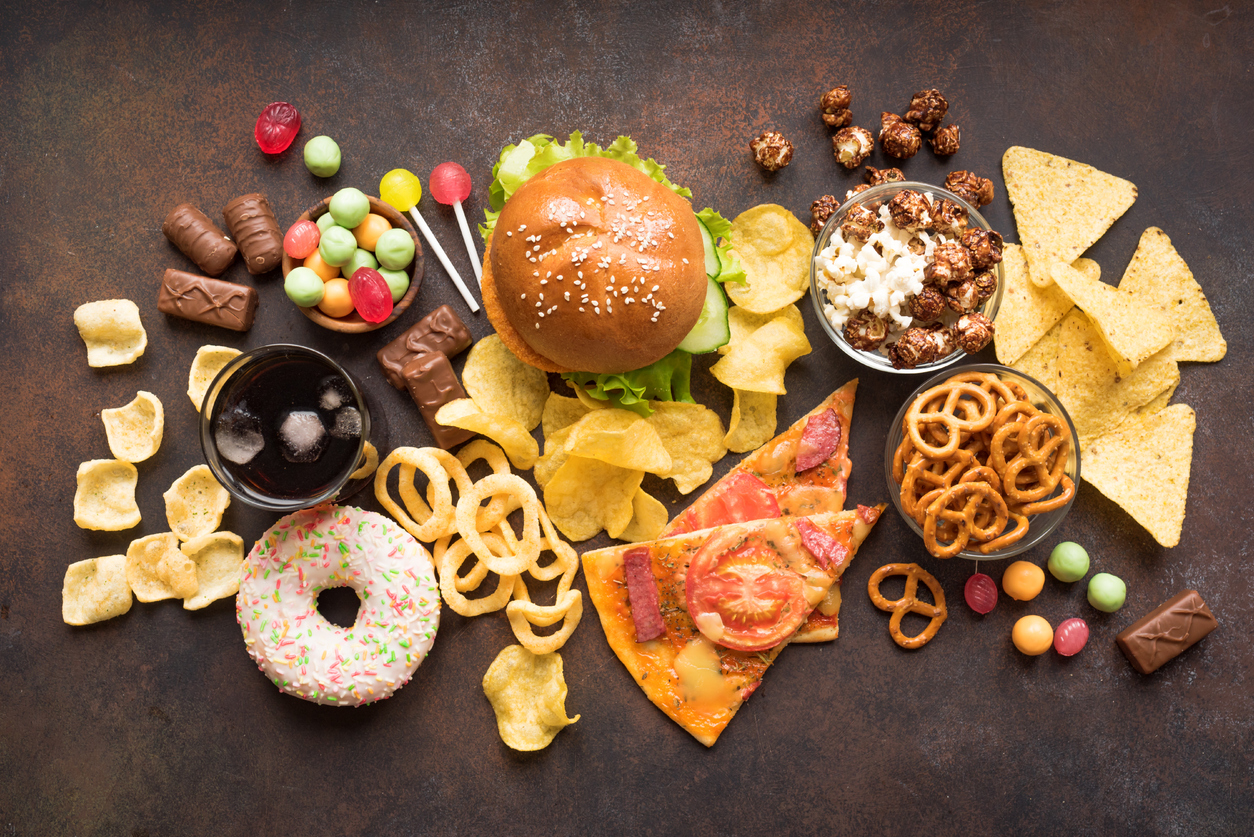
Foods such as samosas, jalebis and chaat are generally prepared outside industrial manufacturing systems but are high in fat, refined carbohydrates.

Synopsis: Scientists at Hyderabad’s ICMR-National Institute of Nutrition (ICMR-NIN) have proposed a “dual-axis” framework to classify packaged foods based on both industrial processing and nutrient content. Published in The Lancet Regional Health-Southeast Asia, the proposal aims to close regulatory loopholes, strengthen food labelling, and support obesity and non-communicable disease prevention in India.
As India’s supermarket shelves fill with protein bars, sugar-free biscuits, flavoured yoghurts and zero-sugar beverages marketed as healthier choices, scientists at Hyderabad’s ICMR-National Institute of Nutrition (ICMR-NIN) are asking a fundamental question: Is India judging packaged foods the right way?
According to a commentary published in The Lancet Regional Health-Southeast Asia, the answer is no.
The researchers argue that India’s food regulations rely too heavily on a single way of evaluating packaged foods, either by measuring how much fat, sugar and salt they contain or by classifying them according to the extent of industrial processing. Neither approach, they say, tells the complete story.
Instead, they have proposed what they call a “dual-axis” food classification, a framework that evaluates foods simultaneously on two parameters: their degree of industrial processing and their nutrient composition. The approach, they argue, could provide the scientific foundation for stronger food labels, marketing restrictions and school nutrition policies as India battles rising obesity and diet-related non-communicable diseases (NCDs).
“India’s food system is unique, and so should be its regulatory framework. Foods cannot be judged solely by how much they are processed or only by their nutrient content,” said Dr SubbaRao M Gavaravarapu, Scientist at ICMR-NIN and lead author of the commentary.
“A dual-axis approach will provide a scientifically robust and culturally relevant basis for food labelling, consumer awareness, and future policy decisions,” he said.
Also Read: They conceived once. Why is the second pregnancy becoming harder?
The proposed framework asks regulators to examine every packaged food using two independent questions.
The first asks how much industrial processing the product has undergone. The second asks whether it exceeds thresholds for fat, sugar and sodium, nutrients commonly linked to obesity and chronic diseases.
According to the authors, relying on only one of these criteria creates blind spots.
For example, a product may be reformulated to contain less sugar and therefore avoid being classified as high in fat, sugar or salt (HFSS). Yet it may still be heavily processed, containing emulsifiers, stabilisers, flavour enhancers and highly refined ingredients that classify it as an ultra-processed food (UPF). Conversely, traditionally prepared foods may not qualify as ultra-processed but can still contain excessive fat, refined carbohydrates or calories.
“Regulatory frameworks require clearer definitions that account for both nutrients and degree of processing,” the authors wrote, noting that nutrient-based systems alone “rarely incorporate processing-related risks like use of cosmetic additives, highly refined ingredients… and alterations to the food matrix that compromise the nutritional quality.”
The commentary comes against the backdrop of changing dietary habits in India.
Citing data from the National Family Health Survey (NFHS-6), the authors note that obesity among adults aged 15 to 49 has continued to increase since the previous survey. Household Consumption Expenditure Survey data also show that monthly spending on processed foods has risen in both rural and urban India over the past decade. The Economic Survey 2025-26 similarly highlighted rising ultra-processed food consumption as a contributor to obesity and NCDs.
Despite these trends, the researchers point out that India still has no formal regulatory definition of ultra-processed foods.
According to the commentary, terms such as “processed”, “pre-packaged” and “ultra-processed” are often used interchangeably, creating confusion for policymakers as well as consumers.
“In the absence of a formal HFSS definition, key policy instruments, such as school food standards, front-of-pack nutrition labelling (FOPNL) and restrictions on marketing of unhealthy foods to children, cannot sufficiently address UPFs,” the authors wrote.
Also Read: Biryani, alcohol and the organs that pay the price: What happens to liver and gut
One of the central arguments of the commentary is that existing systems can classify foods in misleading ways.
The authors cite the rapidly expanding category of “health-positioned” packaged foods, including sugar-free biscuits, flavoured yoghurts, protein bars, plant-based milks and zero-sugar beverages. Many of these products may meet nutrient thresholds after reformulation but still remain ultra-processed because of their ingredients and manufacturing processes.
“Reformulation strategies often reduce select nutrients of concern while retaining additives such as non-nutritive sweeteners, emulsifiers, and stabilisers that alter food matrices,” the authors wrote. “Their marketing fosters a misleading perception of healthfulness despite resemblance to foods associated with increased cardiometabolic risk.”
The reverse problem also exists.
Foods such as samosas, jalebis and chaat are generally prepared outside industrial manufacturing systems but remain high in fat, refined carbohydrates and calories.
“In India, reliance on classification based on ultra-processing alone may overlook substantial dietary hazards,” the authors said, adding that these commonly consumed foods “remain largely outside regulatory focus when ultra-processing is treated as the sole indicator of unhealthfulness.”
Unlike international classification systems designed largely around Western food environments, the proposed framework attempts to account for India’s diverse eating habits.
It builds upon the Dietary Guidelines for Indians 2024, which, according to the commentary, introduced a framework that combines food processing with nutrient considerations for the first time. The researchers recommend that future regulations should incorporate three components: the level of industrial processing, nutrient thresholds for sugar, fat and sodium, and contextual features of India’s food system, including regional cuisines, mixed dishes, packaged traditional foods and the coexistence of informal and industrial food sectors.
“India’s evolving food system underscores the need for a pragmatic, integrated classification combining UPFs and HFSS foods,” the authors wrote.
Also Read: Just 3-4 days of extreme heat during pregnancy can raise risk of low birth weight
The researchers believe the framework could eventually support a range of food policies.
These include front-of-pack nutrition labelling, restrictions on marketing unhealthy foods, school nutrition standards and improved consumer awareness.
The commentary also notes that the Supreme Court recently directed the Food Safety and Standards Authority of India (FSSAI) to reconsider mandatory front-of-pack warning labels for foods high in sugar, salt and saturated fat.
“Therefore, a coherent framework is essential to enable consistent food classification, effective regulation, and protection of culturally important foods that do not share the structure or function of UPFs,” the authors wrote. Such a framework, they added, would also “prevent reformulated products from circumventing regulation” and generate stronger evidence on the relationship between ultra-processed food consumption and health outcomes in India.
“As India faces the dual burden of undernutrition and rising obesity, evidence-based food policies are critical,” said Dr Bharati Kulkarni, Director of ICMR-NIN.
“This commentary provides a practical pathway to strengthen nutrition policy, protect consumers, and support healthier food environments while respecting India’s diverse food traditions.”
With packaged foods becoming an increasingly larger part of Indian diets, the researchers argue that the country’s next challenge is not merely identifying unhealthy foods, but deciding how to define them. Their proposed dual-axis framework, they say, could be the missing link between evolving science and future food regulation.



