

Published Jul 28, 2026 | 7:00 AM ⚊ Updated Jul 28, 2026 | 7:00 AM

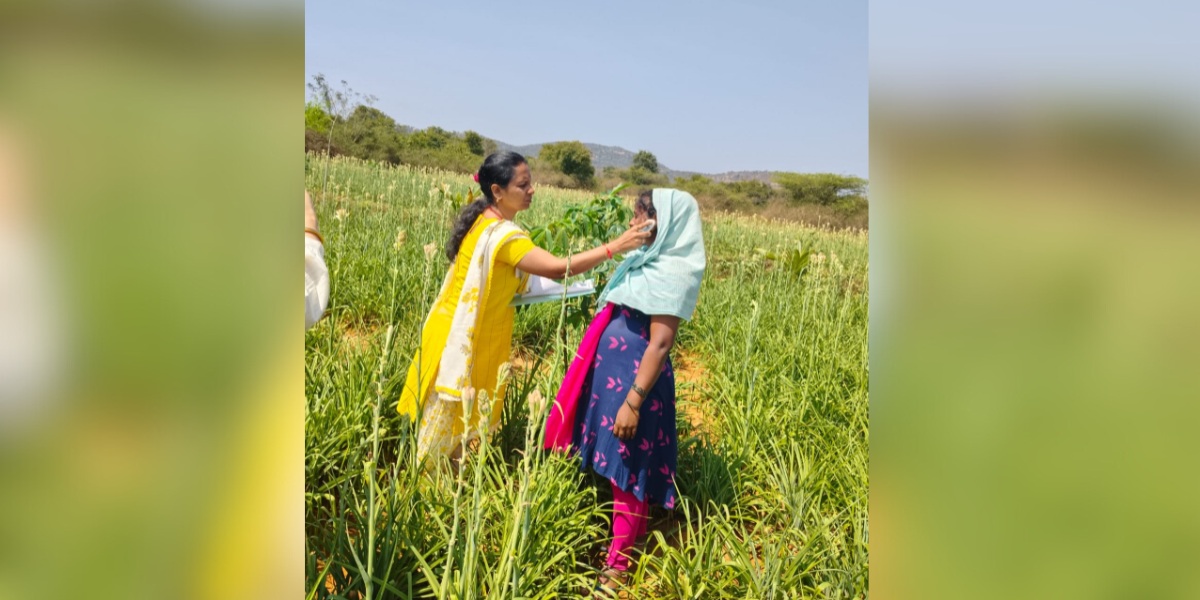
The study's findings call for recognising pregnant women as a priority group in India's heat action plans.

Synopsis: A nationwide study of over 2 lakh births has found that even three to four consecutive days of extreme heat during pregnancy can raise the risk of low birth weight. Researchers also linked first-trimester heat exposure to preterm birth and called for pregnant women to be prioritised in India’s heat action plans.
Merely three to four consecutive days of exposure to extreme heat during pregnancy can significantly increase the likelihood of delivering a low-birth-weight baby, according to the first nationwide study examining how prolonged heat stress affects pregnancy outcomes in India.
The study, published in the peer-reviewed journal Environmental Research Communications, analysed 209,266 births across India between 2015 and 2020. It found that repeated short bursts of extreme heat — not just long-lasting heatwaves — were associated with adverse birth outcomes.
Researchers said the findings added urgency to calls to recognise pregnant women as a priority group in India’s heat action plans, as climate change drives increasingly frequent and intense heat events.
Unlike most previous studies that relied solely on air temperature, the researchers used the India Heat Index (IHI), which combines temperature, humidity, wind speed and solar radiation to estimate the actual heat stress experienced by individuals. They tracked the number of consecutive “sweltering” days—defined as days when the IHI exceeded the 90th percentile of the long-term local climate—throughout each woman’s pregnancy.
Researchers from the University of Queensland-IIT Delhi Academy of Research (UQIDAR), IIT Delhi, and the University of Queensland’s School of Public Health conducted the study in collaboration with the University of New South Wales (UNSW), Sydney, the University of Exeter, and Korea University.
Also Read: Diabetes hitting women in the first trimester
One of the study’s most striking findings emerged from its sensitivity analysis, which examined whether the duration of extreme heat exposure altered pregnancy risks.
Researchers found that exposure to three to four consecutive sweltering days during pregnancy was associated with a statistically significant increase in the odds of low birth weight.
Longer periods of five to six days and seven or more days did not show statistically significant associations, suggesting that repeated shorter episodes of intense heat may be particularly important over the course of pregnancy.
The finding is especially relevant for much of South India, where summers are increasingly characterised by recurring bursts of extreme heat across coastal and inland districts rather than uninterrupted heatwaves lasting several weeks.
“While the per-day increase is small, it compounds over a long, hot pregnancy and affects a very large population, making it a meaningful public health concern in a country where extreme heat is becoming more common,” said Vineetha Vincent, lead author of the study from UQIDAR.
Also Read: One in four pregnant women in South India lives with gestational diabetes
The researchers analysed 232,920 births recorded in the National Family Health Survey (NFHS-5).
After excluding records with incomplete information, such as missing geolocation, pregnancy duration or birth weight, the final analysis included 209,266 births from across India. Among them were 29,873 low birth weight babies, 2,341 preterm births and 1,740 stillbirths.
Overall, the researchers found that every additional consecutive sweltering day during pregnancy increased the odds of low birth weight by about 1%, even after adjusting for maternal age, body mass index, education, household wealth, air pollution, smoking, cooking fuel, residence and other demographic and environmental factors.
Although a one per cent increase may appear modest, the researchers argued that the effect becomes substantial when millions of pregnancies occur each year amid increasingly frequent extreme heat.
Also Read: Why is second pregnancy becoming harder?
The study also found that the trimester in which a woman is exposed to extreme heat affects the outcome.
Exposure during the first trimester was associated with an increased likelihood of preterm birth, while heat exposure during the second trimester was linked to a higher risk of low birth weight.
The researchers also observed a trend towards higher stillbirth risk among women exposed during the third trimester, although this association did not reach statistical significance.
The findings suggested that different stages of foetal development may be vulnerable to heat in different ways, reinforcing the need for continuous protection throughout pregnancy rather than only during the later months.
The authors noted that pregnancy naturally places additional demands on the mother’s cardiovascular system. Exposure to extreme heat can further elevate core body temperature, reduce uterine blood flow through dehydration and increase physiological stress, all of which may impair fetal growth or trigger premature labour.
Also Read: Overweight boys are almost 2 times more likely to become infertile men
Beyond the biological effects of heat, the study found that socioeconomic disadvantage substantially amplified pregnancy risks.
Women with no formal education or only primary schooling were more likely to deliver low birth weight babies or experience stillbirth as heat exposure increased than women with secondary or higher education. Similarly, mothers with low body mass index, indicating undernutrition, faced greater heat-related risks than women with normal Body Mass Index (BMI).
The researchers also observed slightly stronger associations among women living in urban areas, possibly reflecting the impact of urban heat islands. At the same time, subgroup analyses suggested mothers residing in mountainous regions may be less adapted to prolonged heat extremes.
“The mothers most exposed to extreme heat are often those with the fewest resources to cope with it: the poorest, the least educated, the under-nourished. Any adaptation response that ignores this social gradient will miss the women who need protection most,” said Sagnik Dey, professor at IIT Delhi and co-author of the study.
Also Read: How obesity impacts sexual health and fertility?
The researchers noted that India has had limited evidence on how prolonged heat affects pregnancy because previous studies were generally based on smaller cohorts or local populations.
The new study is the first population-scale analysis of heat exposure and pregnancy outcomes using nationally representative NFHS data linked with high-resolution meteorological information.
Instead of using maximum daily temperatures, the researchers adopted the India Heat Index to better capture the combined effects of temperature, humidity, wind speed, and solar radiation, producing what they say is a more realistic estimate of heat stress experienced by pregnant women.
The authors said the nationwide coverage allowed them to compare risks across different climate zones and socioeconomic groups while accounting for important confounding factors such as ambient air pollution, cooking fuel use and household wealth.
Also Read: How AI is transforming healthcare
With India witnessing increasingly frequent and prolonged episodes of extreme heat, the researchers argued that maternal health must become part of climate adaptation planning.
“Our study emphasises the heightened risk of adverse pregnancy outcomes in India due to prolonged extreme conditions. Such extreme conditions are expected to increase due to global warming; therefore, India should prepare to address them with more adequate adaptation planning,” the authors wrote.
The study specifically called for pregnant women to be recognised as a priority group in heat action plans, alongside outdoor workers, older adults and people with chronic illnesses.
The researchers also stressed the need for greater awareness among pregnant women, particularly those from economically disadvantaged backgrounds, about the dangers of heat exposure during pregnancy.
Also Read: Role of Artificial Intelligence in accelerating vaccine production
The authors acknowledged the study’s limitations. Stillbirth information was based on self-reported survey data. At the same time, important clinical factors such as gestational diabetes, hypertension, occupational heat exposure and physical activity during pregnancy were unavailable in the NFHS dataset.
They therefore could not be included in the analysis. Individual heat exposure also had to be estimated from ambient environmental conditions rather than personal measurements.
Even so, the researchers said the findings provided compelling evidence that climate change is becoming an important maternal and child health issue in India.
They called for conducting larger prospective cohort studies to better understand the biological mechanisms by which prolonged heat affects foetal growth and pregnancy outcomes, and to inform targeted interventions to protect mothers and newborns in an increasingly warm climate.
(Edited by Majnu Babu).



