

Published Apr 27, 2026 | 7:00 AM ⚊ Updated Apr 27, 2026 | 7:00 AM

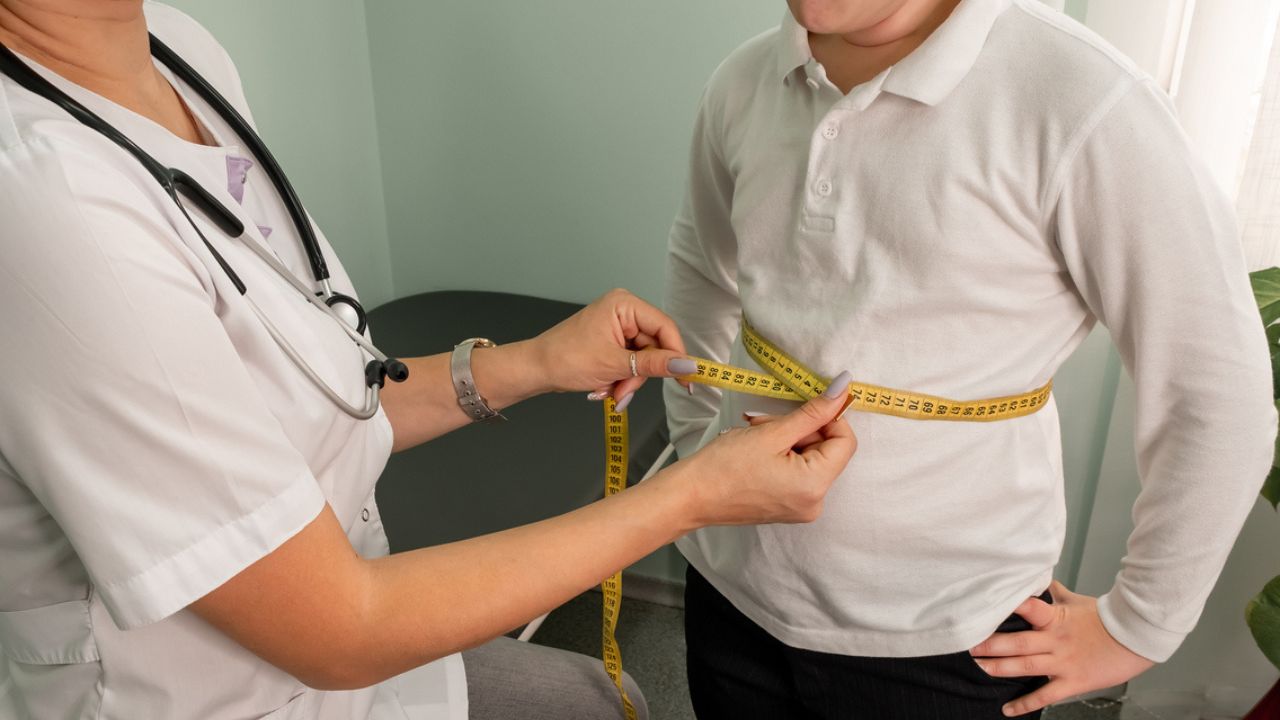
Representative image. Credit: iStock

Synopsis: In India, many families still believe a chubby child is a healthy child, and this belief affects how young children are fed, often because of social pressure rather than medical need. Doctors say overfeeding, giving sugar and salt too early, and mistaking other needs for hunger can disturb eating habits and increase the risk of obesity from infancy.
A mother walks into a paediatric endocrinologist’s clinic in Hyderabad. Her child runs between the chairs, tugs at curtains, demands water, then runs again.
She sits down and tells the doctor her child looks too thin.
This scene repeats itself, day after day, across clinics in India. The child moves. The child eats. The child sleeps well. And still, the mother worries.
In India, a chubby child does not just look healthy. A chubby child signals something larger: that the family eats well, that the mother cares, that the household does not go without.
The word “gol-matol” carries weight far beyond its syllables. When a relative says it about your child, it functions as praise for you.
This belief did not arrive from nowhere. Older generations in India lived through periods of genuine food scarcity. Thinness meant illness. It meant poverty. It meant something had gone wrong.
That memory shaped how families feed, and it has passed down through generations intact.
Also Read: Telangana: 75 medical shops found violating norms on weight-loss drugs
Dr Mounica Reddy M, Consultant Paediatric Endocrinologist at Ankura Hospital in Hyderabad, puts a number to what she encounters.
“About 80 percent of the children whose parents come with issues, ‘my child is not gaining weight’, are not medically sick. The parents are unduly worried that because my child is not chubby, he may be unhealthy,” she told South First.
She describes the pattern as consistent across geographies.
“This is a general deep-rooted cultural belief of Indian parents and grandparents, that a chubby child is only a healthy child.”
But medicine defines a healthy child differently.
“A healthy child is not defined by appearance at all,” she says. “It is a combination of parameters. Consistent growth in height and weight. Age-appropriate developmental milestones. Active and playful behaviour. Good eating habits based on hunger cues. Good sleep. Good emotional well-being. And not frequently falling sick.”
Not one of those parameters requires the child to look round.
Parents often do not arrive at the clinic because they read a growth chart and felt concerned.
They arrive because a neighbour said something. Or an aunt. Or someone at a family gathering who looked at the child and then looked at the mother.
Dr Reddy sees this dynamic directly.
“Sometimes it is more societal pressure. The neighbours are commenting, the elders are commenting, ‘What happened with your child? He looks very lean suddenly.’ That societal pressure drives parents to the doctor, rather than looking at the charts and going in a proper scientific way.”
The mother absorbs this commentary and carries it into the consultation room, where it shapes every question she asks.
The instinct to feed more, driven by appearance and social pressure, carries consequences that accumulate quietly.
Dr Reddy explains what happens when parents force meals or snacks on to children who signal they have had enough.
“The child is getting programmed for early obesity. Right from childhood, overeating can cause increased fat mass. He is getting prepared for long-term obesity as an adult.”
Beyond weight, there is a subtler and more lasting problem.
“Due to overeating, there is disruption of his hunger and satiety signals. The child does not know when he is hungry, when he has to stop eating.”
Screen time deepens this disruption. A child who eats while watching a phone or television loses the ability to register fullness. The signals exist, but nothing receives them.
Also Read: Even ORS, the simplest drug formulation in the world, is substandard in Telangana
One of the clearest interventions in early childhood nutrition involves something most Indian families do not think twice about: adding jaggery or salt to a young child’s food for taste.
The Indian Association of Pediatrics recommends that sugar and table salt not be given to children in the first two years of life.
Dr Reddy explains why this matters beyond weight.
“Early addition of sugar or jaggery results in chances of overweight and obesity right from the beginning. But the more risky thing is that children get habituated to the taste.”
She gives a specific example.
“If you introduce a chapati with honey in the beginning, the child will not develop the habit of eating vegetables as he grows. He will always demand that the chapati has to be eaten with something sweet. This changes their habits permanently.”
The palate, trained early, resists retraining later.
One of the most common errors parents make begins at the very start of a child’s life.
Dr Reddy addresses it directly.
“Parents relate crying to hunger. If he is crying, we feel he might be hungry. But that is not true. There can be different reasons, he may be irritated, he wants a toy, he is sleepy, he is thirsty, or he is uncomfortable with his clothing or diapers.”
Each time a parent responds to non-hunger crying with food, the child’s ability to distinguish internal states erodes slightly. Over months and years, this adds up.
Also Read: Indian women report more sickness than men but spend 32% less in hospital
A study published in the Indian Journal of Medical Research, conducted at Government Medical College in Thiruvananthapuram, tracked 52 obese infants and compared them with 52 non-obese peers matched for age and sex.
The findings identified maternal obesity as the strongest predictor of infant obesity, with children of mothers with a BMI above 25 kg/m² facing more than 10 times the odds of becoming obese.
Formula feeding increased those odds more than sixfold. Family history of lifestyle diseases, diabetes, hypertension, heart disease, also raised risk substantially.
The study reinforces a growing body of evidence that obesity does not begin in adolescence. It begins in the first 1,000 days of life, from conception to a child’s second birthday.
Globally, an estimated 35 million children under five were overweight or obese in 2024. Nearly half of them lived in Asia.
In India, the prevalence of overweight among children under five rose from 2.1 percent in 2015-16 to 3.4 percent in 2020-21.
The trajectory points upward.
A generation ago, Horlicks and Bournvita ran advertisements promising that their products would make children taller, stronger and sharper. Courts eventually directed those companies to remove the misleading claims.
Similar messaging has returned, this time through social media.
Dr Reddy watches it arrive in her clinic through confused parents.
“Social media has influenced parental choices way too much than imagined. Many companies advertise their food and so-called magic remedies. Social media is confusing parents. You are confused as to what is good and what is bad for your child.”
The consequence extends beyond product choices.
“Somewhere down the line, the importance of actual home-based food is going away. Not the marketed products that you give to your child ensure good health, but the actual home-based meals that you prepare for the kid.”
Also Read: Contaminated ice in beverages fuels summer disease risk, say health experts
When Dr Reddy faces a parent who believes their clinically healthy child needs more food, she reaches for the growth chart.
“When I show them on the growth chart what his weight was six months back, and now that he is along his usual curve, they feel a bit relieved.”
She also uses a more direct image.
“I tell the parents: if you think that only chubby kids are healthy, then you should probably arrange a running race between two kids, and definitely you will know that your kid runs faster.”
But the heaviest part of her counselling does not involve charts or races. It involves the mother.
“I usually tell the mother that you should not give in to societal expectations. You should not compare your kid. Mother’s guilt is a real thing. It is unfortunate that everything, the blame, comes onto the mother. She is already overworked with all the work around the kid, and still she feels she is not doing enough.”
The mother from the opening leaves the consultation room reassured. The growth chart showed a consistent curve. The doctor told her the child runs well, eats on hunger, sleeps through the night.
She steps outside.
By evening, an aunt asks why the child looks so lean.
The cultural script does not update with a single visit. It runs deeper than any chart, older than any guideline, and it feeds, quite literally, the next generation.



