

Published Apr 23, 2026 | 4:41 PM ⚊ Updated Apr 23, 2026 | 4:41 PM

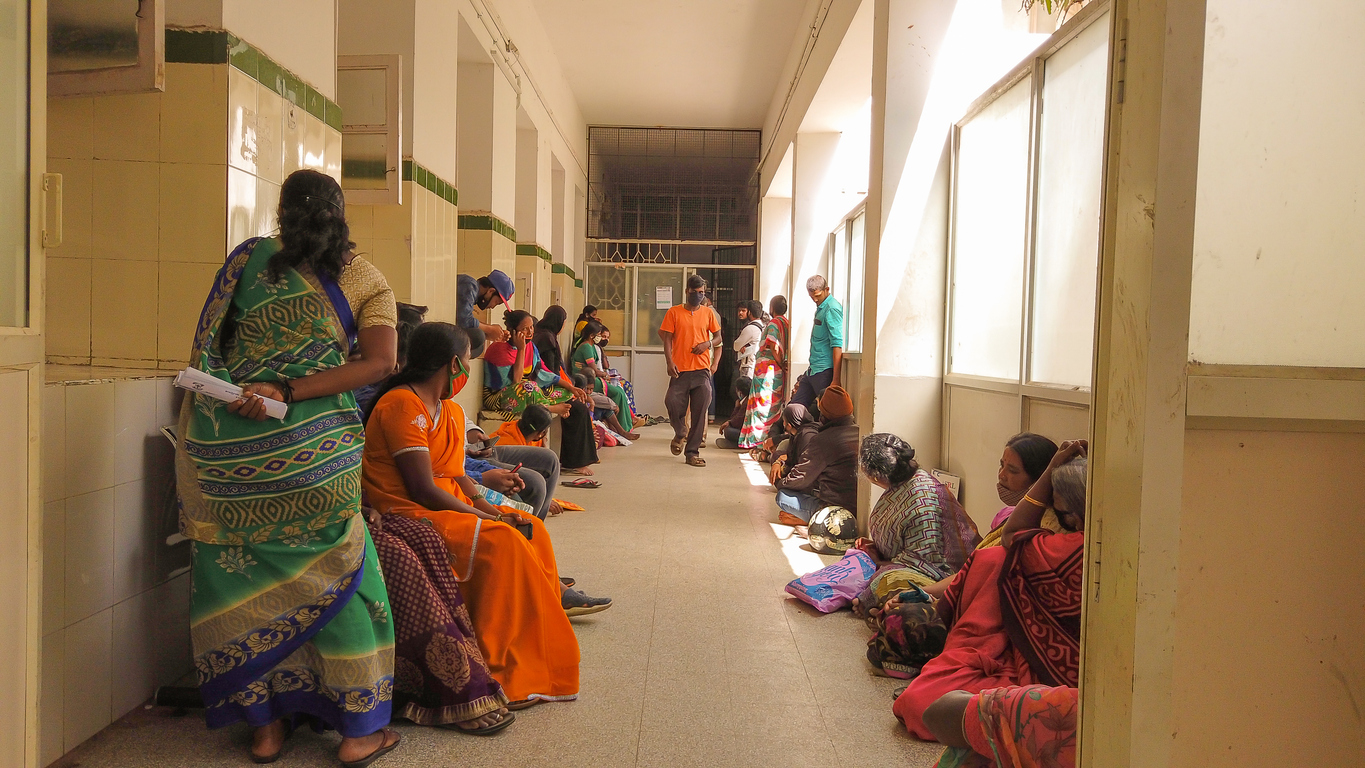
Representational image. Credit: iStock

Synopsis: India’s 80th Round NSS health survey reveals a stark gender gap in hospitalisation spending. Women report more illness but are hospitalised less, and when admitted, families spend 32% less on their care than on men’s. The disparity widens with wealth and is sharpest in private hospitals, highlighting entrenched inequities despite expanded health coverage.
Every time a family in India decides how much to spend on a hospital stay, something quietly unfair tends to happen. The patient who is a woman gets less.
That is not an assertion. It is now a number.
India’s most comprehensive health survey in nearly a decade, the 80th Round of the National Sample Survey on Household Social Consumption: Health, released by the Ministry of Statistics and Programme Implementation on 20 April 2026, shows that women in rural India spend an average of Rs 25,111 per hospitalisation out of pocket. Men spend Rs 36,997. That gap of nearly Rs 12,000 per case works out to women spending 32% less than men on their own hospital treatment.
In urban India the gap is smaller but still significant. Men spend Rs 42,508 per hospitalisation against women’s Rs 34,523, a difference of nearly Rs 8,000 per case.
This is not a story about women avoiding hospitals because they are healthier. The same survey shows that 14.4 percent of women reported suffering from an ailment in the 15 days before the survey, against 11.8 percent of men. Women are more likely to be ill. They are just less likely to have money spent on them when they are.
Also Read: ICMR report says 1 in 6 women in Hyderabad at risk of cancer
The morbidity gap between men and women holds across almost every state in the country.
In Andhra Pradesh, 23.5 percent of women reported illness against 18.6 percent of men. In West Bengal the figures are 27.4 percent and 21.7 percent respectively. In Kerala, which has the highest illness reporting rate in the country, 42.4 percent of women reported being ill against 36.9 percent of men.
Among those aged 45-59, 25.3 percent of women reported illness nationally against 19.6 percent of men. Among the elderly aged 60 and above, 45.4 percent of women reported illness against 42.5 percent of men.
Despite this, women record lower hospitalisation rates than men in most states. Nationally the hospitalisation rate is 30 per 1,000 for men and 28 per 1,000 for women. In several major states the difference is more pronounced.
In Maharashtra, men record 36 hospitalisations per 1,000 against women’s 30. In Karnataka it is 24 for men against 21 for women. In Andhra Pradesh, where women’s illness rate is significantly above men’s, men still record 35 hospitalisations per 1,000 against women’s 28.
Women are sicker by their own account. But they are being admitted to hospitals at lower rates than men, and when they are admitted, less is being spent on their care.
Perhaps the most uncomfortable finding in the data is what happens as household income rises.
Among the poorest rural households, men spend Rs 27,934 per hospitalisation against women’s Rs 23,014. The gap is Rs 4,920.
Among the richest rural households, men spend Rs 47,815 against women’s Rs 29,596. The gap has more than tripled to Rs 18,219.
In other words, as families become more prosperous and can afford better care, the additional spending disproportionately benefits men. Wealthier households are spending more on healthcare overall, but women in those households are not seeing a proportional increase in what is spent on their treatment.
The same pattern plays out in urban areas. The richest urban households spend Rs 57,860 per male hospitalisation against Rs 49,245 for female, a gap of Rs 8,615.
If the expenditure difference were simply a reflection of the types of conditions men and women suffer from, it would not widen so sharply as income rises. The income gradient suggests that when families have more resources to deploy, those resources flow more readily toward men.
Also Read: One in eight: How late diagnosis keeps India’s breast cancer patients from fighting back
The gap is most pronounced in private hospitals, which now account for 60.3 percent of all hospitalisation cases nationally and an even higher share in southern states.
In rural private hospitals, men spend an average of Rs 54,486 per hospitalisation against women’s Rs 39,285. That is a difference of Rs 15,201 per case. In urban private hospitals, men spend Rs 59,863 against women’s Rs 49,736, a gap of Rs 10,127.
Private hospital costs are driven largely by the package component, the lump-sum charge for procedures and surgeries. Men are more likely to be admitted for conditions requiring expensive surgical interventions. But the income gradient shows that even where resources allow for better care, women receive less of it.
Even in government hospitals, where care is subsidised and pricing is largely standardised, the gap persists. Rural government hospital spending averages Rs 7,891 for men against Rs 5,887 for women. Urban government hospitals record Rs 7,040 for men against Rs 4,935 for women.
The existence of a gender expenditure gap even in public hospitals, where pricing is not driven by market forces, suggests the difference is not simply about what hospitals charge. It points to differences in the type of treatment sought, the conditions being treated, and the level of care that women and men are directed toward within the same facility.
The survey does not explain why women spend less when hospitalised. But the pattern it reveals is consistent with barriers to women’s healthcare that researchers have documented for decades.
Women in India continue to face constraints on mobility, dependence on male family members for decisions about hospitalisation, and a deeply ingrained tendency to prioritise the health of others over their own. These factors delay hospitalisation, reduce the quality of care sought, and can limit the procedures authorised on a woman’s behalf.
The income gradient adds a harder dimension. It is one thing to explain the gap among poor households where resources are genuinely scarce and difficult choices have to be made. It is harder to explain why the gap widens among India’s most prosperous households, where the constraint is not money but something else.
Among southern states, the pattern broadly mirrors the national trend.
In Telangana, where overall hospitalisation costs are the highest in the country at Rs 52,743 per case, men record 39 hospitalisations per 1,000 against women’s 31. Given that Telangana’s private hospital costs run at Rs 72,561 per case, the financial consequences of this hospitalisation gap for women are particularly acute.
In Andhra Pradesh, the gap between women’s higher illness reporting and lower hospitalisation rates is among the more pronounced in the south. In Kerala, where hospitalisation rates are the highest in the country, women at 83 per 1,000 are closer to men’s 102 per 1,000 than in most other states, suggesting Kerala women are more successful in converting reported illness into actual hospital admission.
Also Read: Shedding stigma: Male breast reduction is India’s fifth most common cosmetic surgery
India’s health coverage expansion has been one of the more striking policy achievements of the past decade. Insurance coverage in rural areas has jumped from 14 percent in 2017-18 to nearly 47 percent in 2025. Institutional deliveries are near-universal at 96.2 percent.
Public hospitals provide genuinely free or near-free care to millions, with the national median out-patient expenditure at government facilities standing at Rs 0.
But the gender gap in hospitalisation expenditure sits largely unaddressed within this progress. Women report more illness, get hospitalised less, and spend 32 percent less when they do. That gap widens as household wealth rises.
The NSS 80th Round has put precise numbers on a pattern that health researchers have long flagged. The numbers are now on the table. What happens next is a policy choice.



