

Published Sep 25, 2026 | 1:00 PM ⚊ Updated Sep 25, 2026 | 1:00 PM

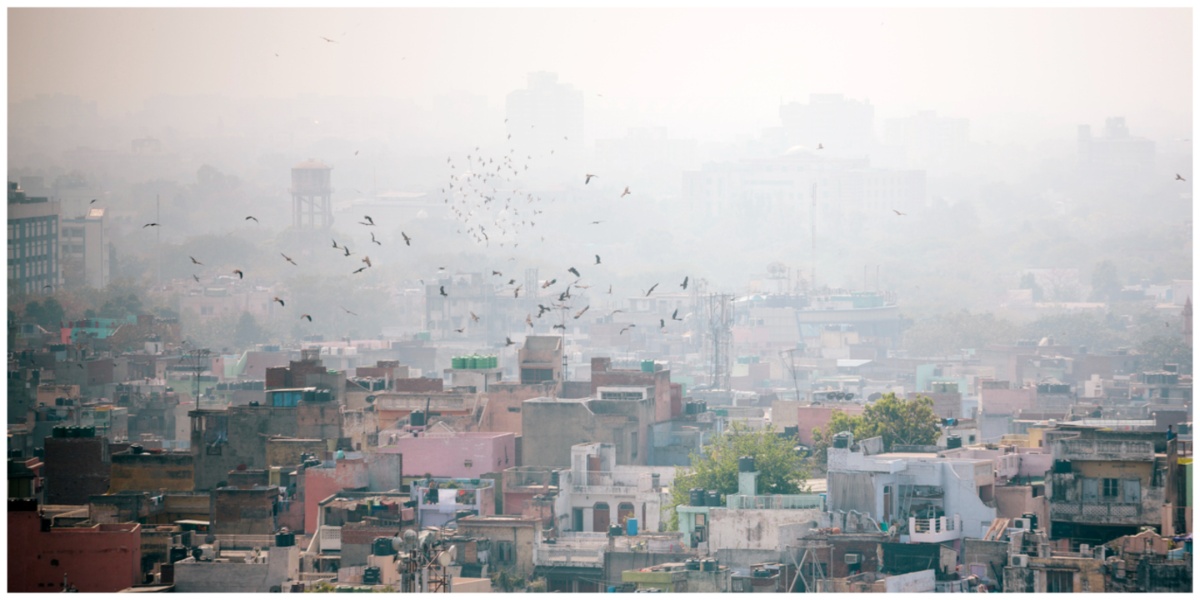
Every five µg/m³ rise in annual pollution exposure corresponded with a drop in kidney function.

Synopsis: A study of more than 12,000 adults in Chennai and Delhi found that long-term exposure to PM2.5 was associated with declining kidney function. The association was stronger in Delhi, where pollution levels were substantially higher. Researchers say the findings add to evidence linking air pollution with cardio-kidney-metabolic health.
A six-year study of 12,000 adults in two Indian cities found that particle pollution, or particulate matter (PM)—tiny droplets of solid and water suspended in the air—enters the bloodstream and correlates with declining kidney function.
The study, published in Kidney International Reports, was based on the Centre for Cardiometabolic Risk Reduction in South Asia cohort research in Chennai and Delhi. Scientists measured blood samples, tracked pollution levels near each participant’s home, and followed 12,064 people through three rounds of testing between 2010 and 2017.
Researchers measured kidney function using a score called eGFR—short for estimated glomerular filtration rate. It tells doctors how efficiently the kidneys filter waste from blood. A higher score means the kidneys work well. A falling score, over months or years, signals the kidneys are losing capacity.

Pollution levels were measured in micrograms per cubic metre (µg/m³), a unit for how many pollution particles sit in a cubic metre of air. The higher the number, the dirtier the air.
Every five µg/m³ rise in annual pollution exposure corresponded with a drop in kidney function. Chennai’s eGFR fell by 0.31 points for every five-unit rise in pollution. Delhi’s fell by 0.40 points.
Dr V. Mohan, Chairman of Dr Mohan’s Diabetes Specialities Centre and the co-author, explained the score. “eGFR is an estimate of how well the kidneys are filtering the blood,” he told South First. “When eGFR falls over time, it can indicate that kidney function is declining.”
He cautioned that people should weigh the numbers carefully. “A small change in eGFR does not mean that an individual has suddenly developed kidney disease. From a public-health perspective, what matters is that small changes can accumulate over many years. If a person already has diabetes, high blood pressure or other risk factors for kidney disease, we want to minimise every additional factor that could potentially affect kidney health,” he said.
Also Read: Karnataka launches salt reduction plan
Delhi’s air carried far more pollution than in Chennai. At the three measurement points, Chennai’s yearly pollution levels averaged 32.9, 37.1 and 29.6 µg/m³. Delhi’s numbers ran 118.0, 123.4 and 130.0 µg/m³, roughly four times higher.
That gap showed up in the kidney data too. Over five years, Delhi’s average kidney score fell by 6.5 points. Chennai showed no meaningful change across the same period.
“PM2.5 exposure in Delhi was higher than in Chennai, and the decreases in eGFR were greater in Delhi than in Chennai,” the authors said.
Dr Mohan warned against reading pollution as the sole explanation.
“Delhi and Chennai are very different environments,” he said. “There can be differences in diet, climate, occupation, socioeconomic conditions, lifestyle and exposure to other environmental factors. So the city-level findings are important, but we should not reduce the difference to one factor alone.”
Also Read: In 2024, 1 in every 3 medically certified heart attack deaths occurred in Tamil Nadu
Researchers built a computer model to predict pollution levels across small one-kilometre squares covering all of India. The model used data from 1,056 ground pollution monitors, satellite images, weather patterns, land-use records, and factory emissions. Researchers ran four separate prediction methods simultaneously and combined the results into one daily estimate for each square of land.
“We assigned exposure to participants based on the distance between their household and the nearest grid point,” the study noted. When researchers checked the model’s predictions against real pollution monitors, the two matched closely.
Chennai contributed 6,722 participants, Delhi added 5,342, and researchers followed both groups through 2010, 2013 and 2016. The typical participant’s age was around 40 in Chennai and 44 in Delhi, a young group for a kidney study.
Researchers fed blood samples drawn at each visit into a standard formula that converted one blood marker into the eGFR kidney score. Researchers repeated the calculation using a second formula, built specifically for South Asian bodies, and got matching results.
Many participants dropped out during the course of the study—34 percent in Chennai and 42 percent in Delhi failed to give blood samples at every visit. Researchers built a statistical correction to overcome this, using age, sex, education, wealth, weight and health history to account for who left the study and why.
Also Read: Telangana govt medical college teaches radiodiagnosis without an MRI machine on campus
The study found that as pollution exposure climbed, kidney scores fell in both cities even after researchers accounted for neighbourhood wealth and the passage of time.
“Even though the associations were clinically small in magnitude, these significant findings in a relatively younger population could indicate increased vulnerability to PM2.5 and cumulative worsening over time,” the authors wrote.
Subgroup patterns diverged between cities, though researchers stopped short of calling these differences confirmed. In Chennai, the pollution-kidney link ran strongest among men, older participants and people without high blood pressure. In Delhi, it ran strongest among men, younger participants and people carrying more weight around the waist.
Also Read: Stem cell therapy for autism can only be offered in approved clinical trials, Centre tells states
Diabetes ranks among the biggest drivers of kidney disease, which raises an obvious question: does pollution hit people with diabetes harder?
Dr Mohan said the data did not support such a conclusion. “We specifically looked at whether diabetes changed the relationship between PM2.5 exposure and kidney function,” he said. “We did not find a statistically significant difference based on diabetes status. So at this stage, we cannot say people with diabetes are definitely more vulnerable to the kidney effects of PM2.5.”
One finding stood out. “We observed larger declines in kidney function among people with diabetes in Delhi even after accounting for PM2.5,” he said. “It deserves further investigation.”
Dr Mohan did not pin it on one cause. “Duration of diabetes, blood sugar control, blood pressure, weight and other factors can all play a role. I would look at this finding as an important clue rather than a final answer.”
He advised controlling blood sugar, maintaining healthy blood pressure, managing heart risk and regularly checking kidney function. “Air pollution may turn out to be another factor, but we need more evidence before we can establish that people with diabetes face specifically higher risk,” he added.
Also Read: One high nutrient should trigger a warning: ICMR-NIN’s case as SC scrutinises FSSAI labels
The study did not pin down a single biological cause, but pointed to several factors. It said fine particles trigger inflammation throughout the body, disrupt the nervous system’s control over organs, and damage the lining of blood vessels.
“When we breathe in fine particulate matter, its effects are not necessarily restricted to the lungs,” Dr Mohan said. “These changes can potentially affect the very small blood vessels that are critical for kidney function.”
A second pathway runs through a hormone system that controls blood pressure and kidney performance together.
“This is particularly relevant in diabetes because diabetes itself can damage small blood vessels over time,” Dr Mohan said. “There may be overlapping pathways through which metabolic disease and environmental exposure affect the kidneys.”
A third pathway skips signalling altogether: fragments of pollution particles may cross directly into the bloodstream and reach kidney tissue.
Dr Mohan explained further. “Our study is an epidemiological study. It shows an association; it does not establish which particular biological mechanism is responsible.”
Previous research linking pollution to kidney health was mostly conducted in countries with far cleaner air. The authors cited yearly pollution averages of 11.4 µg/m³ in a US study, 13.1 µg/m³ in Belgium, and 25.0 µg/m³ in South Korea. Chennai’s lowest reading still topped 29 µg/m³. Delhi’s lowest reading exceeded 118 µg/m³, a gap the authors called “4 to 10 times less than those for Chennai and Delhi in our data.”
Also Read: Over 7% of daily deaths in 10 Indian cities linked to PM2.5 pollution
Very few participants developed diagnosed kidney disease, called chronic kidney disease or CKD, during the six-year study period, limiting the ability to test the PM2.5-CKD link.
Dr Mohan called it the study’s central limitation. “We did not have enough new CKD cases in this cohort to properly assess whether PM2.5 exposure was associated with the development of new kidney disease,” he said.
Researchers also lacked reliable measurements for other pollutants, such as vehicle exhaust gases, limiting their ability to isolate PM2.5’s individual role. The cohort covered only two cities, and the authors cautioned against extending results to rural India or the country as a whole.
The cohort data stretched back to the 2010s, which raised a question: does an analysis built on older numbers still speak to India today?
Dr Mohan explained. “It is important to distinguish between when the data were collected and when the study was conducted and published. This is a recent analysis of a valuable long-running study, and the findings are relevant to the current discussion.”
He agreed with the study’s caution about applying these numbers directly to today’s cities, and wanted to see the work repeated. “I would very much like to see this repeated using more recent Indian data, more cities, longer follow-up and other pollutants, because in real life people breathe a mixture of pollutants, not just one.”
“Our study gives us an important signal: long-term PM2.5 exposure was associated with changes in kidney function over time,” Dr Mohan said. “But the next step is to understand what this means in terms of actual kidney disease.” He wanted future studies to track lasting kidney decline, newly diagnosed cases and progression to advanced disease, with particular focus on people with diabetes.
“The question we need to answer is not just, is there a link between air pollution and kidney function, but can reducing exposure actually prevent or slow kidney disease,” he said. “Answering that would have important implications for clinical care and public health.”
On where clean air fits into prevention, Dr Mohan placed it as an addition, not a replacement.
“For a person with diabetes, controlling blood sugar and blood pressure, managing cholesterol and heart risk, maintaining a healthy weight and regularly monitoring kidney health remain the foundation of prevention,” he said. “If pollution contributes to the long-term burden of chronic disease, reducing exposure could have benefits across several conditions. I would see clean-air initiatives as an additional layer of prevention, rather than a substitute for good diabetes and kidney care.”
India carries a heavy kidney disease burden already. The authors cited estimates placing 143 million people in the country with chronic kidney disease as of 2022, out of roughly 850 million worldwide. Known risk factors, diabetes, high blood pressure, and excess weight, explained some part of that burden.
This study extends earlier work from the same research group, which linked long-term pollution exposure in Indian cities to diabetes, high blood pressure and higher death rates. Kidney function now joins that list.
Nobody exposed to Delhi’s air will develop kidney disease overnight. But six years of data now sit alongside evidence on diabetes, blood pressure, and mortality, all pointing to the same conclusion: pollution reaches further into the body than the lungs and heart alone.
(Edited by Majnu Babu).



