

Published Sep 23, 2026 | 1:17 PM ⚊ Updated Sep 24, 2026 | 10:13 AM

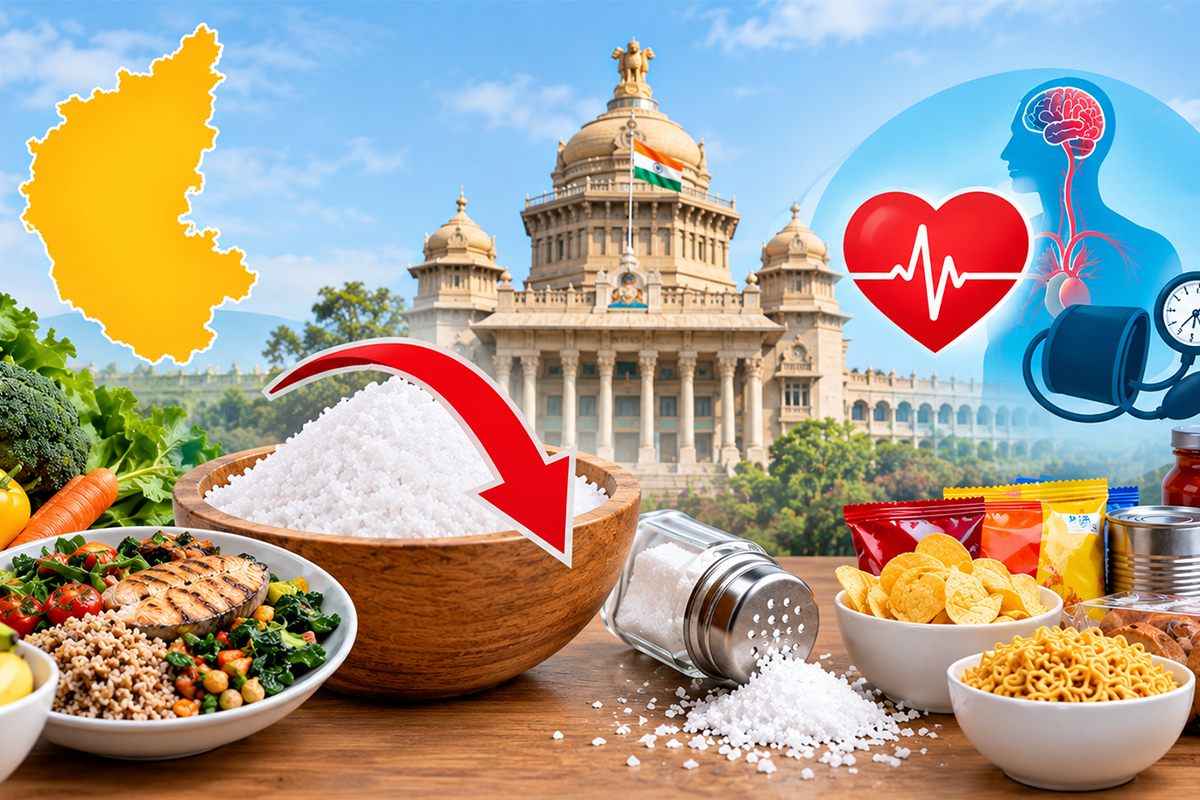
The action plan proposes reducing discretionary salt use and promoting healthier food choices. (AI generated image)

Karnataka has launched a state action plan to reduce salt consumption and promote healthier diets, with the government targeting a 30% reduction in population salt intake by 2030 as part of efforts to prevent hypertension, stroke and other non-communicable diseases.
Health and Family Welfare Minister UT Khader launched the Karnataka State Multisectoral Action Plan for Salt Reduction and Promotion of Healthy Dietary Habits at a Technical Advisory Group meeting at Vidhana Soudha on Tuesday.
The plan seeks to address salt consumption across households, food consumed outside the home, and processed and packaged foods.
Excessive salt consumption is a major dietary risk factor for high blood pressure and cardiovascular disease. The action plan notes that Indians consume an estimated 8-11 grams of salt a day, nearly twice the World Health Organization’s recommendation of less than 5 grams a day.
Khader called for coordinated action across government departments to promote healthier diets and reduce dietary risk factors linked to NCDs. He proposed a State Steering Committee involving multiple departments to drive sustained action on healthier dietary habits.
The action plan proposes reducing discretionary salt use, promoting healthier food choices and encouraging manufacturers to reduce salt in processed and packaged foods.
It also calls for stronger dietary counselling within the health system and support for research on potassium-enriched low-sodium salt.
The state plans to work towards the global target of a 30% reduction in population salt intake by 2030 while moving towards the WHO recommendation of less than 5 grams per person per day.
The strategy builds on existing initiatives in Karnataka, including salt-reduction measures under PM POSHAN, dietary counselling through Gruha Arogya, and dietary risk-factor counselling under the National Programme for Prevention and Control of Non-Communicable Diseases (NP-NCD).
A Technical Advisory Group chaired by Dr Bhagavan B C, Vice-Chancellor of Rajiv Gandhi University of Health Sciences, has been constituted to provide technical guidance and support evidence-based action.
The group includes representatives from the Department of Health and Family Welfare, Sri Jayadeva Institute of Cardiovascular Sciences and Research, NIMHANS, academic and nutrition institutions, and public health organisations.
During the meeting, Dr Dinesha B, Director of Sri Jayadeva Cardiovascular Health Research Institute, highlighted the importance of evidence-based and coordinated action to address dietary risk factors.
Dr Jnanesh Kamath, Joint Director, Health and Family Welfare, presented the key priorities, objectives and proposed actions under the state plan.
Other participants included Dr Raghunandan, DD-NCD; Dr Amrut Kadam of RGUHS; Dr U S Vishal Rao, member of the Consultative Group to the Principal Scientific Adviser to the Government of India; Dr Syed Imran Farooq and Dr Manika Sharma of Resolve to Save Lives; and Amit Karnik of Vision for Social Development.
The action plan was developed through collaboration between government departments, academic institutions, public health experts, development partners and civil society organisations, with technical support from Resolve to Save Lives and Vision for Social Development.
Karnataka said the multisectoral approach would bring together existing government programmes and departments to strengthen efforts towards healthier diets and food environments.
Also Read:
Indians pay more for pink salt social media influencers promote, ignores cheaper, healthier products
Same taste, fewer heart attacks: Indian scientists endorse a salt that does two jobs at once
(With inputs from Sumit Jha. Edited by R Rajesh Kumar.)



