

Published Jul 11, 2026 | 12:15 AM ⚊ Updated Jul 11, 2026 | 12:15 AM

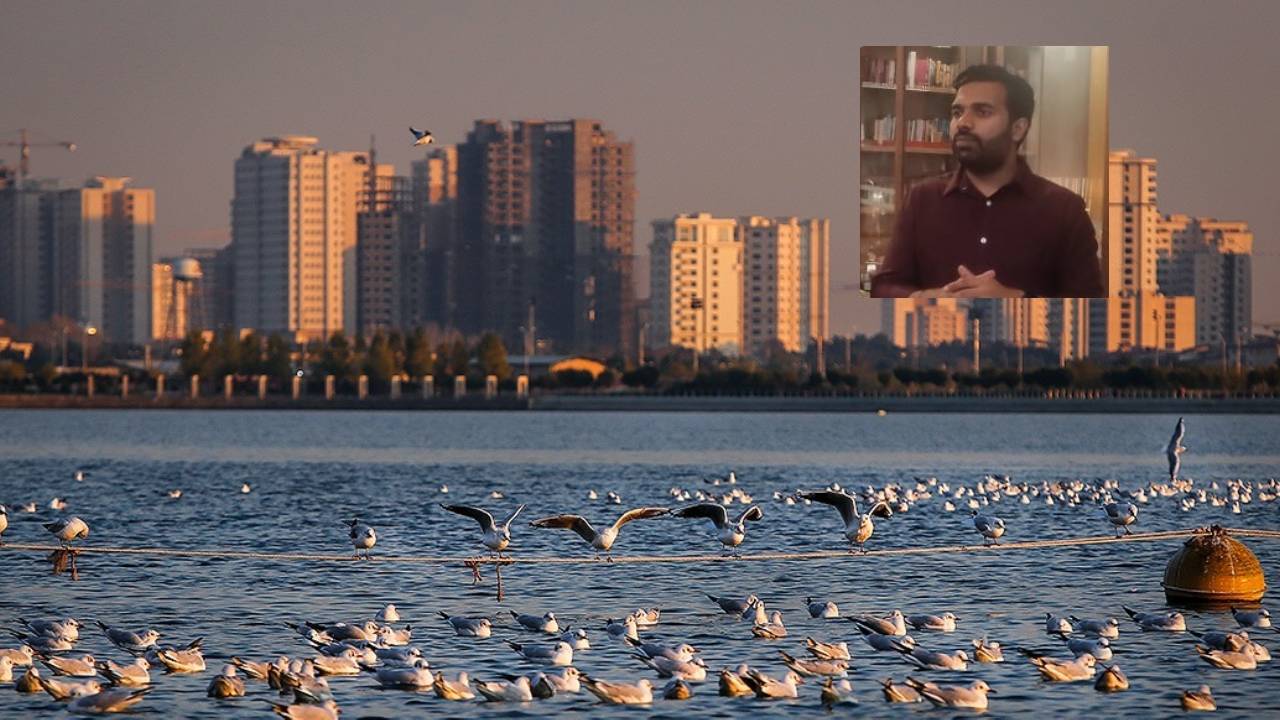
Saurabh Shukla (inset) found Tehran much better than several European cities. Pictured, the artificial Chitgar Lake in northwest Tehran. (Wikimedia)

Synopsis: Journalist Saurabh Shukla recounts reporting from Tehran. He says Iran is a much misunderstood country, thanks to the Western media narrative. He found Iran to be a resilient, modern, and defiant nation.
When journalist and Red Mike co-founder Saurabh Shukla announced his plan to visit Iran during the height of the West Asia conflict, those around him took it as a joke.
“The decision to go to Iran was met with laughter,” Shukla said while speaking at Resilience & Unity: Truth, Courage and Journalism in Times of Conflict, an interaction organised by Oneness in Bengaluru on Friday, 10 July. “I told them I must go because there were lots of misconceptions. We are exposed to only one side of the story through the Western media.”
For Shukla, the assignment was driven by his desire to witness the conflict firsthand rather than rely on narratives emerging from outside the region.
Journalist Saurabh Shukla (Centre) at the event in Bengaluru.
Reaching Tehran proved to be an obstacle. Obtaining a journalist visa was difficult. Shukla and fellow journalist Saurabh Shahi travelled using an Iraqi pilgrim visa since the Iranian Embassy in Delhi was reluctant to facilitate their request.
Their journey took them to Sharjah and Qatar before they embarked on a gruelling 17-hour drive to the Iranian capital, Tehran.
“I was apprehensive whether I’d even be allowed in,” he recalled.
Also Read: How Ayatollahs of Iran betrayed their revolution’s mentor
Once in the country, however, the reality he encountered differed sharply from the image often portrayed internationally.
“People think of Iran and immediately they think of hijab and the Islamic rule. Tehran was much better than several European cities, with good roads, modern buildings and excellent infrastructure,” he said, adding that the city was dotted with political graffiti, including one criticising US President Donald Trump.
Beyond the infrastructure, it was the resilience of ordinary Iranians that left the deepest impression on him.
Shukla described covering public demonstrations that began around 7 pm and continued until 11 pm, after which the participants returned to work the following morning.
“People were strong-willed and ready to die for their country,” he said.
Also Read: The myth and reality of Ali Shariati
Shukla said external threats, such as Trump “threatening to wipe out the entire civilisation,” only strengthened the Iranian national resolve, with many members of the diaspora returning home during the conflict that began on 28 February.
He recounted the story of a mutual friend who was opposed to the regime but resigned his job at Stanford University to return home during the war.
“It’s not about the regime; it’s the country. I want to die here. Country comes first,” the friend reportedly told him.
Drawing from his observations, Shukla argued that Iran remains “the most misunderstood country in the world.”
He pointed to several aspects of everyday life that contradicted prevailing perceptions, including women visiting local markets without hijabs, despite the law technically remaining in place.
“You are requested to wear a hijab. It’s not compulsory,” he said, adding that women are often more educated than men and that universities reserve seats for male students.
Also Read: Boycotting US, Israeli products could end West Asia conflict
He described the Strait of Hormuz as Iran’s most significant strategic asset. “Hormuz is a nuclear weapon Iran has, and they won’t let go of it, knowing the implications it will have on the global oil economy.”
Despite decades of economic sanctions, Shukla described Iran as a largely self-reliant economy with locally manufactured vehicles, strong educational institutions and a highly literate population. Inflation, however, remained one of the country’s biggest challenges due to currency devaluation and limited foreign trade.
He also highlighted Iran’s sizeable Jewish community having representation in the legislature, Christian memorials honouring fallen soldiers and a metro station named after Maryam-e- Moghaddas (Mother Mary).
As the session drew to a close, Shukla said the experience had reshaped his understanding of both journalism and human resilience.
“Reporting in Iran and the journey taught me the power of resilience. The sight of young men and women running in the streets of Tehran without any fear as bombs rained will always stay etched in my mind,” he added.
(Edited by Majnu Babu).



