
Published Jun 12, 2026 | 6:33 PM ⚊ Updated Jun 12, 2026 | 6:33 PM

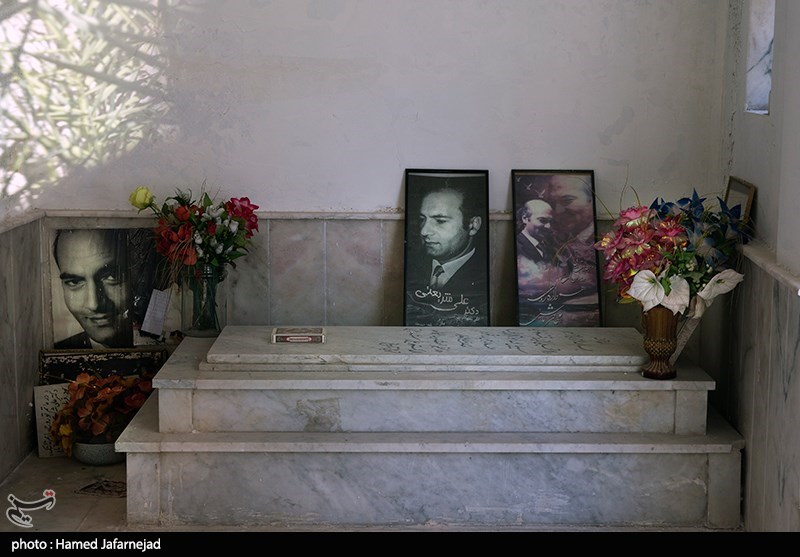
Ali Shariati's tomb. Courtesy: Tasnim News Agency (Creative Commons)

Synopsis: Western scholars frequently describe Shariati as an “Islamic Rousseau,” whose ideas inspired a revolution later appropriated by more radical actors. This comparison has important limitations.
On June 10, 2026, The South First published an article by Faisal CK entitled How Ayatollahs of Iran betrayed their revolution’s mentor.
The central argument of the article is that Dr Ali Shariati, as the intellectual architect of the 1979 Iranian Revolution, envisioned an emancipatory and egalitarian Islam, while the Islamic Republic that emerged after the revolution institutionalised a clerical order fundamentally at odds with his aspirations.
This claim deserves careful examination, not only because of its implications for understanding modern Iranian history, but also because it reflects a broader tendency within Western and secular scholarship to interpret the Iranian Revolution through conceptual frameworks derived from European political experience.
A review of Faisal CK’s published writings reveals a consistent commitment to secular constitutionalism, democratic pluralism, and the protection of minority rights. His analyses frequently criticise the fusion of religious identity and state power and advocate political arrangements grounded in constitutional liberalism and social equality.
Viewed in this context, his interpretation of the Iranian Revolution can be understood as part of a broader concern regarding the dangers of ideological states. The article is therefore not merely a historical assessment of Iran but also a reflection on contemporary debates concerning religion, democracy, and state authority.
Such a perspective is legitimate and deserves consideration. However, whether it adequately explains the historical evolution of the Iranian Revolution remains open to debate.
There is little doubt that Dr Ali Shariati played a significant role in mobilising Iranian youth during the final decade preceding the revolution. Through his reinterpretation of Shi‘i history, anti-colonial discourse, and emphasis on social justice, he inspired many students and intellectuals to view Islam as a revolutionary force against oppression.
Yet acknowledging Shariati’s influence does not necessarily mean that he designed the institutional structure of the Islamic Republic.
A distinction must be made between:
1. Intellectual mobilisation of society;
2. Constitutional and institutional construction of the post-revolutionary state.
Shariati belonged primarily to the first category. His writings energised revolutionary consciousness, but he neither drafted constitutional frameworks nor developed a comprehensive theory of governance capable of replacing existing political institutions.
The constitutional architecture of the Islamic Republic emerged principally from the jurisprudential theories of Imam Khomeini and other senior clerical figures, including Ayatollah Mohammad Beheshti and Ayatollah Morteza Motahari. Their intellectual foundations were rooted in Shi‘i jurisprudence (Fiqh), particularly the doctrine of Wilayat al-Faqih (Guardianship of the Jurist), rather than in Shariati’s sociological writings.
Consequently, describing Shariati as the sole “mentor” or “architect” of the Islamic Republic oversimplifies a far more complex historical reality.
Another common assumption is that Shariati stood in direct opposition to the clergy.
Historical evidence suggests a more nuanced picture.
Shariati strongly criticised what he regarded as passive, conservative, and court-aligned religious institutions. However, he also admired activist and reform-oriented clerics who challenged authoritarianism and foreign domination.
His disagreement was therefore not with religion itself, nor with every member of the clerical establishment, but with particular forms of religious authority that he believed had become detached from social justice and revolutionary responsibility.
Likewise, many revolutionary clerics appreciated Shariati’s role in awakening political consciousness among young Iranians, even while disagreeing with aspects of his methodology and intellectual synthesis of Islam with modern social theories.
The relationship was therefore characterised by both cooperation and tension rather than outright antagonism.
Western scholarship frequently describes Shariati as an “Islamic Rousseau,” portraying him as an intellectual precursor whose ideas inspired a revolution later appropriated by more radical actors.
While attractive as a narrative device, this comparison has important limitations.
Jean-Jacques Rousseau formulated theories of popular sovereignty grounded in secular political philosophy. Shariati, by contrast, remained deeply rooted in an Islamic worldview. Even his calls for social transformation were framed within religious categories and Shi‘i symbolism.
Reducing Shariati to a Middle Eastern version of Rousseau risks obscuring the religious foundations of his thought and imposing European historical categories onto a distinct civilizational experience.
The central question is whether the Islamic Republic betrayed Shariati’s vision.
The answer largely depends on which aspect of Shariati’s legacy is emphasised.
If one focuses on his commitment to social justice, anti-imperialism, support for the oppressed, and resistance to foreign domination, proponents of the Islamic Republic argue that these themes remain integral to the state’s official ideology.
If, however, one emphasises his critiques of bureaucratic authority, his suspicion of institutionalised religious power, or his aspiration for continuous revolutionary renewal, critics argue that certain dimensions of his thought were marginalised after the establishment of the state.
In this sense, the relationship between Shariati and the Islamic Republic cannot be reduced to either complete continuity or complete betrayal.
Rather, it reflects a selective process in which different aspects of his intellectual legacy were adopted, reinterpreted, or sidelined according to evolving political realities.
The Iranian Revolution was not the product of a single thinker, social class, or ideological current. It emerged from the interaction of multiple forces:
• Shi‘i jurisprudence and clerical leadership;
• Revolutionary Islamic intellectualism;
• Anti-imperialist nationalism;
• Popular religious culture;
• Socioeconomic grievances;
• Political opposition to authoritarian rule.
Ali Shariati was undoubtedly one of the most influential voices within this broader revolutionary coalition. Yet he was neither the sole architect of the revolution nor the exclusive source of legitimacy for the Islamic Republic.
Consequently, framing the history of post-revolutionary Iran as a simple story of the “Ayatollahs betraying Shariati” risks replacing historical complexity with ideological narrative.
A more balanced conclusion is that the Islamic Republic represents one particular institutional outcome of a revolution in which Shariati was an important participant, but not its only intellectual founder. Whether that outcome fulfilled or departed from his aspirations remains a legitimate subject of scholarly debate rather than a settled historical fact.
(Dr Habib Reza Arzani is the Cultural Counsellor of the Islamic Republic of Iran in Malaysia. Views are personal.)



