

Published Jun 10, 2026 | 8:00 AM ⚊ Updated Jun 10, 2026 | 8:00 AM

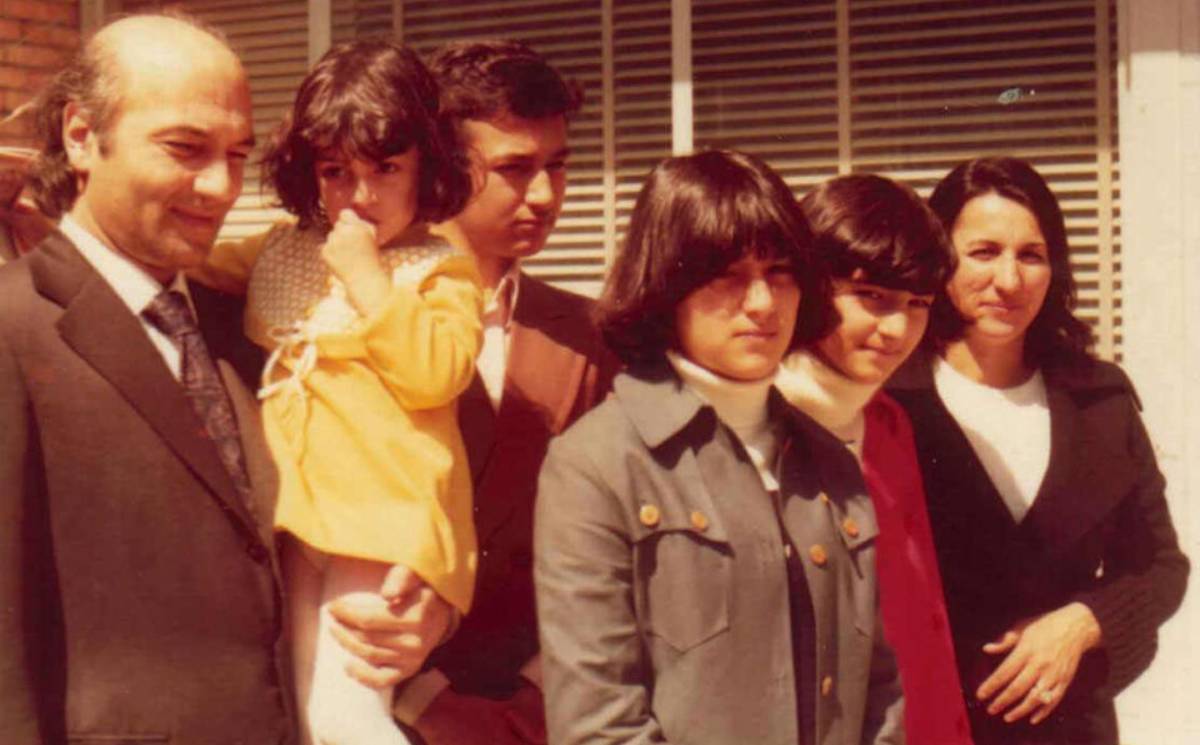
Shariati and his family a day after his release from prison. Courtesy: Wikimedia Commons

Synopsis: Shariati was the intellectual architect of the 1979 Iranian Revolution, yet the theocracy that rose from its ashes systematically devoured his vision.
To be the intellectual engine of a revolution is a glorious fate; to be its first casualty is a tragic one.
Much as Jean-Jacques Rousseau provided the moral blueprint for the French Revolution only to have his “General Will” twisted into the Reign of Terror, Ali Shariati served as the “Islamic Rousseau” who gave Iran’s youth a reason to believe. By fusing Marxist social justice with a revolutionary “Red Shi’ism,” this Sorbonne-educated sociologist built the ideological bridge that allowed a secular generation to cross over to Ayatollah Khomeini’s cause.
Yet, just as the French Revolution eventually devoured its own ideals, the Islamic Republic transformed Shariati’s vision of spiritual liberation into a rigid clerical hierarchy. In the end, the regime didn’t just inherit Shariati’s revolution-it betrayed the very man who made it possible, honouring his name on street signs while burying the anti-clerical heart of his message.
Ali Shariati died two years before the revolution and lies buried beside his heroine, Syeda Zaynab, in Damascus. He was deeply moved by the revolutionary mind of Imam Husayn, seeing justice as the cornerstone of thought and action for both. Shariati upheld the message of “commanding good and preventing evil”-the very cause for which Imam Husayn set out from Makkah and Zaynab from Karbala.
A child prodigy and bibliophile, Shariati spent his youth in his father’s vast library. “I can remember each of his books, even their bindings. I love that good, sacred room greatly,” he later recalled.
From his father, Muhammad Taqi Shariati, who rejected stagnant Shia ritualism, he imbibed the idea of a revolutionary Islam anchored in justice. Consequently, Ali Shariati’s perspective evolved into a realist, socialistic Islam diametrically opposed to injustice and oppression.
Shariati’s political activism began through the Socialist Movement of Believers-in-God in the mid-1490s. He later joined Mehdi Bazargan’s National Resistance Movement and was arrested in 1957 at the age of 23, where he was brutally tortured by the Shah’s police.
Upon his release, he travelled to France for higher studies, forming the Young National Movement of Iran in Europe to advocate for the end of the monarchical regime. During his time in France, he gained proximity to the Pan-Africanist intellectual Frantz Fanon, supporting the Algerian freedom movement even at the cost of imprisonment.
His ideological stance was marked by his first publication, The Egalitarian School of Islam: The History of the Evolution of the Philosophy (1955). He wrote: “Movement [for a just society] always arises from among the people because it is the aristocratic and ruling class who most often refuse to limit conservatism in order to preserve their own position. Their efforts are inevitably directed towards preventing any social change, for change could endanger their interests.”
This observation squarely fits today’s Iranian geronto-theocratic regime, where the ruling Ayatollahs ruthlessly suppress the movements of the youth and common people to serve their own narrow socio-political interests.
Also Read: The blow of the West Asian war on Telangana
Shariati perceived Islam in sharp contrast to Western philosophy. He emphasised the role of prophets as social reformers and crusaders for justice who discerned social laws to mould a fair society. His political philosophy was a defiant “Third Way,” rejecting both the hollow mimicry of Western secularism and the stagnant traditionalism of the conservative clergy. He viewed Western-style liberal democracy as a deceptive tool of the elite, arguing instead for a “Guided Democracy” (Democracy-ye Ershadi)-a temporary revolutionary tutelage designed to awaken the masses’ consciousness before granting them full self-governance.
By fusing spiritual mysticism (Erfan) with social equality (Barabari) and liberty (Azadi), he sought to create an indigenous, activist Islam focused on worldly justice rather than private ritual. Ironically, while Shariati envisioned this guidance as a path to ultimate liberation, his theories provided the structural blueprint for the very permanent theocracy that eventually silenced his radical, anti-clerical soul.
In the Islamic Republic, Shariati’s mustaz’afin (the oppressed) were stripped of their role as the “engine of history” and redefined as subjects requiring permanent clerical guardianship. By institutionalizing Velayat-e Faqih, the state inverted Shariati’s “Guided Democracy” into an absolute, stagnant hierarchy. The regime weaponised his critique of “Westoxification” to justify the violent subjugation of women like Mahsa Amini, turning the female body into a state battlefield.
The 1988 “Death Commissions,” which extrajudicially executed thousands of political prisoners, were overseen by a four-man panel including a young Ebrahim Raisi, a key architect of the state’s most brutal purge. As the ultimate enforcer of the state’s “Black Shi’ism,” Ebrahim Raisi personified the violent betrayal of Shariati’s vision by serving as a lead architect of the 1988 “Death Commissions.” His trajectory from a young prosecutor of the purges to the President who oversaw the crackdown on Mahsa Amini’s generation marks the final triumph of the executioner over the mentor.
This bloodletting was courageously denounced by Ayatollah Montazeri, Khomeini’s designated successor, whose principled opposition to the “crime” led to his immediate dismissal and permanent house arrest. This marked the moment the regime definitively chose absolute terror over internal dissent. From the 1988 commissions to the gallows of 2022, the revolution transformed Shariati’s liberating “Red Shi’ism” into a cage, prioritising the survival of the elite over the human dignity of the youth he sought to empower.
From the 2009 Green Movement’s cry of “Where is my vote?” to the 2022 “Woman, Life, Freedom” uprising, Iran has witnessed a persistent cycle of unrest. These movements demonstrate a deepening rift between a tech-savvy youth and a rigid theocracy that relies on internet blackouts and lethal force to maintain its grip.
As Michael Axworthy wrote in Revolutionary Iran: A History of the Islamic Republic (2019): “It is a repressive, autocratic regime run in the interests of a narrow clique that systematically denies political freedom and natural rights to the Iranian people. The defects of the regime have only become more apparent since the crisis that followed the presidential elections of June 2009. The regime continues to be responsible for systematic, serious abuses of human rights.”
Shariati provided the intellectual steam for the revolutionary engine of 1979. As Axworthy noted: “Shariati’s radical Islam, both fully Iranian and fully modern, was a strong influence on the generation of students that grew to adulthood in the 1970s; slogans drawn from his writings were elsewhere on the streets in 1979, and his face still appears on fresh graffiti in Tehran thirty years later.” Yet, if Ali Shariati was the “Islamic Rousseau,” the post-revolutionary government became its “Saturn.”
In Francisco Goya’s haunting painting, Saturn Devouring His Son, we see a deity driven to madness by the fear of his own displacement, animalistically consuming his offspring to forestall a prophecy of his downfall. There is no triumph in Saturn’s face-only a frantic, wide-eyed paranoia.
This is the precise portrait of the Islamic Republic: a regime so terrified of the revolutionary energy that brought it to power that it began to systematically “devour” its own architects, purging the very intellectuals and students who had marched with Shariati’s books in their hands.
By canonising Shariati while silencing his message, Iran performed a masterful act of ideological cannibalism. They kept the “martyr” but murdered the “mentor,” stripping his “Red Shi’ism” of its egalitarian soul and replacing it with a rigid, state-mandated “Black Shi’ism.” Shariati’s vision was of a faith that liberated the oppressed; the state he helped birth used his rhetoric to build a new class of oppressors.
In the end, the revolution did not just drift from its course-it consumed its own heart. Like Goya’s Saturn, the regime stands alone in a dark void, clutching the remains of the vision it was supposed to protect, proving that power’s first instinct is often to destroy the very hands that crowned it.
Today, caught between the Scylla of external aggression and the Charybdis of internal oppression, the challenge before the Iranian people is to reclaim the pristine ideals of Ali Shariati-the true spirit of the 1979 Revolution.
(Faisal CK is Deputy Law Secretary to the Government of Kerala. Views are personal).
Also Read: How the US–Israel war on Iran blindsided Hyderabad’s medical tourism ambitions



