

Published Oct 11, 2026 | 10:31 AM ⚊ Updated Oct 11, 2026 | 10:31 AM

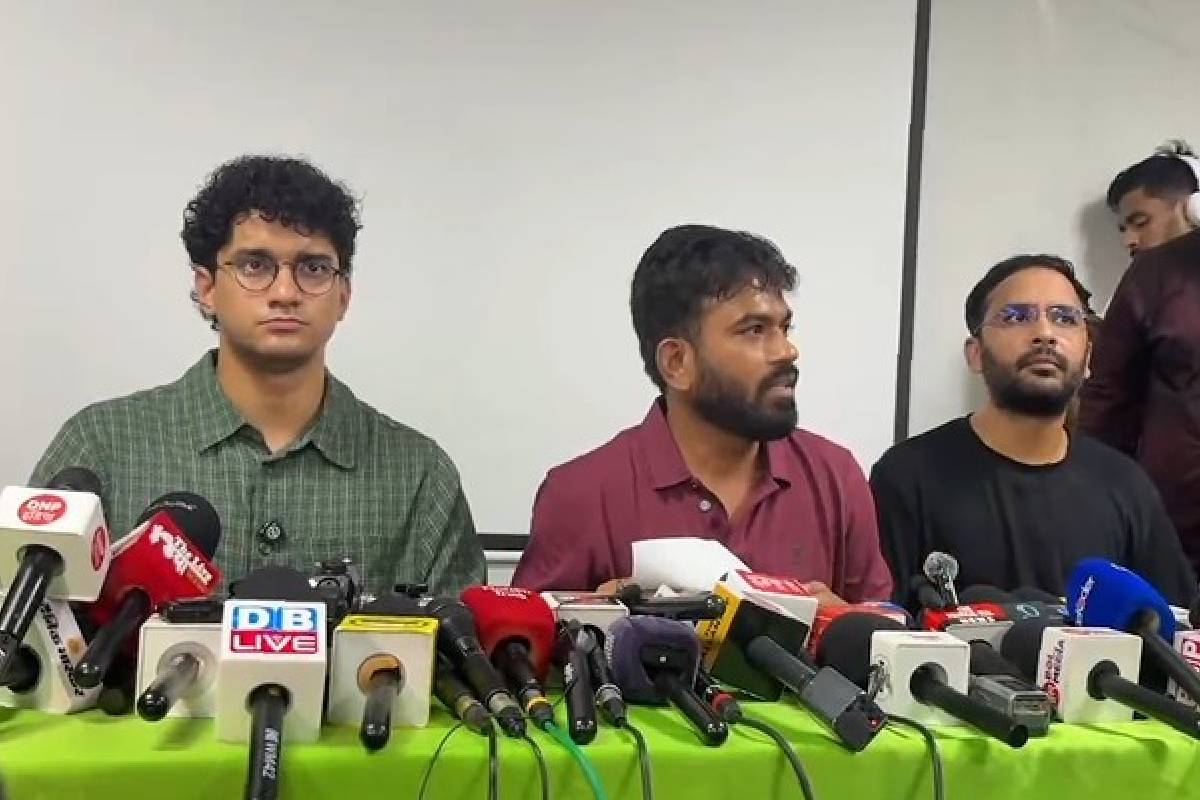
CJP leaders Abhijeet Dipke, Sourav Das and Asutosh Ranka addressing a press conference. (File Photo)

Synopsis: A Delhi court has ordered the release of Cockroach Janta Party founder Abhijeet Dipke and party leaders Saurav Das and Ashutosh Ranka, on the condition that they maintain peace for one year. The trio were detained from an Air India flight arriving from Bengaluru on Saturday and produced before an Executive Magistrate on Sunday.
A Delhi court has ordered the release of Cockroach Janta Party (CJP) founder Abhijeet Dipke and party leaders Saurav Das and Ashutosh Ranka, on the condition that they maintain peace for one year, CJP legal affairs head Ratna Singh said.
“Executive Magistrate court releases Abhijeet, Saurav and Ashutosh. Condition – no breach of peace for one year,” Singh said in a post on X on Sunday, 11 October.
Condition – no breach of peace for one year.
— Ratna Singh (@whattalawyer) October 11, 2026
The order comes a day after the trio were detained from an Air India flight on its arrival in Delhi from Bengaluru. They had travelled to the national capital to lead a protest demanding the resignation of Chief Election Commissioner Gyanesh Kumar and the withdrawal of the Special Intensive Revision (SIR) of electoral rolls. The CJP had called the protest with the support of Left student groups, trade unions and other organisations.
The trio were produced before an Executive Magistrate at Delhi Cantonment Police Station at 9 am on Sunday. Delhi Police had invoked Sections 126 and 170 of the Bharatiya Nagarik Suraksha Sanhita (BNSS) against them.
Section 126 provides for preventive proceedings by an Executive Magistrate against a person likely to breach the peace or disturb public tranquillity. It allows the Magistrate to require the person to execute a bond to keep the peace for up to one year. Section 170 empowers the police to arrest a person without a warrant or a Magistrate’s order when the statutory conditions for preventing a cognizable offence are met.
Also Read: The road to Jantar Mantar: A day inside India’s sealed capital
Delhi was placed under its biggest security lockdown since the COVID-19 pandemic ahead of the protest.
More than 26,000 police personnel were deployed across the city, with barricades erected at multiple locations. The Delhi Police prepared 12 detention centres, which began filling up as the day progressed.
Police also detained protesters travelling by train. By evening, around 3,000 people had been taken into custody.
Forty-five metro stations were shut and internet services were suspended. Student neighbourhoods were barricaded, police personnel were deployed outside major campuses, and bus services and cab movement into Connaught Place were severely curtailed.
Before Dipke was detained, several CPI(M) central committee members staying at Kerala House, on the same road as Jantar Mantar, attempted to march towards the protest site.
Former Kerala Chief Minister and senior CPI(M) leader Pinarayi Vijayan was among those detained. CPI(M) general secretary MA Baby and several others accompanying him were also taken into custody.
(Edited by Dese Gowda)



