
Published Aug 30, 2026 | 6:00 AM ⚊ Updated Aug 30, 2026 | 6:00 AM

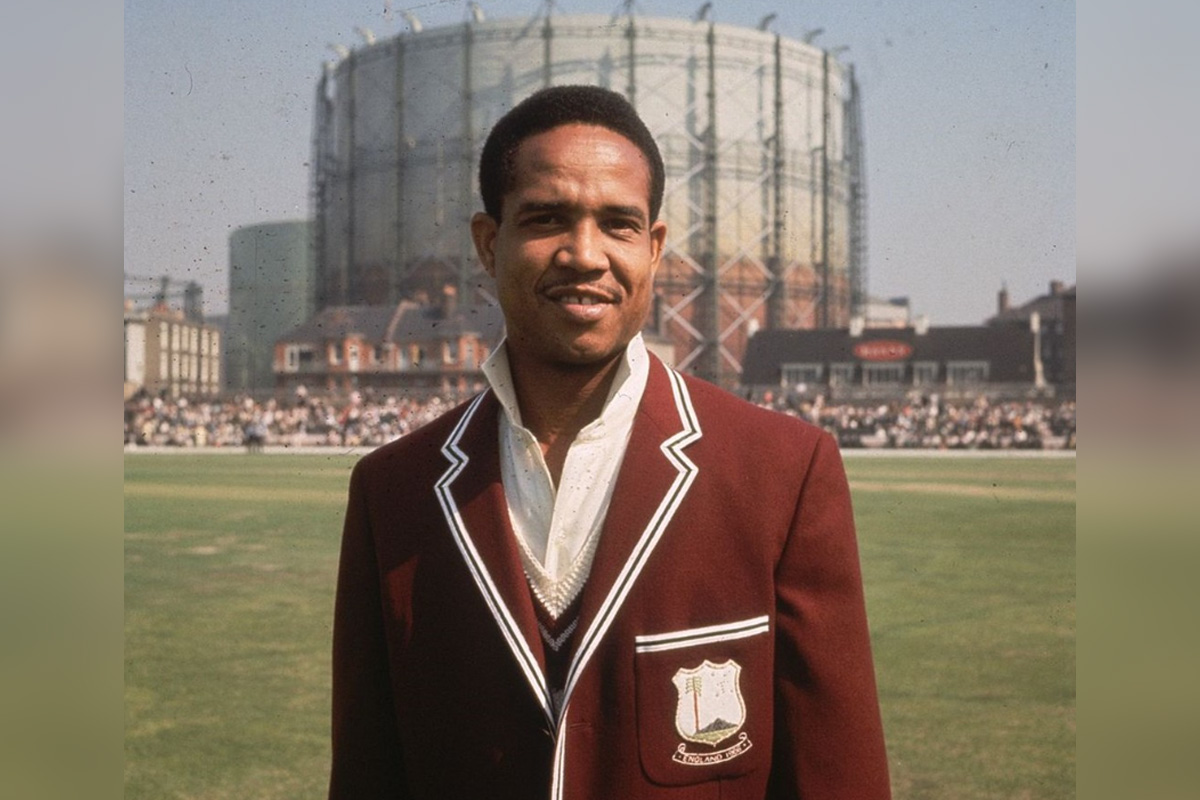
Sir Garry Sobers

Synopsis: Sir Garry Sobers. Cricket will not see the like of him again. These are memories of a fan who had the wonderful fortune of seeing the great man both at his absolute best and at the “dying of the light”, when there were still moments of magic, including an innings that Bradman rated the best he had ever seen.
Like most Indian children, I was obsessed with cricket. Growing up in Calcutta, my life revolved around games in parks or, often, in the roads and lanes in our neighbourhood where you had to compete with older kids for a turn with the bat or ball.
In 1966/67, I saw my first Test at Eden Gardens between India and the West Indies. The game would become infamous for the second day’s play being abandoned due to a riot when spectators invaded the ground, set fire to several stands, and clashed with police after the authorities had oversold tickets. The match was dominated by the West Indies, who won easily by an innings and 45 runs in a series which they clinched 2-0 at a canter, with the final game at Madras being drawn.
It would be the first of two times I saw Garfield St. Auburn Sobers play in person. In a quiet series, he made a half-century in every innings. Along with 342 runs at an average of 114, he also took 14 wickets and five catches.
At Eden Gardens, he made 70 in quick time. He arrived at 5 down for 259, walking to the wicket leaning forward in his famous Groucho Marx walk, his sleeves buttoned down, wearing a sleeveless sweater, and characteristically capless. He stroked his runs out of 131 additional runs added.
I noticed that Sobers did not move his feet much, merely transferring his weight back (his preferred position) or forward. He hit the ball with frightening power with a fairly light bat by today’s standards. When driving, he picked the bat up high and followed through until it was behind his head in an almost 360-degree arc. Only Brian Lara at his best with an exaggerated back lift comes anywhere close. One drive went about 2 metres to the left of the mid-off, who did not have time to move as the ball sped past him.
He was a class above the other batsmen, which included excellent players like Conrad Hunte, Rohan Kanhai, Basil Butcher, Clive Lloyd, and Seymour Nurse. It looked like Sobers was having a net, which in real life he rarely did, preferring his other loves like golf, horse racing, or socialising.
The spin attack of Chandrasekhar, Bedi (on his debut), Venkataraghavan, and Russi Surti was decent but no match for him. One delicate late cut, where the ball seemed almost in wicket-keeper Budhi Kunderan’s gloves when he made contact, lives on in my memory. India did not have real fast bowlers, so I did not get to see his thunderous hooks and pulls.
Later, taking the new ball, he bowled at sharp pace, varying late inswingers to the right-hander with one that went across, looking for the edge. He bowled spin, especially in the second Indian innings, mainly Chinamen and googlies. Sobers took 7 wickets for 98 in the match, supporting Lance Gibbs who took 7 wickets for 87 from nearly 68 overs.
Sobers was then at the peak of his career, evidenced by his dominant performances on the 1966 tour of England and for the Rest of World XI against England in 1970, a hastily organised replacement for the cancelled tour of Britain by apartheid South Africa.
The last time I saw him was on another Rest of the World XI in 1971/72 in Australia (we had emigrated there by then), also hastily convened when a planned South African tour was stopped. The Rest of the World won the series 2-1, although a rain-shortened game in Sydney, which I attended, probably flattered the visitors.
Sobers was in decline. Yet, despite ill health, including persistent knee and shoulder problems (which prevented him from bowling his deceptive googly), and marital issues, he made 341 runs at an average of 48.71, took 9 expensive wickets, and 4 catches. During the series, every day of which I watched on TV or at the ground (skipping school where necessary), he played an innings which Sir Donald Bradman considered the best he had seen.
Going into the third game, the World XI trailed 0-1, after a drawn match in Brisbane and a disastrous showing in Perth, where, on a fast wicket, Dennis Lillee took 12 for 92 including 8 for 29 in the first innings. Leading a side which was, at best, mediocre, certainly compared to the World side he led in England in 1970, Sobers was under pressure.
Having made scores of 20 not out, 15 not out, 0, and 33, he made a duck in the first innings in the third match in Melbourne, caught at second slip by Keith Stackpole off Lillee. The World XI’s first innings of 184 suggested another disappointing showing. Sobers (3 for 67) and Tony Greig (4 for 41) restricted the Australians to 285, but the World XI in their second innings were 3 for 146 (effectively 3 for 45) when Sobers strolled to the wicket. He stayed for 6 hours and 16 minutes, faced 324 balls, hit 35 fours and 2 sixes, and made 254 runs, with minimal support primarily from fast bowler Peter Pollock, who made 54 runs in an 8th-wicket partnership of 186.
Bristling because of press suggestions that he and the World XI were not taking the matches seriously, the match found the Sobers of his peak. Mixing power and touch, he drove, cut, pulled, hooked, and deflected an attack including Lillee, Massie, Jenner, O’Keeffe, Walters, Greg Chappell, and Stackpole all around the ground.
A Lillee 90-miles-an-hour yorker was driven straight so hard that the bowler had not even finished his follow-through when the ball bounced 20 metres back after hitting the fence with a crack. He repeatedly cut and drove the Australian fast bowler square on the off-side with three men on the fence in a 30-metre band reduced to spectators. His two sixes were off the quickish leg spin of Kerry O’Keeffe, both straight drives where the ball never rose more than 15 metres off the ground and cleared the fence (one of the longest boundaries in world cricket). Lillee and O’Keeffe finished with figures of 3 for 133 (30 overs) and none for 121 (27 overs).
The World XI won the game by 96 runs with Sobers picking up three close-in catches off spinners Bedi and Intikhab Alam. After the rain-affected draw in Sydney, the World XI won the final game in Adelaide on a wearing pitch to take the series.
I saw Sobers in the Sydney match too. He made 15 and 2, being bowled in the second innings by an innocuous tossed-up delivery from part-time left-arm finger spinner John Inverarity. Sobers laughed as he made his way from the field. The ball had floated above the sightboard making it difficult to see. He bowled a prolonged spell in the second innings, both pace and spin, only picking up one wicket.
In Adelaide, his contributions were minor as Greig and the spinners engineered a victory. But with the new ball, he terrorised new opener Ashley Woodcock, an able first-class player, who found it impossible to read which delivery would curve late back into him and the one that kept going across. Woodcock eventually edged Sobers to wicketkeeper Bob Taylor.
It was the “dying of the light”. There were a few subsequent moments which came close to his previous highs, including a meticulously compiled 150 at Lord’s. He played the last of his 93 Tests in early 1974.
In Tests, Sobers made 8,032 runs at an average of 57.78 with 26 hundreds, 30 fifties, and a highest score of 365 not out (which stood for 36 years as the highest individual Test innings). Alongside 109 catches, mostly in close, particularly at leg slip or backward short leg, including 39 off the bowling of Lance Gibbs, he took 235 wickets, bowling pace, finger and wrist spin, at an average of 34.03, taking 6 wickets 6 times with a best of 6 for 73. In addition, playing for the World XI (games which are now unfairly not recognised as Tests), he made 929 runs at 61.63 (3 centuries and 3 fifties), took 30 wickets at 29.53, and 11 catches.
The statistics are only part of the story because Sobers was never interested in records. Like Vivian Richards, he played to dominate and win. Both were prone to getting bored and were simply not interested in racking up numbers for their own sake.
It is common to compare Sobers to Jacques Kallis, the only all-rounder with a comparable record.
The South African made 13,289 runs at 55.37 (with 45 centuries, 58 fifties and a highest score of 224), took 292 wickets at 32.65 (5 five-fors and a best of 6 for 54), and 200 catches. A common measure of all-rounders is the difference between batting and bowling averages. For Sobers, it is 23.75 while Kallis’ is 22.72. None of the other notable all-rounders such as Keith Miller, Ian Botham, Imran Khan, Kapil Dev, or Richard Hadlee come close to these achievements.
It is difficult to compare players across different eras because of different pitches, variations in the game’s laws, quality of the opposition and that of their own team. The truest judgement is from knowledgeable observers, including players, who have seen the individual play. None of them rates Kallis in the same bracket as Sobers.
There were weaknesses. He often batted himself too low in the order, preferring number 6 or even 7 when probably 4 or 5 would be more appropriate. He argued it allowed him to play the kind of innings needed. Despite his sound reading of the game, his record as a captain is ordinary. But he lacked the quality that, say, Frank Worrell or Clive Lloyd enjoyed. Like many great sporting men and women, he overestimated the capabilities of others less talented than himself. He also saw cricket as a game and sought to win, often willing to take risks, hating negative play.
The beginning of the end of his captaincy was in a Test against England in Trinidad in 1968 when he made a generous declaration, setting the visitors a target of 215 in 165 minutes. It proved to be an unwise decision. The West Indies were without their only fast bowler because Charlie Griffith had pulled a muscle in the first innings, and the rest of the attack, other than Gibbs and Sobers, was inexperienced. It was a bet on the erratic leg-spinner Willie Rodriguez, who had had success against England in an earlier tour match on a wearing pitch. Experienced in run chases from domestic one-day cricket, England won comfortably.
With the rewards for playing a minuscule fraction of that available to much lesser players today, Sobers, then one of the best-paid cricketers in the world, was forced to play almost continuously from his debut to retirement, including in English league and county cricket, Australian Sheffield Shield and club matches, and exhibitions. The wear and tear on his body, in an era before coaches, personal trainers, dietitians, physiotherapists, psychologists, and doctors, was considerable. He played with injuries fairly constantly for the latter half of his career. This meant that he did not always play to his full ability, reserving that for special occasions such as his innings at Melbourne.
Sobers was, in some ways, an uneven figure in his views and personal affairs. Less interested in and not well aware of politics, his decision to play in a tournament in apartheid Rhodesia remains controversial. But he never played in South Africa. In a match for South Australia against the visiting South African side, he wore his West Indian Test cap, with the permission of his captain, during a long innings to make sure the opposition players got a long look at him and it. His drinking, gambling, and difficult personal life remain problematic. But, on the cricket field, he remains peerless.
Everyone who has known him speaks of his humility. Consistently self-deprecating, he preferred to talk about anything other than his deeds. After hitting six sixes in an over in a first-class game, he found himself in a public bar amongst people who wanted to talk about the event. Sobers promptly left for a quieter location.
Many cricketers benefited from his advice, usually provided over a beer or two in the opposition dressing room which Sobers habitually frequented at the end of each day’s play. His humour shows in an oft-repeated anecdote. Geoffrey Boycott asked why he was persistently falling leg-before-wicket to Sobers. The West Indian pointed out that Boycott’s much-vaunted technique was imperfect. He planted his front foot and tended to play around it, making him susceptible to a late inswinger, a weakness that would haunt the opener for much of his career. The next morning, Sobers dismissed Boycott with a ball going across him, which he edged. As he trudged off, the bowler remarked that he hadn’t asked about that ball.
Asked about players, Keith Miller, an extraordinary all-rounder in his own right, made a succinct judgement: “Best batsman, Bradman; best cricketer, Sobers!”
The West Indian played in a period before video coverage and technological analysis, such as speed guns, degree of swing or turn, etc. Only snippets of grainy footage of his performances between 1956 and 1970 exist.
Sadly, the effluxion of time and disappearance of those who actually saw him play at the height of his powers means that the extraordinary deeds of Sir Garfield St. Auburn Sobers will fade from memory.
With his death, cricket has lost its greatest player. The game will never see his like again.
Also Read:
From Being There to Wag the Dog: When cinema gets political without saying so
Book Essay: “At the risk of being pedantic…?”
Trump-ite world or not, there was never any West—only arguments about it
Satyajit Das is a former banker and author of numerous technical works on derivatives and several general titles. His latest book, The Everything Bubble: A Guide to the New Age of Financial Speculation and Phantom Wealth, will be released in 2027. He has also written on ecotourism – In Search of the Pangolin (2006) (with Jade Novakovic) and Wild Quests: Journeys into Ecotourism and the Future for Animals (2024).
(Edited by R Rajesh Kumar.)



