

Published Aug 20, 2026 | 10:00 AM ⚊ Updated Sep 15, 2026 | 11:42 AM

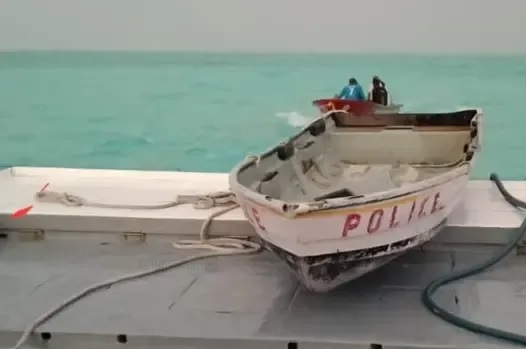
A Coast Guard vessel and Dornier aircraft were also deployed during the initial days of the search.

Synopsis: Two Lakshadweep Police personnel have been missing for seven days after a boat accident near Suheli Island, with no breakthrough in the search. Families and locals allege a slow response, lack of specialised equipment and poor coordination, while family said that crucial hours were lost. The families are now seeking urgent Central intervention and expanded SAR operations.
Perhaps no Union Territory in India has an administration that reaches as deeply into the everyday lives of its people as Lakshadweep. From what residents can drink and where they can live to whether they can ride a two-wheeler or even pluck coconuts from trees, the administration’s presence is felt in the most ordinary aspects of life.
Yet, when two of its own security personnel disappeared at sea, that all-encompassing authority has been met with an unsettling silence.
Seven days have passed since a boat carrying three Lakshadweep policemen on routine patrol near the uninhabited Suheli Island met with an accident. Two of them, Nabeel KM and Hidayathulla KC, remain missing, while Ummer survived.
The trio had been deployed at the Suheli Island police outpost on 1 August for a 20-day stint and were reportedly the only policemen stationed there.
The questions are difficult to ignore.
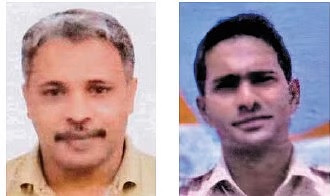
Hidayathulla and Nabeel
A high-wave and coastal-flood warning, including a swell surge/Kallakadal alert is now in effect across Lakshadweep from 19 August to 20 August, according to the Indian National Centre for Ocean Information Services (INCOIS).
But what happened during the crucial golden hours after the accident? Where were the specialised search capabilities expected in a strategically sensitive maritime region? And why has the search failed to bring answers even after a week?
Also Read: Heritage slayers? Many moves to strip Lakshadweep of its identity, land, language and culture
The incident occurred around 12.30 pm on 11 August when the three officers, posted at the remote Suheli Island police outpost, were on patrol.
According to an officer familiar with the incident, the men managed to cling to rocks for some time after the boat lost control but strong currents eventually swept them in different directions.
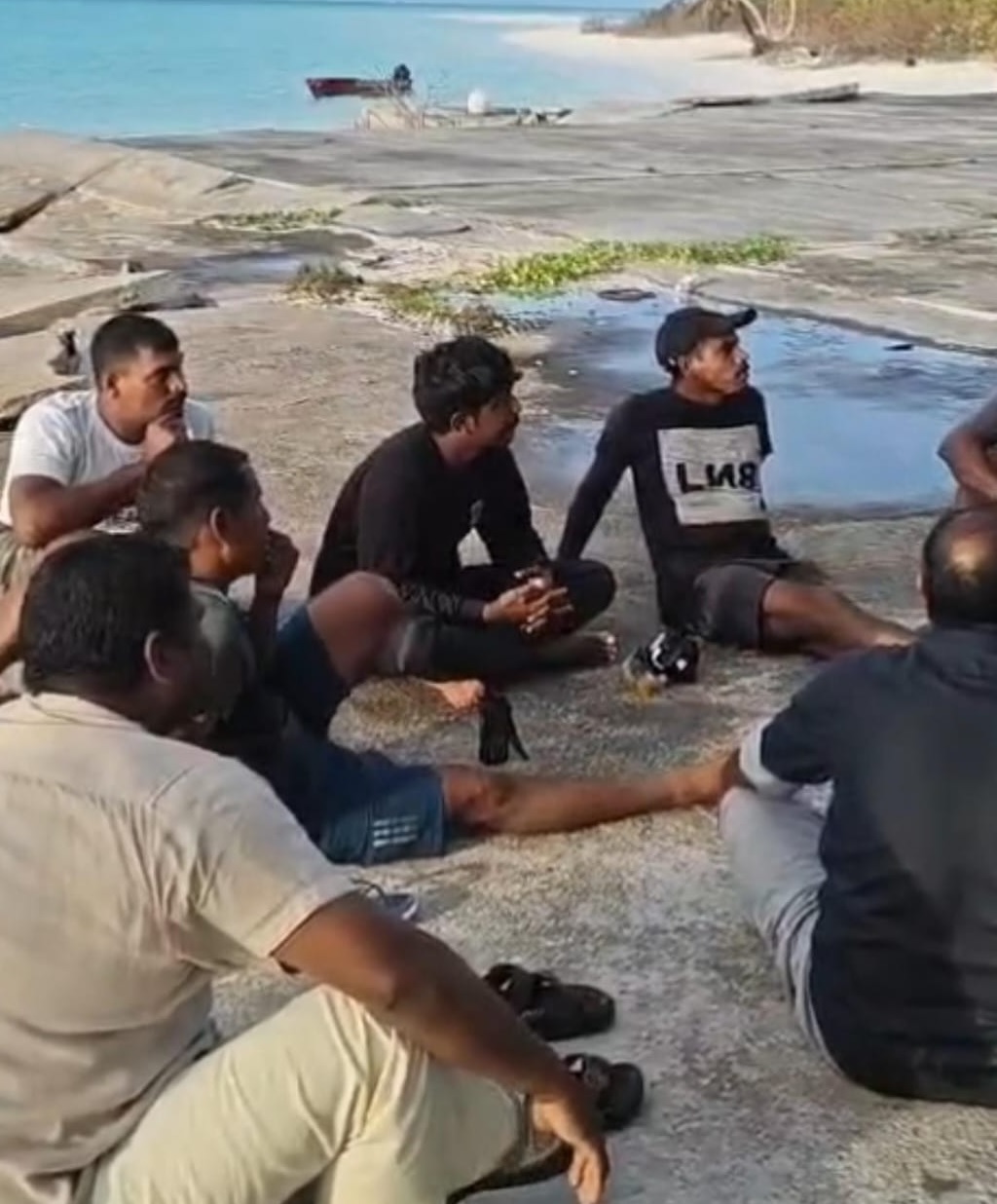
Police and local fishermen were engaged in the search.
Ummer survived after being carried towards the island. He swam and walked for hours before reaching the outpost. He initially waited, believing the other two officers might have reached the shore or been rescued.
He eventually alerted senior officials around 3.05 am on 12 August.
The official stressed that the absence of a clear and effective standard operating procedure for such emergencies remains a serious concern in a strategically important island territory.
The Lakshadweep administration, police, Indian Coast Guard and local fishermen have since conducted sea and aerial searches, along with drone surveillance and localised diving operations.
A Coast Guard vessel and Dornier aircraft were also deployed during the initial days.
However, the search has so far yielded no results.
Speaking to South First, Youth Congress leader Sabith said the operation has been severely affected by a lack of specialised equipment and difficult monsoon conditions.
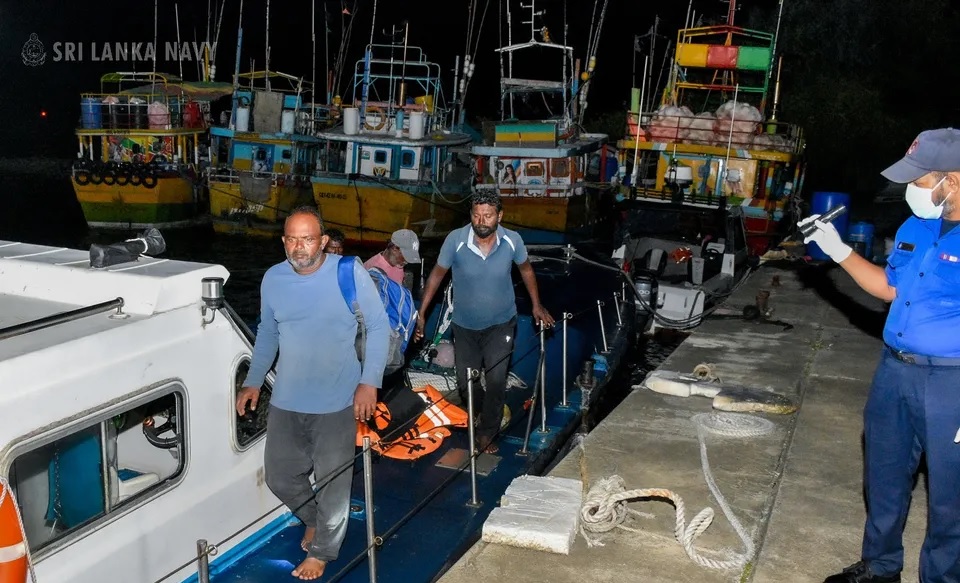
The Sri Lankan Navy rescued Minicoy fishermen from last month
He said the helicopter deployed for the search was an air ambulance and was not suitable for deep-sea search operations.
Sabith said the absence of adequate drones, radars, powerful binoculars and specialised search equipment has further restricted the operation. He also raised questions over the response during the crucial initial hours, saying the ”golden hour” was lost as the incident was reported in the early hours of 12 August, when much of the administrative machinery was occupied with Independence Day-related arrangements.
According to Sabith, local fishermen have voluntarily joined the search despite not receiving permission, spending their own money and taking risks in rough seas.
Also Read: Lakshadweep admin axes key degree programmes on eve of admissions, leaves students in limbo
Mohammed Naseeb, brother of missing officer Nabeel, told South First that the family is facing immense emotional distress. Nabeel’s father was also a police officer, while his mother is undergoing cancer treatment and is awaiting her final chemotherapy session.
Hidayathulla’s four daughters are also waiting for their father to return.
Naseeb said the immediate need is for better radar systems, binoculars, drones, deep-sea search equipment and vessels capable of operating in rough monsoon conditions. He said the tragedy should not become another case where families are left without answers because of limitations in rescue infrastructure.
The incident has revived concerns over Lakshadweep’s preparedness for maritime emergencies. Residents point out that this is not the first instance of fishermen or civilians going missing at sea, while limited equipment and coordination often leave local communities dependent on fishermen and other islanders during rescue efforts.
Questions are also being raised over whether assistance could have been sought from neighbouring states or countries earlier.
A recent incident in July highlighted the possibility of regional cooperation.
The Sri Lankan Navy rescued four Indian fishermen from Minicoy who had been stranded at sea and brought them safely to Dikowita harbour, where the Sri Lankan Navy and Coast Guard provided assistance.
For the families of Nabeel and Hidayathulla, however, the immediate concern is finding the missing men.
Seven days have passed, and the families are now demanding that the Defence Ministry, Home Ministry, Indian Navy and Coast Guard take over or substantially strengthen the operation with specialised assets.



