

Published Jul 30, 2026 | 11:56 PM ⚊ Updated Jul 30, 2026 | 11:56 PM

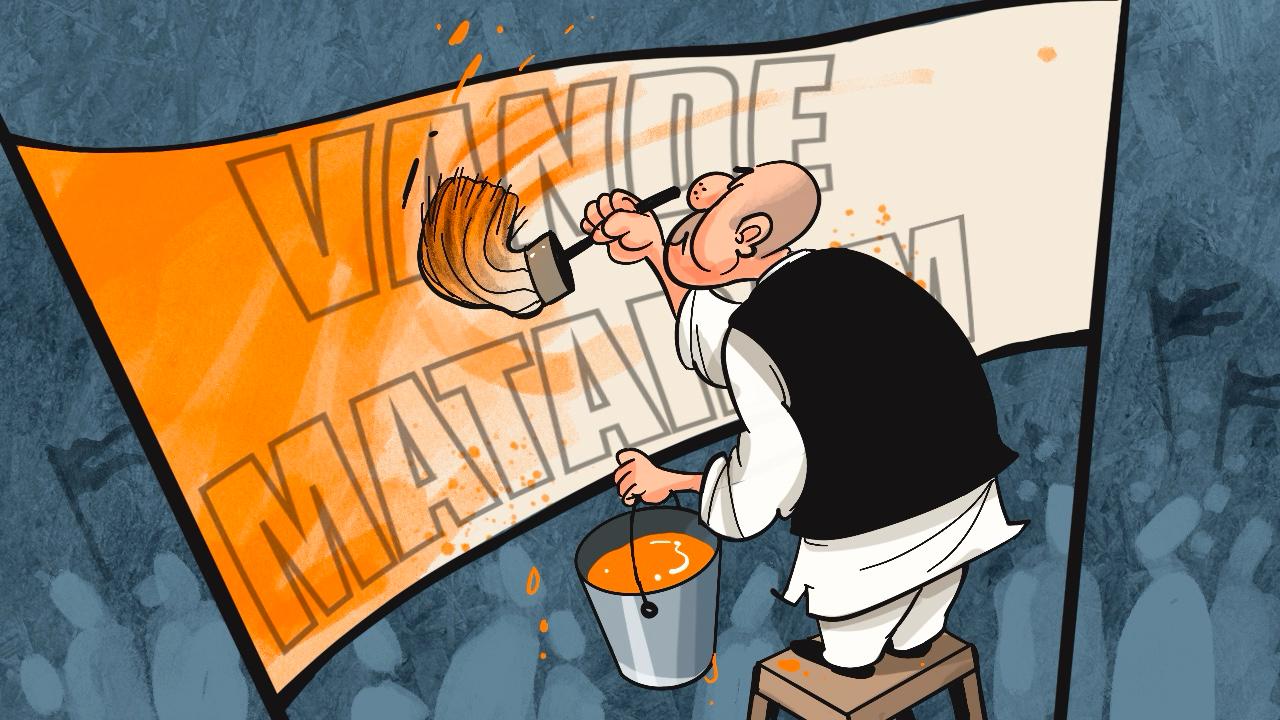
Vande Mataram

Synopsis: The Parliament has passed the Prevention of Insults to National Honour (Amendment) Bill, 2026, granting protection to Vande Mataram and penalising the prevention of the singing of all of its six stanzas. The Bill amends Section 3 of the 1971 Act, which deals with the national anthem, to include the national song and grant it the same statutory protection. The Bill was passed amid protests by the Opposition MPs.
The Lok Sabha on Thursday, 30 July, passed the Prevention of Insults to National Honour (Amendment) Bill, 2026, despite criticism from the Opposition parties, including the Congress and the DMK, who described the move as an attempt to divide people. The Bill seeks to grant national song Vande Mataram the same statutory protection as that of the national anthem. It also makes it an offence to intentionally prevent or cause a disturbance during the singing of Vande Mataram.
The Prevention of Insults to National Honour (Amendment) Bill has amended Section 3 of the Prevention of Insults to National Honour Act, 1971, to accommodate Vande Mataram, granting it legal protection.
Section 3 of the 1971 Act specifically addresses the national anthem ‘Jana Gana Mana’ and states that anyone who intentionally prevents the singing of it or causes a disturbance to any assembly engaged in singing it shall be punished with imprisonment extending up to three years, or a fine, or both. The new Bill has amended the Section to include the national song and also mentions singing of all six stanzas of the song.
The amended Bill extends the same punishment to a person or group that (a) prevents the singing of the National Anthem or the National Song; or (b) causes disturbance to any assembly engaged in such singing.
For repeated offenders, the amendment issues the same punishment as mentioned in Section 3A of the 1971 Act.
The 1971 Act, which came into being on 23 December 1971, deals with any act of disrespect towards national symbols and the national anthem. It covers the national anthem, the Constitution and the national flag.
Section 2 of the existing law deals with insults to the Indian National Flag and the Constitution of India. It stipulates that anyone who burns, mutilates, defaces, defiles, disfigures, destroys, tramples upon, or otherwise shows disrespect to the Flag or the Constitution in a public place can face imprisonment for up to three years, a fine, or both.
However, according to the law, comments criticising the Constitution, the national flag or government measures, when made with a view to securing lawful amendment or alteration, do not constitute an offence under Section 2.
Section 3 of the law specifically deals with the national anthem, while 3A, added as an amendment in 2003, covers punishment for repeated offenders.
Also Read: Beyond the Cockroach Janta Party protests: The next test for governments and institutions
The Bill was passed in both the Houses amid protests by the Opposition MPs. The Bill was introduced in Rajya Sabha on 24 July by Minister of State for Home Affairs Nityanand Rai. It was approved by the Upper House on 29 July amid protests by the Opposition MPs, who also staged a walkout.
The Bill was passed by the Lok Sabha on Thursday. Speaking during a debate on the Bill, DMK MP Kanimozhi called it a disrespect to people of Tamil Nadu and an attempt to divide people.
Speaking during the discussion in RS, Rashtriya Janata Dal MP Manoj Jha said, “reverence cannot be legislated.”
“During my student life we used to sloganeer saying, ‘Vande Mataram, kar le thodi sharam [have some shame]’. Will that become an insult? I am also asking this on behalf of the youth. Vande Mataram, kar le thodi sharam,” Jha said.
Also Read: Uproar in Parliament after Rahul Gandhi accuses Amit Shah of ordering firing on student protestors
Vande Mataram is a poem written by Bankim Chandra Chatterjee in the early 1870s, which was later included in his novel Anandamath.
It was used during the freedom struggle but later also adopted by the right-wing groups as a communal cry to unite Hindus against Muslims during riots and conflicts. This prompted leaders like Mahatma Gandhi and Rabindranath Tagore to suggest the removal of its controversial parts and keep the first two stanzas to be used as the national song. The leaders also noted that some parts of the poem portray the nation as Goddess Durga, which goes against the religious beliefs of Muslims and Christians. At the advice of Gandhi and Tagore, the Congress under Jawaharlal Nehru decided to use just two stanzas of the song, a decision which was upheld by the Constituent Assembly in January, 1950, when Rajendra Prasad declared it the national song.
However, the RSS and the BJP have long been pushing for the use of Vande Mataram’s full version, with Prime Minister Narendra Modi repeatedly accusing the Congress of demeaning the song and limiting it to two paragraphs to “appease” its Muslim vote bank.
Earlier this year, the Union Home Ministry issued directives requiring the recital of the entire song at schools and at government functions, and mentioning that it should be given priority over the national anthem. When the directive was challenged before the Supreme Court, the court dismissed the petition, saying there was no penalty associated with failure to follow the instructions, as it was merely an advisory. However, the new Bill mentions disruption of the singing of the national song as an offence inviting penalty and punishment.
(Compiled by Fayisa CA)



