

Published Nov 10, 2026 | 4:50 PM ⚊ Updated Nov 10, 2026 | 4:50 PM

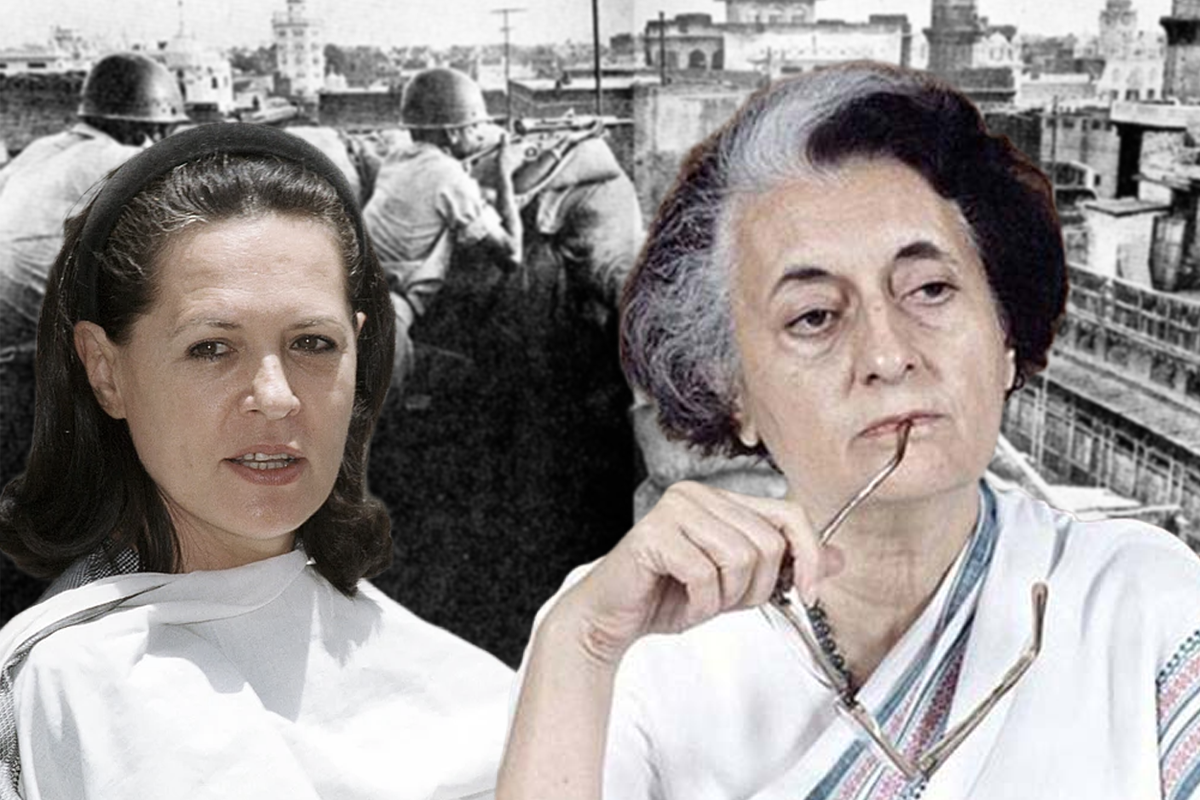
Operation Blue Star was carried out in June 1984, at the orders of Indira Gandhi.

Within hours of hitting the stands, Sonia Gandhi’s memoir Belonging: A Journey of Love has triggered a political row — as expected — over her recollection of former Prime Minister Indira Gandhi’s reaction to Operation Blue Star, which eventually led to the Congress leader’s assassination in 1984.
In her book, published in India by HarperCollins, Sonia Gandhi writes that her mother-in-law was filled with remorse after witnessing the aftermath of Operation Blue Star, which resulted in nearly 400 deaths, including 87 soldiers.
“As my mother-in-law watched the slow-moving record, I could see her face wet with tears — tears of pain and regret. I think: sorrow at the manner in which the siege has ended, at the large number of lives lost,” Gandhi writes.
Operation Blue Star was carried out in June 1984 at the orders of Indira Gandhi. Indian Army personnel stormed the Golden Temple in Amritsar, Punjab, which is considered Sikhism’s holiest shrine, to remove separatists demanding an independent homeland, Khalistan. Authorities said Sikh militants led by Jarnail Singh Bhindranwale had stockpiled large quantities of arms and ammunition within the temple complex.
The operation left a lasting scar on the Sikh community, eventually leading to Indira Gandhi’s assassination by her own bodyguards five months after the incident, on October 31, 1984.
In an interview with The Guardian ahead of her book’s release, Sonia Gandhi also stated that her mother-in-law was “prepared for her death” in the wake of the operation and had taken her grandchildren — Rahul Gandhi and Priyanka Gandhi — for a “goodbye” trip to their ancestral home in Kashmir.
“She told us what to do in case she died — so she knew… She was making preparations for her death. She told Rahul he must be brave and not to cry,” Sonia Gandhi said.
Also Read: Modi’s eye contact, Clinton’s sizing up, Indira’s temper: Sonia’s memoir drops rare anecdotes
Responding to Sonia Gandhi’s account of Indira Gandhi expressing remorse over the operation, AAP Delhi president Saurabh Bharadwaj said if it had been expressed by the former prime minister herself, it would have been significant.
“Sonia Gandhi is now attempting, in her own way, to help people move past these wounds. However, had Indira Gandhi herself expressed such remorse at the time, it would have carried far greater significance. This sentiment, coming from Sonia Gandhi, is merely hearsay — it cannot be independently verified. It should be viewed as a political statement tailored to the current political climate,” he said.
BJP MP Bhola Singh described the operation as part of a “recurring pattern in the Congress party’s modus operandi.”
Also Read: Sonia Gandhi: Reflections on a life bound by love, loss and belonging
In her book, Sonia Gandhi also talks about her mother-in-law’s fear of being assassinated by former defence minister George Fernandes after the Emergency. She states that Indira Gandhi’s fears were triggered by the assassination of Bangladesh President Sheikh Mujibur Rahman in August 1975.
“Even though she had been warned of a potential attack on Mujib, the murder was still a shock for my mother-in-law. The choice of the date for the massacre was also curious — our Independence Day. While mourning Mujib and his family, Indira Gandhi could not overlook the possibility of a similar fate for herself and her family. She feared, above all, for Sanjay’s safety,” she writes.
She also states that Indira Gandhi’s security chief had informed the former prime minister that her assassination had “certainly been considered within the group set up by the Railway trade unionist, George Fernandes.”
Sonia Gandhi notes that in a letter to Hungarian-Indian social worker Fori Nehru, Indira Gandhi had written, “Fernandes had intended to blow me up in Banaras.”
In her book, Sonia Gandhi also comments on the Emergency and the role of Sanjay Gandhi.
“Whatever his faults may have been, Sanjay was no coward. He was in fact without fear to the point of being reckless, and — as subsequent events showed — he had enough courage in him to face any situation and to fight his way back to political leadership,” she writes.
“What is undeniable, however, is that he had a significant role in decision-making during the Emergency period, despite lacking a constitutional locus standi for some of his political interventions,” Gandhi adds in her book.
(Edited by Fayisa CA)



