

Published Jun 25, 2026 | 7:03 PM ⚊ Updated Jun 25, 2026 | 7:03 PM

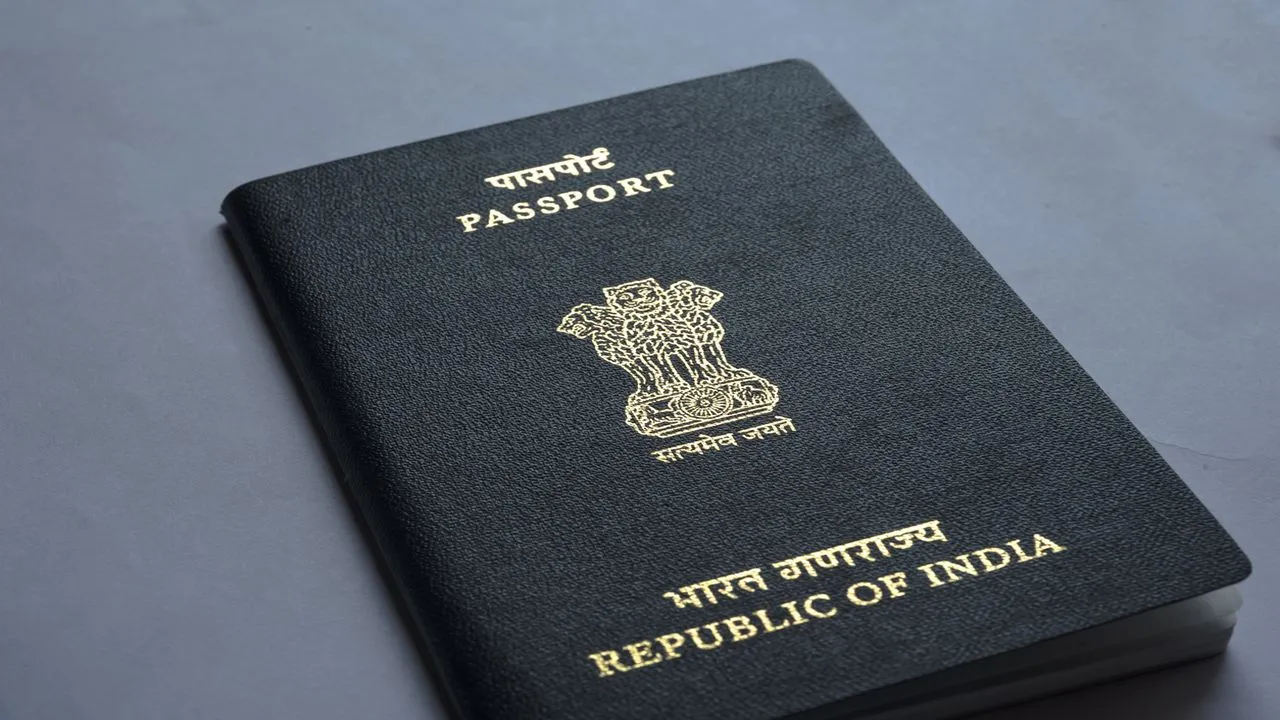
Indian passport.

Synopsis: The Union government has doubled down on its statement that the Indian passport is a travel document and not, by itself, proof of citizenship, saying this has always been its position under the Passport Act, 1967. The clarification has done little to quell outrage from opposition leaders and public figures, who questioned how citizens were expected to prove their nationality if passports and other commonly held documents were not recognised as proof of citizenship.
A day after officials of the Ministry of External Affairs (MEA) issued an extraordinary clarification asserting that the Indian passport is a travel document and not, by itself, proof of citizenship, the Union government on Thursday, 25 June, doubled down on its position, maintaining that a passport has never been treated as proof of citizenship and that no fresh decision had been taken by the Narendra Modi government since 2014.
“It was not decided yesterday that the passport is not proof of citizenship. It was not even decided in the last 12 years. The passport has never been proof of citizenship,” a government source told PTI.
The Centre said the position was not new and stemmed from the Passport Act, 1967 and that the Act permits the issuance of passports in certain circumstances to non-citizens.
The clarification, however, has done little to quell the backlash triggered by the MEA’s statement on Wednesday.
Opposition leaders, public figures and commentators questioned how citizens were expected to establish their nationality if even a passport, issued by the Government of India after police verification and other checks, was not regarded as proof of citizenship, particularly after the Centre had consistently maintained that documents such as Aadhaar, voter identity cards and PAN cards were likewise not proof of citizenship.
Also Read: Priyank Kharge pushes RSS to a “Kagaz Nahi Dikhayenge” moment and he won’t stop there
Senior Supreme Court advocate Sanjay Hegde said the MEA’s clarification, though technically correct was akin to “saying that maternity is a fact and paternity is a presumption.”
He pointed to the language printed in every Indian passport, under which the President of the Republic of India requests foreign governments to allow the bearer to travel freely and to extend “assistance and protection” whenever required.
“It is presumed that the President of the Indian Republic is not asking for help for all and sundry,” he said.
Adv Hegde acknowledged that exceptional cases exist in which a person who is no longer entitled to hold an Indian passport may continue to possess one, citing instances of Indians who acquire foreign citizenship but fail to surrender their passports.
“The mere fact that you have a passport does not automatically prove that you are a citizen of India. To that extent, technically in law, [the MEA spokesperson] may be right,” he told South First.
“But in actual practice, it is very rare that somebody who is not entitled to a passport, who is not a citizen, still has access to an Indian passport.”
Adv Hegde also noted that Indian law does not provide most citizens with a standalone certificate of citizenship. Such certificates are ordinarily issued only to persons who acquire citizenship through registration or naturalisation.
“Most people who are born as Indian citizens, and whose citizenship is never questioned, wouldn’t acquire any document which is a conclusive proof of citizenship,” he said, adding that citizenship is usually adjudicated only when it is disputed before a tribunal or court.
Veteran screenwriter and lyricist Javed Akhtar termed the government’s position “absurd”, asking whether passports were being issued without the authorities first being “totally convinced” that an applicant was an Indian citizen.
“So are they providing this travel document to some people without being totally convinced that this person is an Indian citizen? It is absurd,” he wrote in a post on X.
Political commentator and RTI activist Robin Zaccheus posted a photograph of his father’s passport, issued in 1980, pointing out that it explicitly described the holder’s “Nationality Status” as “Citizen of India”.
“[The MEA’s] vague and incoherent claim that a passport copy is ‘just a travel document’ is a senseless, self-defeating act. It not only damages the Ministry’s own credibility but actively undermines India’s passport and its global standing. This kind of ambiguity weakens rather than strengthens our passport’s reputation and ranking,” he added.
This is my father’s passport, issued in 1980, which unequivocally declares his “Nationality Status: Citizen of India.”
The @MEAIndia’s vague and incoherent claim that a passport copy is “just a travel document” is a senseless, self-defeating act. It not only damages the… pic.twitter.com/gtj1beOuRz
— Robin Zaccheus (@RobinZaccheus) June 25, 2026
Journalist Veena Venugopal sarcastically listed the various reasons the government had given for why official documents could not be treated as proof of citizenship:
“Aadhaar is proof of identity, not citizenship. Passport is a document for travel, not proof of citizenship. Voter ID is proof of identity and residence, not proof of citizenship. PAN card is a tax identifier, not proof of citizenship.”
AIMIM president Asaduddin Owaisi alleged that, at this rate, the only acceptable proof of citizenship would soon be membership of the ruling BJP.
“The path this country is taking—it now seems that in the coming days, a BJP membership card will become proof of citizenship. That is what it looks like,” he told reporters at a press conference on Thursday.
“Look at Section 6, subsection (2), and subsection (2A) of the Passport Act. Read what it says. It says that a passport shall not be issued to someone who is not an Indian citizen. So tell me, what are we supposed to do? Police verification is mandatory before issuing a passport. It is mandatory. Yet that is not considered proof. A birth certificate is not proof. An Aadhaar card is not proof. A voter ID card is not proof. Then tell me, what exactly is proof?”
Also Read: Explained: How the RSS operates in a legal, financial and organisational grey zone
Author Tony Joseph alleged that the government’s position effectively placed all citizens in a perpetually uncertain state, granting the state unfettered power to determine who qualified as a citizen.
“Essentially, there is nothing that can prove you are a citizen. It has to be decided on a case-by-case basis, for a limited period at a time, by the ‘proper authorities’ using their intuition and gut-feeling,” he wrote in a post on X.
“Since no one can at any point in time be sure if they are a citizen or not, they need to, at all times, be propitiating the ‘authorities concerned’, so that whenever required, they may be granted a few drops of citizenship. Radical reinvention of the Constitution that we can all applaud. The next step towards progress could be to determine four hereditary hierarchies of citizenship.”
Senior journalist Rajdeep Sardesai likewise questioned what document an ordinary citizen could use to prove their citizenship, short of obtaining a citizenship certificate, which is generally issued to naturalised citizens.
“I have a VOTER ID card, but NO, it is not proof of citizenship. I have an AADHAAR card but NO, it is not proof of citizenship. I have a PAN Card, but NO, it is not proof of citizenship. I have a PASSPORT but NO, it is not proof of citizenship,” he wrote in a post on X.
“So who will give me a CITIZENSHIP CERTIFICATE? A government bureaucrat? My question is simple: is the problem with the citizen, or with the Mai Baap State itself?”
(Edited by Dese Gowda)



