

Published May 29, 2026 | 5:58 PM ⚊ Updated May 30, 2026 | 10:28 AM

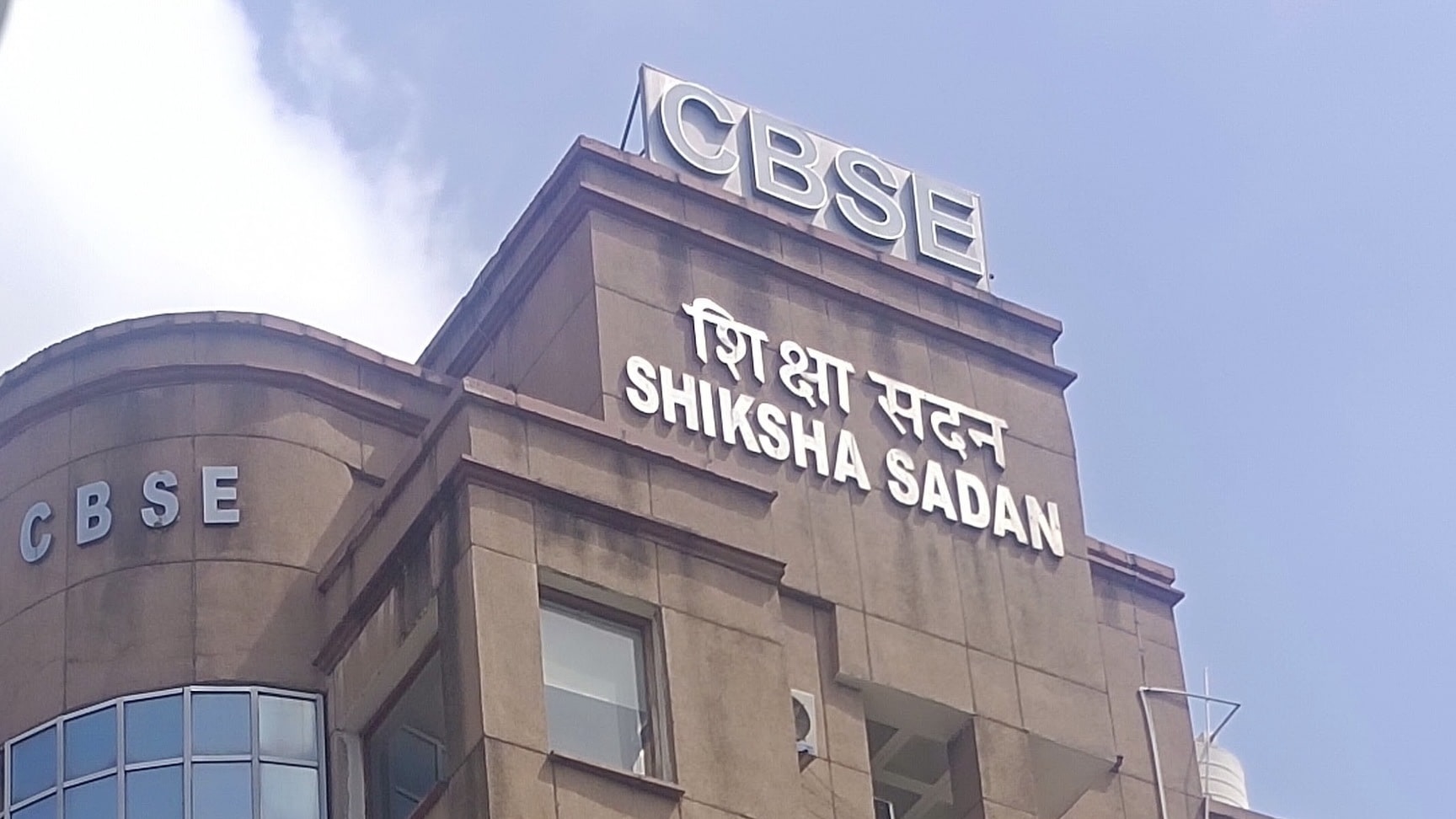
For students entering Class VI in 2026–27 and subsequent batches, CBSE said that two of the three languages must be Bhartiya Bhashas.

Synopsis: The CBSE is facing criticism after reports revealed it had circulated a toolkit, urging school principals to defend its On-Screen Marking (OSM) system in public. The coordinated campaign emerged amid widespread complaints about blurred scans, portal glitches, and revaluation issues, raising questions about transparency, accountability, and perception management.
“Let us embrace this digital advancement with trust, patience, and optimism,” Sarika Singh, Principal of Shriya Devi Bhagirathprathi Maheshwari Vidyapeeth at Sohna in Haryana’s Gurugram, recorded a video and posted it online.
Her tone was measured, as she acknowledged students’ concerns about blurry scans and portal failures as “completely valid,” and spent the remainder of the video explaining why everyone should, anyway, trust the Central Board of Secondary Education (CBSE), a national-level board of education for public and private schools, controlled and managed by the Government of India..
She described On-Screen Marking (OSM) as a system that “minimises clerical and calculation errors” and “ensures greater transparency.” She urged students to remain “positive, patient, and confident.”
It was a reassuring message from a school principal to anxious students and parents.
2. Principal of Shreeya Devi Bhagirath Rathi Maheshwari Vidyapeeth speaking on #OSM #OnScreenMarking #CBSE pic.twitter.com/9yemX3UPN7
— Mohammed Zubair (@zoo_bear) May 29, 2026
It was also, reportedly, scripted by the Board her students were worried about.
Also Read: CBSE’s OSM gamble and ‘lab mice’
The Hindustan Times reported on Friday, 29 May, that CBSE’s regional offices circulated a social media toolkit to school principals across the country, directing them to defend the Board’s controversial OSM system online.
Hundreds of schools fell in line, including government-run Kendriya and Jawahar Navodaya vidyalayas.
The document, titled “Material for Principals“, contained word-for-word scripts. One line urged principals to describe the Board as “highly proactive, empathetic, and communicative regarding these teething issues.”
Another passage urged principals to say, “As with the rollout of any technology on such an unprecedented scale, I know that a few implementation bumps have caused concern. Please, do not panic. I want to reassure every student and parent that no child will be allowed to suffer due to a technical error.”
DPS Nerul Navi Mumbai.
Check the last line – Regards, City Coordinator CBSE. pic.twitter.com/6Vb8lGLSjD— Mohammed Zubair (@zoo_bear) May 29, 2026
Across dozens of videos posted by different schools in multiple states, the language, cadence, and reassurances matched, because they came from the same document.
Also Read: Student branded ‘Pakistani’ after alleging answer-sheet mix-up
On-Screen Marking is a digital evaluation process in which answer sheets are scanned, secured, and corrected online by teachers. CBSE designed the system to eliminate calculating errors and increase grading accuracy.
The Board first introduced OSM in 2014, but limited technical capacity delayed its full-scale deployment for over a decade. This year, CBSE deployed it across nearly 98 lakh answer scripts for Class 12 board examinations.
The Board stated that 13,000 answer sheets that remained unclear after scanning, due to ink or legibility issues, were corrected manually.
Soon after the results were published on 13 May, students reported widespread difficulties accessing the CBSE portal for re-evaluation requests and scanned copies of their evaluated answer sheets. The website crashed repeatedly under heavy traffic.
Students reported server timeouts, login failures, and payment gateways that deducted money without registering successful applications.
Amid growing criticism, CBSE revised its fee structure. School Education Secretary Sanjay Kumar said the revision aimed for greater transparency. The fee for re-evaluation dropped to ₹25 per subject. Earlier, students paid ₹700 for scanned copies, ₹500 for verification requests, and ₹100 per question for revaluation.
Despite the revision, frustration continued to grow.
Also Read: India’s exam system has reached a breaking point after NEET fiasco
As students raised concerns online about mark discrepancies and inaccessible portals, a separate wave of content appeared alongside it.
School principals and, in some cases, students posted videos praising OSM, calling it “transparent” and “efficient.” Several videos described the digital marking system as one of CBSE’s “best reforms.”
The timing and similarity of the videos triggered further outrage. Many students and social media users accused CBSE of attempting to suppress public criticism through coordinated promotional content.
A viral Reddit post intensified the controversy further. A student alleged that teachers pressured them to post scripted statements on Instagram.
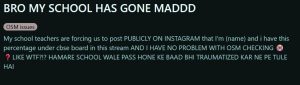
“My schoolteachers are forcing us to post publicly on Instagram that I’m (name) and I have this percentage under CBSE board in this stream and I have no problem with OSM checking,” the post read.
My brother from KV Imphal just shared me a video of students being asked to praise CBSE OSM 😭
The crazy part is OSM was introduced this year. 2024-25 batch didn’t even study under it, yet toppers are now being used for promotion like it changed their board experience. pic.twitter.com/M61S6nRqPL
— Mohit Tyagi (@mxtyagi) May 28, 2026
The post raised direct questions about whether institutions were organised to shape public perception online while students continued to contest their results offline.
CBSE has not issued any detailed statement addressing the toolkit, the scripted videos, or the allegations of student pressure.
Sources from the Education Ministry informally denied the allegations. No official clarification followed.
(Edited by Majnu Babu).



