

Published May 01, 2026 | 7:00 AM ⚊ Updated May 01, 2026 | 6:15 PM

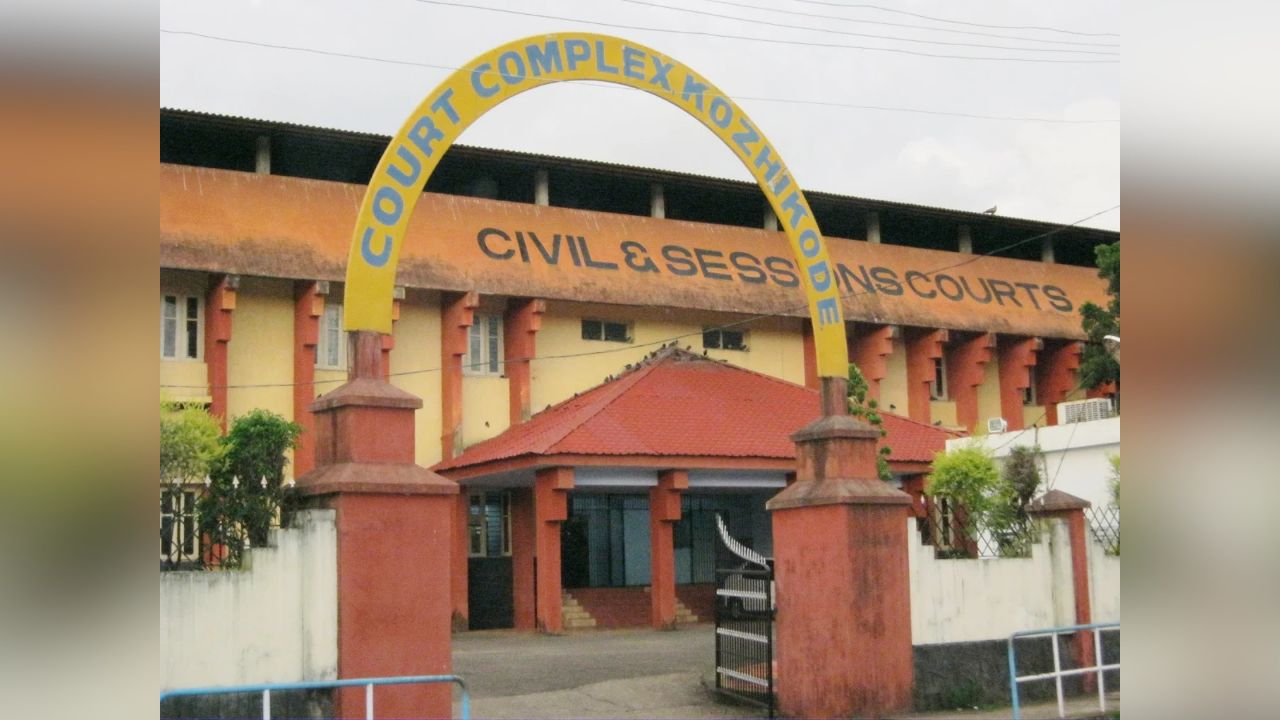
District court Kozhikode.

If government files had a sense of humour, this one might have chuckled quietly while moving from desk to desk.
A protest in March 2023 by ministerial staff at the Kozhikode District Court in Kerala has finally wrapped up — not with a bang, but with a semantic shrug.
After three years of memos, enquiries, appeals and reviews, four employees have been let go. The reason? What they did was a protest. Not a strike. And that, as it turns out, makes all the difference.
The events trace back to 9 March 2023. A group of court staff staged a march and gathering within the court premises, near the southern entrance. Allegations followed swiftly. The protest, it was claimed, took place during working hours, slogans were raised against the District Judge and the judiciary, and a microphone was used in a restricted zone.
According to the version of the protestors, the protest was triggered by an Office Memorandum issued on 23 February 2023, which effectively banned even designated spaces for service organisations to display posters or notices within the court complex.
This, they argued, ran counter to an earlier circular issued by the Personnel and Administrative Reforms Department in November 2012. That circular required departments to earmark spaces for such activities and permitted campaigning during break hours, so long as official work was not affected.
Also Read: People’s Pulse predicts a UDF surge; LDF faces heat
Within days, the District Judge, acting as Disciplinary Authority, issued memos to 22 employees. What followed was a familiar bureaucratic filtration. One explanation was accepted outright. Proceedings against five more were dropped later. Sixteen employees were eventually served formal charge memos, accused of violating the Kerala Government Servants’ Conduct Rules, 1960, particularly provisions dealing with unauthorised protests within office premises.
All sixteen denied wrongdoing.
An inquiry was ordered. Additional District Judge Mohanakrishnan P was tasked with examining the evidence. His findings split the group again. Twelve employees were cleared due to the lack of evidence. Four — M Dinesh Kumar, Remya PR, Sangeetha P and Aswathi P — were found culpable.
The punishment was not mild. The Disciplinary Authority proposed withholding three annual increments with cumulative effect, a penalty that affects long-term earnings. The four employees pushed back, arguing that the protest had taken place during the lunch interval, that it did not disrupt court functioning, and that it could not be equated with a strike. Their replies did not persuade the authority. The penalty was imposed.
An appeal before the Kerala High Court brought partial relief. The Court upheld the findings of guilt but reduced the punishment to two years’ withholding of increments instead of three.
That could have been the end of the matter. It wasn’t.
The employees turned to the Government under Rule 34 of the Kerala Civil Services (Classification, Control & Appeal) Rules, 1960, seeking review. By February 2025, they were granted a personal hearing.
Their argument was simple, almost stubbornly so: this was a protest during lunch hour. Not a strike.
Also Read: Your guide to the snakes behind Kerala’s fatal bites
Also, they said, they were reacting to an Office Memorandum issued on 23 February 2023, which clamped down on even designated spaces for putting up notices — something a 2012 circular had explicitly allowed during break hours.
The hearing authority took a closer look and found itself drawn into the philosophical depths of service law.
What exactly is a strike? And when does a protest stop being one harmless thing and become a punishable offence?
The answer, after careful consideration, was refreshingly precise. A strike involves stopping work or disrupting it.
A protest, especially during a break, does not automatically qualify. In this case, there was no evidence that the employees had downed tools, slowed work, or thrown the court into chaos. No complaints of disruption. No separate action on the alleged microphone misuse either.
In other words, plenty of noise perhaps, but no measurable damage.
The government stepped back and looked at the bigger picture. Yes, the enquiry had technically proven misconduct. But the context — the restrictive office order, the allowance for campaigning during breaks, the absence of disruption — made the whole episode look less like indiscipline and more like an over-policed lunch break.
The file went to the Kerala Public Service Commission. The Commission agreed. And just like that, the penalty vanished.
What remains, after the files have closed, is a case study in how a few words can carry surprising weight.
Protest versus strike — a distinction so thin it could be missed in casual conversation.
Three years, multiple proceedings, and a stack of paperwork later, the conclusion is almost playful: they did raise slogans, they did gather, they did make some noise. But they did not, crucially, stop working.
The difference rested on a thin, almost fragile distinction. But in service law, that line was enough.
(Edited by Muhammed Fazil.)



