

Published Oct 05, 2026 | 7:44 PM ⚊ Updated Oct 05, 2026 | 7:44 PM

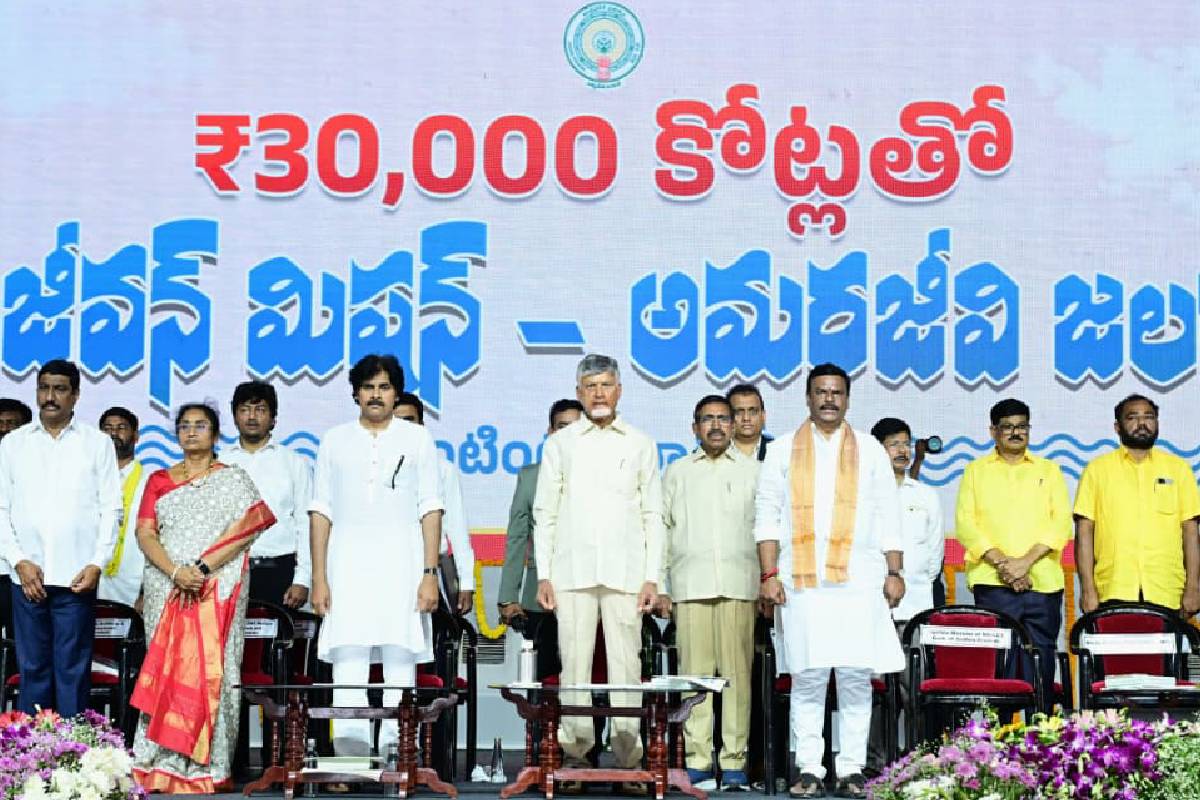
They unveiled the pylon at Kothapalli in the Proddatur Assembly constituency of Kadapa district.

Synopsis: Andhra Pradesh Chief Minister N. Chandrababu Naidu and Deputy CM Pawan Kalyan launched Jal Jeevan Mission 2.0–Amarajeevi Jaladhara, a ₹30,156-crore project aimed at expanding rural drinking water access. The programme targets 27 lakh additional households, with plans for 13,075 overhead tanks, expanded coverage across 24,601 habitations and a 77,243-km pipeline network.
Chief Minister N. Chandrababu Naidu and Deputy Chief Minister Pawan Kalyan on Monday, October 5, launched Jal Jeevan Mission 2.0 ‘Amarajeevi Jaladhara’ works aimed at providing a permanent solution to drinking water problems in rural areas.
They unveiled the pylon at Kothapalli in the Proddatur Assembly constituency of Kadapa district, formally launching the programme aimed at providing tap water to every household and safe drinking water to every family.
With an estimated cost of ₹30,156 crore, the project will provide drinking water facilities to another 27 lakh rural households across the State. The works include the construction of 13,075 overhead water tanks, expansion of water supply to 24,601 habitations and extension of a 77,243-km pipeline network.
The project will strengthen drinking water supply to a total of 61.60 lakh tap connections, ultimately benefiting 3.3 crore people.
CM Naidu said that of the nearly 95 lakh rural households in the State, around 62 lakh already have household tap connections. Under Jal Jeevan Mission 2.0, the government has set a target of extending drinking water facilities to another 27 lakh households.
The primary objective of the Jal Jeevan Mission is to supply drinking water from sustainable water sources, the Chief Minister said.
He alleged that implementation of the scheme had suffered from deficiencies in the past and said the previous government had utilised only about ₹2,600 crore for the programme in Andhra Pradesh, despite several other States receiving and utilising substantially higher levels of Central funding.
The current government gives equal priority to drinking water and rural infrastructure development, Naidu said.
Naidu said that under ‘Palle Panduga 3.0’, infrastructure works worth ₹11,085 crore were being taken up, including roads, drains, streetlights and farm ponds.
The government plans to spend ₹1.30 lakh crore on rural infrastructure in the coming years, he said.
The government is focusing on integrated water management to meet drinking water, irrigation and industrial requirements, Naidu said.
The State has spent ₹24,000 crore on irrigation projects over the past two years, he said.
Naidu said the interlinking of the Godavari and Krishna rivers had brought water security to the State and announced that 36 irrigation projects would be taken up over the next three years at an estimated cost of ₹35,000 crore. A project calendar, including specific dates, had already been released, he said.
Naidu reiterated that linking the Godavari and Cauvery rivers could help address drought concerns in southern India. Even during drought conditions, around 2,000 TMC of water had flowed into the sea, he said, adding that utilising at least 200 TMC of Godavari floodwaters could transform Rayalaseema into a fertile region.
Handri-Neeva Phase-I had been completed and reservoirs in Rayalaseema filled, while water had been taken to Nallamala Sagar through Veligonda Phase-I, he said.
The Chief Minister said the government had launched the ₹1 lakh crore Global Horticulture Hub with the objective of transforming the future of Rayalaseema. The initiative would lead to the expansion of irrigation projects, roads and marketing facilities, he added.
Projects are expected in sectors including space, aerospace, defence, drones, automobiles, electronics, steel, cement, solar, wind, pumped storage, green energy and gold mining.
Rayalaseema was now poised for a transformation, with fighter jets manufactured in the region becoming a symbol of its industrial strength, he said.
Fruits grown in Rayalaseema would reach international markets under a distinct Rayalaseema brand, he said.
Rayalaseema needs peace, water, industries, good governance and employment, Naidu said, asserting that “no conspiracy could stop Rayalaseema Rising.”
The government is working towards empowering the poor, increasing household incomes, developing villages and towns and ensuring a better quality of life, Naidu said. With the objective of providing a house to every eligible family by 2029, construction of 19 lakh houses is being taken up, he said.
Naidu praised Deputy Chief Minister Pawan Kalyan for his contribution to improving road connectivity in rural areas. He said the government had set a record by conducting Gram Sabhas simultaneously in 13,326 villages.
More than ₹4,136 crore had been received through the 15th Finance Commission grants, he said, adding that development had accelerated with farm ponds, village roads and other infrastructure works.
(Edited by Fayisa CA)



