

Published Nov 27, 2026 | 6:10 PM ⚊ Updated Nov 27, 2026 | 6:11 PM

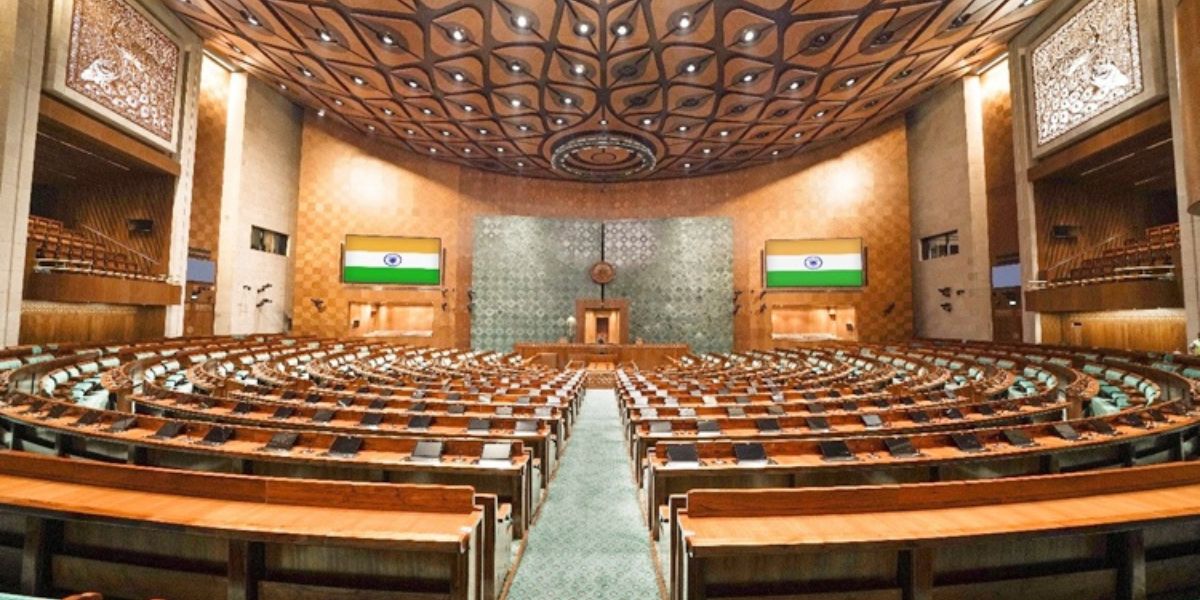
The five southern States, Puducherry and Lakshadweep account for 131 of the Lok Sabha’s 543 seats, or 24.12 percent of the House.

Synopsis: Of the 131 MPs representing the five southern States, Puducherry and Lakshadweep, 75 voted against the Constitution (131st Amendment) Bill in April. MPs from Tamil Nadu voted against the Bill almost unanimously. Andhra Pradesh MPs, meanwhile, voted unanimously in favour of the amendment.
The BJP-led Union government’s call for a special sitting of Parliament from 30 November is being seen as an attempt to secure the passage of the controversial Delimitation Bill, 2026, after the first attempt to bring it to a vote failed in April.
The Bill had been tabled alongside the Constitution (131st Amendment) Bill and the Union Territories Laws (Amendment) Bill, 2026, with the stated aim of expediting the implementation of 33 per cent reservation for women in the Lok Sabha and State Assemblies.
The Constitution (131st Amendment) Bill was put to a vote and required a two-thirds majority, or 352 votes from the members present and voting in the 543-member House, to sail through.
The NDA had secured 293 seats in the 2024 Lok Sabha elections but could muster only five more votes in favour of the Bill on the given day. It was defeated, with 298 votes in favour and 230 against.
All three Bills were subsequently withdrawn, as the other two were predicated on the Constitution Amendment Bill passing.
The Union Cabinet on Friday cleared a fresh Bill, which reportedly incorporates key demands raised by southern states. These include a uniform 50 percent increase in the number of Lok Sabha seats in all States and a 25-year extension of the freeze on each State’s proportional share of representation in the Lok Sabha, currently pegged to the 1971 Census.

The five southern States, Puducherry and Lakshadweep account for 131 of the Lok Sabha’s 543 seats, or 24.12 per cent of the House.
Tamil Nadu has the largest representation, with 39 seats, followed by Karnataka (28), Andhra Pradesh (25), Kerala (20) and Telangana (17). Puducherry and Lakshadweep have one seat each, taking the combined representation of the five States and two Union Territories to 131.
In Andhra Pradesh, the TDP holds 16 of the 25 seats, followed by the YSRCP (four), BJP (three) and Jana Sena Party (two).
Karnataka’s 28 seats are divided among the BJP (17), Congress (nine) and JD(S) (two). In Kerala, the Congress holds 14 of the 20 seats. The IUML has two, while the CPI(M), BJP, Kerala Congress and RSP have one each.
Tamil Nadu’s 39 seats are represented by the DMK (22), Congress (nine), VCK (two), CPI (two), CPI(M) (two), MDMK (one) and IUML (one). In Telangana, the BJP and Congress hold eight seats each, while the AIMIM holds the remaining seat.
The Congress holds the lone Lok Sabha seats in both Puducherry and Lakshadweep.

Also Read: KTR rules out BRS-BJP alliance ahead of 2028 Telangana polls, backs proportional delimitation
Of the 131 members, 53 MPs voted in favour and 75 against the Constitution Amendment Bill, according to Lok Sabha records.
The parties that voted in favour were the BJP (29) and its NDA allies: the TDP (16), Jana Sena Party (2) and JD(S) (2). All four YSRCP MPs, though not part of the NDA, also voted in favour of the Bill.
The votes against the Bill came from the Congress (40), DMK (22), IUML (3), CPI(M) (3), CPI (2), VCK (1), AIMIM (1), Kerala Congress (1), RSP (1) and MDMK (1).
The Lok Sabha records do not list the votes of three MPs: Congress MPs Radhakrishna Doddamani (Gulbarga, Karnataka) and Adoor Prakash (Attingal, Kerala), and VCK MP D Ravikumar (Viluppuram, Tamil Nadu).
MPs from Tamil Nadu voted against the Bill almost unanimously. Andhra Pradesh MPs, meanwhile, voted unanimously in favour of the amendment.
Karnataka recorded 19 votes in favour and eight against, with one Congress MP’s vote unlisted. In Kerala, 18 MPs voted against the Bill, while one, BJP’s Suresh Gopi, supported it. One Congress MP’s vote was unlisted.
Telangana recorded eight votes in favour and nine against. The sole MPs from Puducherry and Lakshadweep, Ve Vaithilingam and Muhammed Hamdullah Sayeed, respectively, also voted against the Bill.

Also Read: Why the NDA hit pause on women’s reservation and the delimitation bill
The upcoming special sitting will be an extension of the Monsoon Session, which was adjourned sine die on 13 August but has not been formally prorogued by the President.
This allows the government to convene the Houses within the existing session by issuing a notification two days in advance.
Reports also indicate that the Union Cabinet meeting scheduled for 27 November, ahead of the special sitting, is expected to clear the contentious delimitation Bill.
Opposition parties, particularly in the southern States, have opposed the exercise on the grounds that it would reduce their share of parliamentary representation, given the South’s greater success in implementing population control measures than the northern States.
Parties such as the Congress have maintained that they support women’s reservation in Parliament but will not agree to a delimitation exercise that discriminates against southern States.
Since the DMK’s defeat in the 2026 Assembly polls and its fallout with INDIA bloc partner the Congress, speculation has been rife that the Dravidian party might be ripe for the picking. The Congress broke away from its 19-year alliance with the DMK to form the government in Tamil Nadu with the TVK. DMK chief MK Stalin, however, has rubbished the speculation.
Separately, the Centre has reportedly reached out to several Opposition parties, including the DMK, seeking support for the proposed exercise.
(Edited by Dese Gowda)



