

Published Aug 23, 2026 | 8:38 PM ⚊ Updated Aug 23, 2026 | 8:38 PM

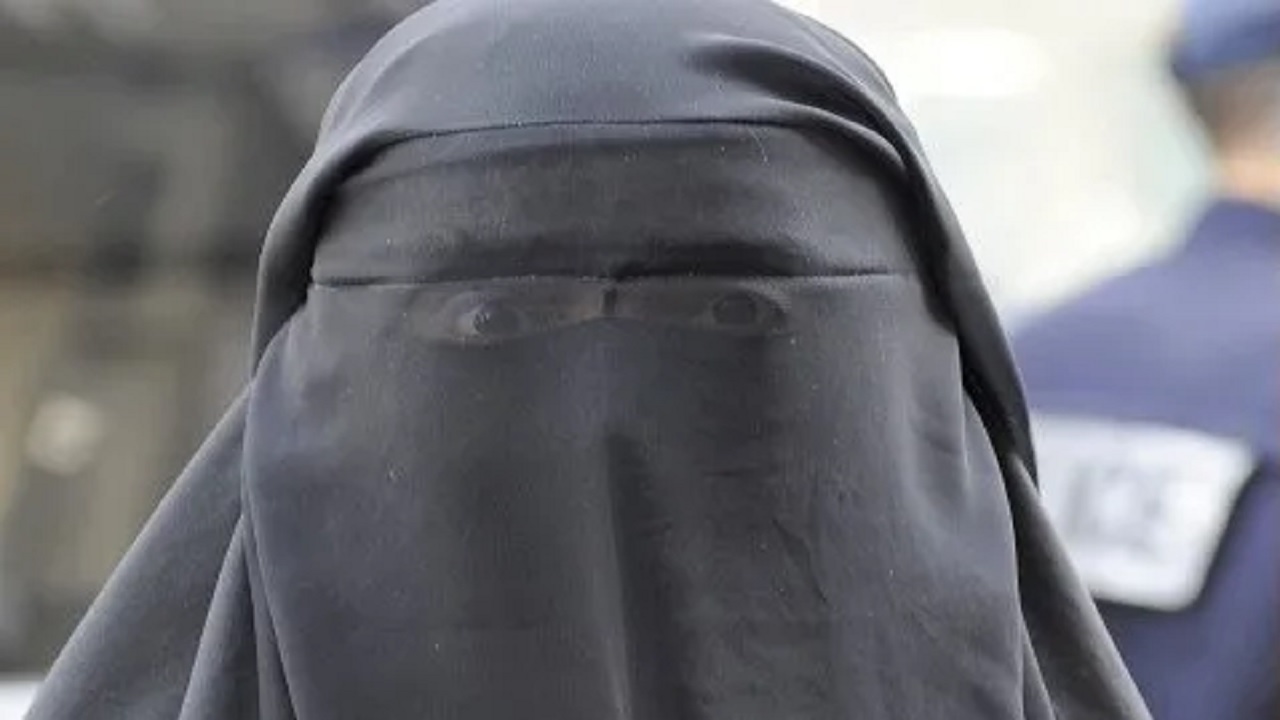
A 2022 World Bank study found that Saudi returnees also brought home conservative attitudes on women, gender roles and violence.

Synopsis: Keralam’s migration story is often measured in remittances, but a 2022 World Bank study on Saudi returnees reveals a less visible impact – the transfer of conservative attitudes on women, gender roles and violence. The study found that 43 percent justified a husband beating his wife for disobedience, 53 percent blamed women for being molested after going out alone at night.
Alex Mammen, a 78-year-old Kuwait returnee from Thiruvalla in Pathanamthitta, believes family pride must be protected and that responsibility, he says, rests largely with the women at home. Even today, he has not accepted his daughter’s marriage to a Hindu man settled in Europe. He is not ready to speak to her and the silence between them continues even after so many years.
In Malappuram, 65-year-old Saudi returnee Sulfikkar Ali built a life and reputation in Riyadh after becoming one of the first from his family to migrate from Kondotty in Malappuram. His mother once wore the traditional kachimundu and kuppayam.
But his wife, daughter and the younger women in his family now wear the pardha – a practice he himself brought home.
Two men, from different parts of Keralam and different generations, arrive at a strikingly similar belief – that women must live within certain boundaries to protect the family’s honour.
This is not just the story of two men. It is a story of generations of how migration brought money, dreams and new lives home but sometimes carried back old ideas about women, control and family honour, quietly passing them from one generation to the next.
Keralam’s migration story is usually told through money.
But new evidence suggests that migrants may also bring home something less visible and potentially more damaging – attitudes about women, violence and gender roles.
For decades, migration to the Gulf has been central to Keralam’s economic transformation.
Remittances have helped households reduce poverty, invest in education and housing and improve living standards. Keralam has also been one of India’s major sources of workers for the Gulf, with millions of Keralites moving temporarily to countries such as Saudi Arabia, the United Arab Emirates, Kuwait, Qatar, Oman and Bahrain.
But what happens when migrants return home?
A 2022 World Bank Policy Research Working Paper asks a question that is particularly important for Keralam – does migration transfer not only money and skills, but also social norms? The answer is yes.
Also Read: Debutant Aroma Chundan rows to thrilling finish, lifts Nehru Trophy
Keralam has an unusually deep relationship with international migration.
By 2013, the Keralam Migration Survey recorded around 2.4 million migrants from the state in the Gulf countries, compared with about 1.4 million in 1998. Remittances increased dramatically over the same period. The Gulf remains much more important to Keralam’s migration economy than migration to other Indian states.
Yet money is only one thing migrants bring back.
Migration can also produce what researchers call social remittances, like ideas, behaviours, identities and social expectations transferred from destination countries to migrant-sending communities.
Such transfers can be positive.
Migrants may return with new ideas about education, employment, fertility, political participation or social mobility.
But the flow of ideas does not automatically move in a progressive direction. The research paper suggests that migrants exposed to more conservative social environments can potentially bring conservative attitudes home as well.
That possibility is especially significant in Keralam because migration is not a marginal phenomenon. It is woven into families, communities and local economies.
Also Read: Record-breaking 420-plus weddings lined up at Guruvayur temple
The study’s most striking finding concerns migrants returning from Saudi Arabia.
Using data from the Keralam Migration Survey 2013, the researchers compare returning migrants with people who had no migration experience. Their sample included 256 return migrants from Saudi Arabia, 322 from other Gulf countries and 8,614 non-migrants.
The researchers examined 35 questions covering women’s employment, household decision-making, general gender attitudes and gender-based violence (GBV).
They then constructed composite measures of these attitudes and used instrumental-variable methods to address the problem that migrants are not randomly selected – people who migrate may already differ from those who do not.
The results are difficult to dismiss as a simple ”migration makes people conservative” story.
Returnees from Saudi Arabia displayed significantly more conservative attitudes on several measures, particularly gender-based violence and extreme attitudes toward violence against women.
Compared with non-migrants, their GBV attitudes were approximately three standard deviations more conservative, while their attitudes on extreme gender-related behaviours were about 2.6 standard deviations more conservative.
The contrast with migrants returning from other Gulf countries is particularly revealing.
Their attitudes toward GBV and extreme gender attitudes were not significantly different from those of non-migrants. In some areas, they were actually less conservative.
Also Read: ED taking ‘strange measures’ because Veena is my daughter: Pinarayi Vijayan
The findings are not about abstract opinions alone. The survey asked respondents about concrete situations involving women’s lives.
Among Saudi returnees, about 43 percent agreed that a man has the right to beat his wife if she disobeys him. Around 53 percent said that a woman or girl who goes out alone after dark is herself to blame if she is molested.
About 70 percent believed that women’s ”immodest” dress provokes men to behave badly towards them. Nearly half believed that a woman who is raped usually did something careless to put herself in that situation.
These attitudes matter because gender-based violence does not occur in a social vacuum.
Ideas about whether women should obey men, whether victims are responsible for violence against them, and whether violence can be justified within marriage help shape the environment in which abuse is tolerated or challenged.
The study also finds conservative attitudes around women’s mobility and authority within households.
For eg, 75.3 percent of Saudi returnees agreed that a man’s respect in the community suffers if his wife or daughter moves freely outside the home. Around 85 percent agreed that a man who cannot control his wife loses community respect.
Also Read: Moral policing torture: Emergency martyr Snehalatha Reddy’s story caught in obscenity row
This does not mean that Saudi migrants are inherently conservative, nor does it establish that every returning migrant brings harmful attitudes into Keralam.
The researchers themselves emphasize that migration experiences differ by destination, but the evidence does establish a policy problem that Kerala cannot afford to ignore.
Migration policy has traditionally concentrated on wages, recruitment, worker protection, remittances and reintegration.
Gender norms rarely occupy the same space in the conversation. Yet if migration can transmit attitudes, then the social consequences of migration deserve policy attention alongside its economic benefits.
The researchers argue that countries and regions with large migrant populations need to consider potentially harmful social remittances. They specifically recommend education and communication programmes addressing GBV, extreme attitudes towards women and discriminatory employment practices.
They also point to Keralam’s Department of Non-Resident Keralites Affairs (NORKA) as an existing institutional platform that could incorporate awareness, continued education and outreach for migrants, returnees and their households.



