

Published Aug 25, 2026 | 12:23 PM ⚊ Updated Aug 25, 2026 | 12:23 PM

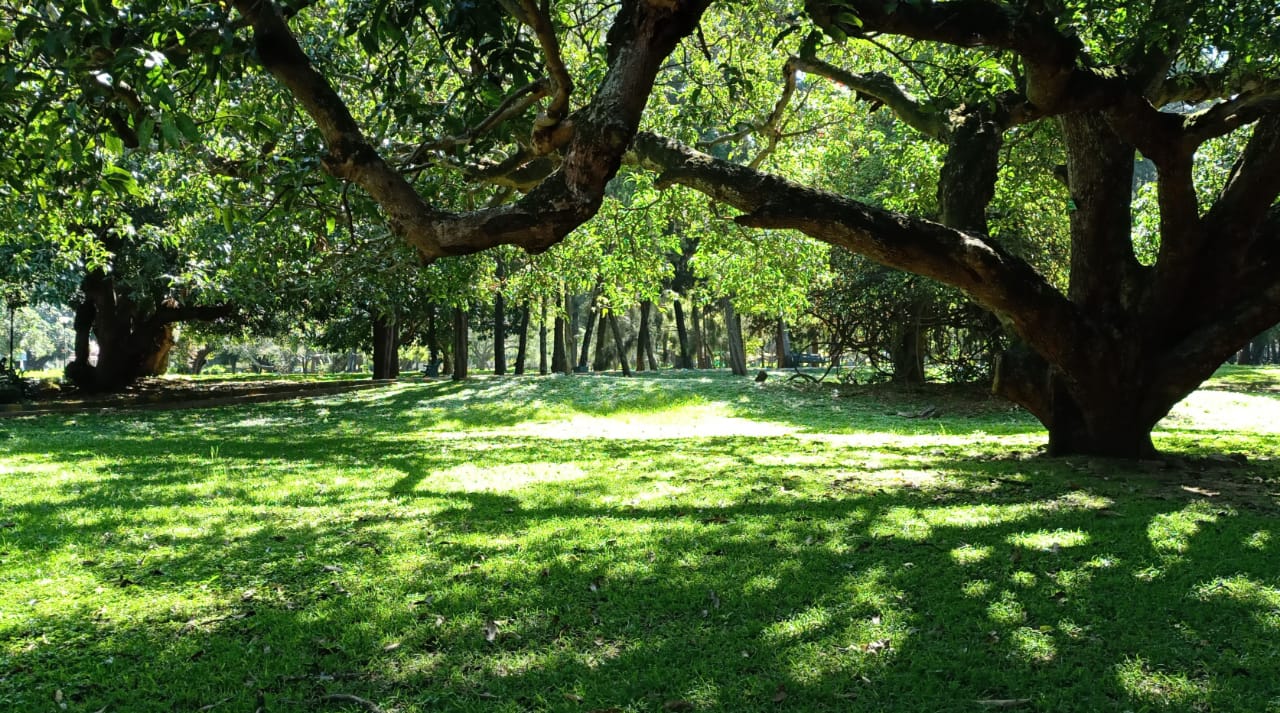
Today, 2150 species of plants belonging to 673 genera and 140 families can be seen in Lalbagh. (Karnataka horticulture department)

Synopsis: The Karnataka Legislative Assembly has passed an amendment to the Karnataka Government Parks (Preservation) Act, 1975, allowing the government to use or transfer up to 5 percent of the land in a park or garden for public projects. Environmental activists and urban planners say this could put Bengaluru’s remaining green spaces at greater risk, while opposition leaders have alleged that the Bill is aimed at helping clear the contentious tunnel road project.
The Karnataka Legislative Assembly on Monday passed the Karnataka Government Parks (Preservation) (Amendment) Bill, 2026, allowing the State government to alienate or permit the use of up to 5 percent of the total area of a park or garden for public infrastructure and public utility projects.
The Bill amends the Karnataka Government Parks (Preservation) Act, 1975, and allows such land to be sold, leased, transferred, gifted, exchanged, mortgaged or otherwise made available to government departments, statutory authorities, government companies and local authorities. The 5 percent limit includes land already alienated from a park or garden.
The proposal must first be examined by a High-Level Committee headed by an officer not below the rank of Additional Chief Secretary, comprising government officers and domain experts, before it is recommended to the government.
Environmental activists and urban planners say the Bill could open Bengaluru’s remaining and already shrinking green spaces to further exploitation.
Opposition leaders and environmental groups have also alleged that the amendment is aimed at easing regulatory clearances for the contentious tunnel road project, considered a pet project of Chief Minister DK Shivakumar.
The project would require one acre of Lalbagh, alongside six more acres for the duration of construction. Lalbagh is one of the two largest remaining green spaces in the city.
Section 5 of the existing Act permits the use of specifically identified parcels of park and garden land for specified purposes. The amendment creates a general provision under which up to 5 percent of the area of any park or garden covered by the Act can be alienated or used if the State government considers it expedient in the public interest and the committee recommends the proposal.
The existing exceptions under Section 5 include 1,223 sq. m. of the Indira Gandhi Musical Fountain Park for road widening and 1,135.18 sq. m. of Lalbagh for a Metro elevated station.
Other identified parcels include 2,126.71 sq. m. and 11,160 sq. m. of Cubbon Park, and 18,028.35 sq. m. of land between the High Court and the old KGID building for parking for High Court advocates and visitors.
Another category covers approximately 49 acres and 34 guntas, including the Vidhana Soudha, Vikasa Soudha and other structures, for repairs and other developmental works.
The amendment separately allows the minimum necessary area of Horticulture Farms to be used for horticulture projects, provided reasons establishing public interest and necessity are recorded. These projects can include nurseries, cold storage and post-harvest facilities, value addition and horticulture-based industries.
Structures used by the Horticulture Department for its horticultural, allied and administrative purposes are treated separately.
The State government will prescribe rules governing construction, maintenance and management, including conditions for the protection of ecology and the environment.
Environmental activist Vijay Nishanth said formally allowing a portion of protected parks to be used for infrastructure could set a precedent for the gradual erosion of Bengaluru’s remaining public spaces.
“Bangalore is already overburdened.. You could go to the other districts and develop there. Everything doesn’t have to come to Bangalore,” Nishanth told South First. He said development should be distributed more evenly across the city and its outskirts.
Pointing to shrinking lakes, footpaths and other public spaces, he said parks should not become the next category of public land opened to development.
“Parks are something very important for the people. They are part of the culture here and it is a avenue where it is open for people from all strata of society,” he said.
Concerned citizens have started an online petition against the move and are discussing further action. Senior environmentalist and retired IFS officer AN Yellappa Reddy has also written to the State government raising concerns over the Bill.
“We are going to fight this. This is not a trivial issue,” he told South First.
Urban planning expert RK Misra said the justification for taking park land should be clearly documented and open to scrutiny.
Authorities should first exhaust alternatives such as relinquished land, Transferable Development Rights (TDR) and direct acquisition before considering land within a park, he said.
“Any time a park land is being used, they should have a technical report that there are no other alternatives,” Misra told South First.
Such a report should examine alternative alignments or locations and provide data showing why the particular portion of park land is unavoidable, he said.
Misra said taking a small portion along the periphery of a park could have a very different ecological impact from taking an area containing more trees or greater biodiversity.
At the same time, infrastructure development and environmental protection need not always be competing objectives, he said. Public transport projects such as Metro lines, for instance, may require the removal of trees but could deliver wider environmental benefits by reducing private vehicle use, congestion and pollution.
The test, he said, should be whether a project serves a demonstrable public purpose, whether less damaging alternatives have been considered and whether its benefits justify the environmental cost.



