

Published Oct 04, 2026 | 3:18 PM ⚊ Updated Oct 04, 2026 | 3:18 PM

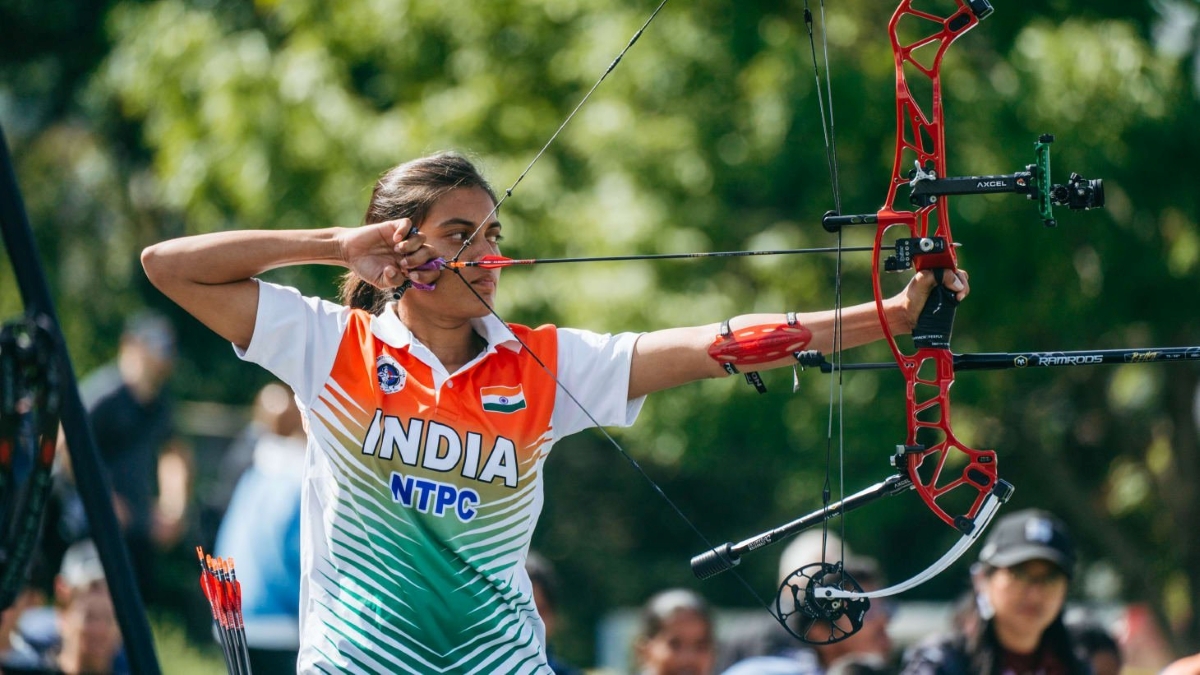
Chikitha Taniparthi. (X)

Synopsis: Telangana’s Chikitha Taniparthi won two gold medals at the 20th Asian Games in Japan and helped India secure its first-ever Olympic quota in the mixed compound archery event for the 2028 Los Angeles Games. In a conversation with South First, her father recounts Chikitha’s beginnings in archery, her struggles with equipment and training, and her hopes for the future.
Chikitha Taniparthi, the 21-year-old compound archer from Telangana’s Peddapalli, won two golds at the 20th Asian Games in Aichi-Nagoya, Japan, and helped secure, along with her compound mixed team partner Sahil Jadhav, India’s first-ever Olympic quota for mixed compound archery event at the Los Angeles 2028 Games.
She won gold in the women’s compound team event with Jyothi Surekha Vennam and Prithika Pradeep, beating China 238-234 in the final and matching the world record.
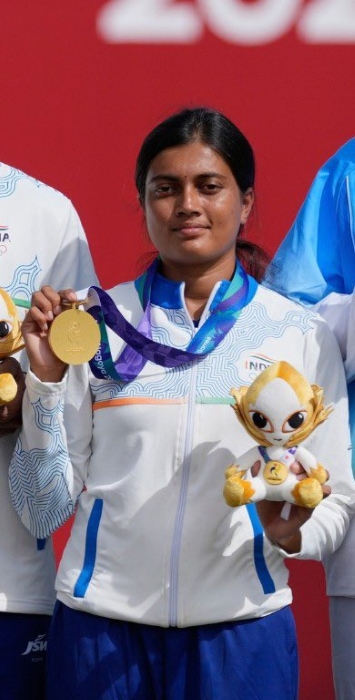
Chikitha Taniparthi with the gold medal. (X)
The other gold was in the mixed compound team event with Sahil Jadhav, beating South Korea in a shoot-off after the final ended 157-157.
Chikitha Taniparthi had also made history in Indian archery as the first Indian woman compound archer to win an Individual Junior World title at the World Archery Youth Championships 2025 held in Winnipeg, Canada.
Today a national pride, Chikitha’s journey in archery began when she was about 13 years old, in the erstwhile Karimnagar district.
Also Read: The stones that remember: Elgandula and the birth of modern Karimnagar
Speaking with South First, Srinivas Rao, Chikitha’s father, says he was always interested in sports, and that is what he tried to imbibe in his children.
Speaking of how it all started, Srinivas Rao says, “Chikitha started off with Karate in school, she even got a black belt. But soon we realised the sport had little scope to pursue further. That is when we tried to find out about other sports.”
“One thing I was sure of was, it should be an individual sport, from what I knew and heard, team sports are riddled with politics. That’s when we zeroed in on Archery, as it was an individual sport, and it is also a transparent sport, whatever we do is clearly visible,” the father, who has been the wind beneath Chikitha’s wings, says.
He quickly adds, “We never thought about how difficult the training would be, how expensive it would be, or how far we would have to go. We never sat down to count what the sport would cost. We didn’t think much about it. She was interested, and so were we.”
Chikitha’s younger brother Yashwanth is also a national-level archer.
Once the decision was made on what sport to pursue, the hurdles also showed up. The initial hurdle was to find a coach. “The Karate sir suggested a PET sir who was nearby. Chikitha started training under him,” he said.
Choosing the right equipment was the next challenge for the Taniparthi family.
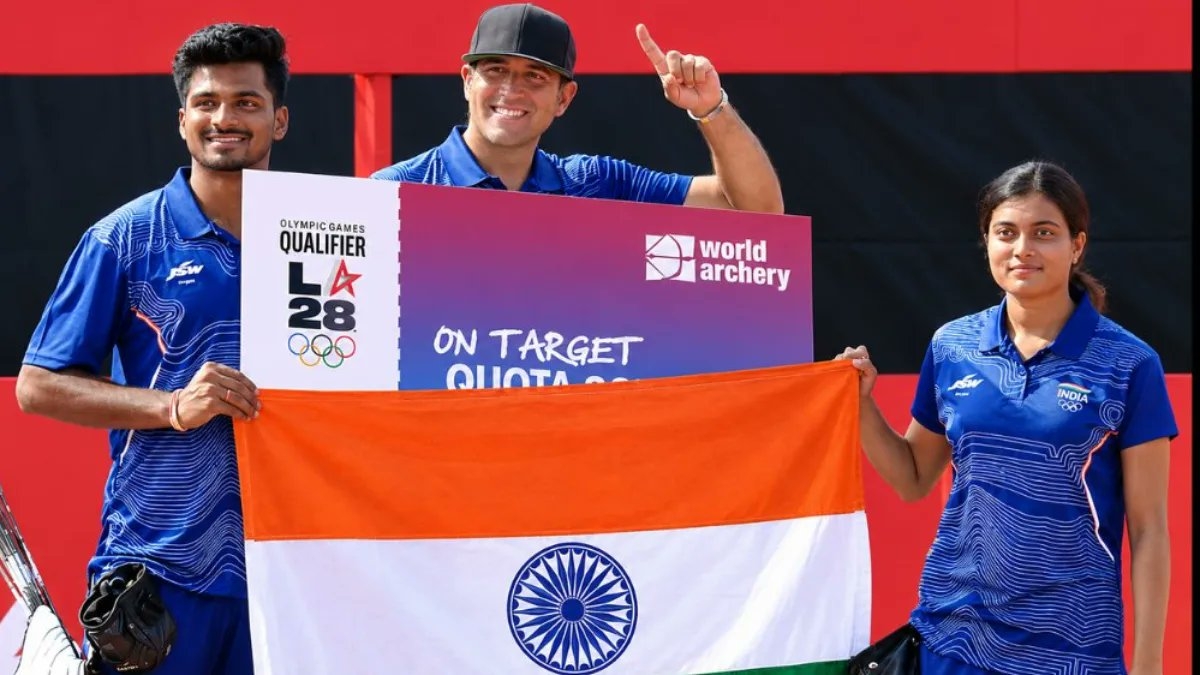
Chikitha Taniparthi and Sahil Jadhav. (X)
“We started off with equipment from Decathlon, but they were not sustainable for long-term serious practice, we did not know about the right equipment too, that was also something we learnt along the way. That had cost us about ₹7,000 to ₹8,000. Later we researched more, and bought better, latest equipment from a dealer,” he said.
“When she started the training, there were about seven to eight others from Telangana who were pursuing the sport seriously, especially the compound event.”
He further went on to explain the three types of archery – Indian, compound and recurve.
Indian archery is played with bamboo bows resembling modern equipment (with sights/stabilisers), while recurve archery is played with a recurve bow, modern evolution of traditional bows, and compound archery uses a mechanically advanced bow equipped with a system of cables and pulleys.
Chikitha is trained in compound archery.
“Bamboo was limited to India, and recurve required more physical strength, so based on the advice of her mentors we decided to pursue compound archery,” Srinivas Rao said.
Asked about what was the most difficult part of the journey, Srinivas Rao said, “We never thought of it as a difficulty, for me, excelling in the sport was important, she was putting in all the effort, and I had to do whatever I can to make it any bit easier.”
Being a small farmer, with three acres of land, whose income depends on agriculture, Srinivas Rao says finances were a hurdle.
“Even though we did not have the money, we took loans and tried to make it happen. However, we did not know the equipment would be that costly, especially the mechanical bow used in compound archery,” he said.
He also recollects the time they had to sell their rice harvester to fund the travel and training.
For a small farmer, a rice harvester is meant to ease farming. Srinivas Rao had bought one with a loan, at a considerable cost. But as his daughter’s training and tournaments took the family from place to place, he could no longer be near the farm when the harvest came.
“I was unable to earn with the harvester, and the loan interest would just pile up,” he says, adding, “I could not even trust anyone else with it.” In the end, he sold it, so that the money could be used for her travel and training.
Finding the right places to buy the equipment was another issue. As a blessing in disguise, this problem brought her under the wings of her idol, the Arjuna Awardee Abhishek Verma, who became her mentor.
It was during the COVID pandemic, in 2021, that she made the move to Delhi, and then to Sonepat.
Asked how that happened, Srinivas Rao recounts, “We wanted to buy the equipment, and by chance we found out about My Choice Archery Store in Delhi. Which we found out was run by Sonali, Abhishek Verma’s wife.
“Chikitha always looked up to him, so we wanted her to train under him. After a lot of struggle, we managed to secure a week’s time, that is how we went to Delhi,” he said.
The smiles say it all. 🥇🇮🇳
Chikitha Taniparthi, Prithika Pradeep and Jyothi Surekha Vennam celebrate a golden day at #AichiNagoya2026. ✨
#AsianGames https://t.co/eZzWwJIkKL
— Olympic Khel ™ (@OlympicKhel) September 30, 2026
It was around the same time that she won her first medal in the sub-junior category. Chikitha got the silver medal in personal category and bronze medal in mixed in under-17 sub-junior National Archery competitions held in Amaravathi, Maharashtra in 2021.
Later, she participated and succeeded in the selection trials to make it to Sports Authority of India’s National Centre of Excellence in Sonipat.
“Now she is under Vivek [Kumar] sir, he is the head coach at SAI Sonipat. She is there with the whole Indian team,” he said.
Asked how she adjusted in Sonepat, the father says, “She adjusted well, language was a hurdle in the start, she did not know Hindi, and most athletes there were Hindi-speakers. However, she has always been fluent in English, since childhood, which has helped her.”
Also Read: How Shivani Sibal’s ‘Moms’ reveals the cracks in a perfect life and the anxiety of elite motherhood
Speaking of the future, the father hopes she gets selected to represent India at the 2028 Los Angeles Olympics too, with her gold along with Sahil Jadhav in the mixed compound event helped India secure a place in the compound mixed team event at the 2028 Los Angeles Olympics, where the discipline makes its Olympic debut.
“Since forever, she has spoken of winning an Olympic medal for the country, and I wish that dream of her also comes true,” the father wishes.
(Edited by Dese Gowda)



