

Published Aug 30, 2026 | 9:00 AM ⚊ Updated Aug 30, 2026 | 9:00 AM

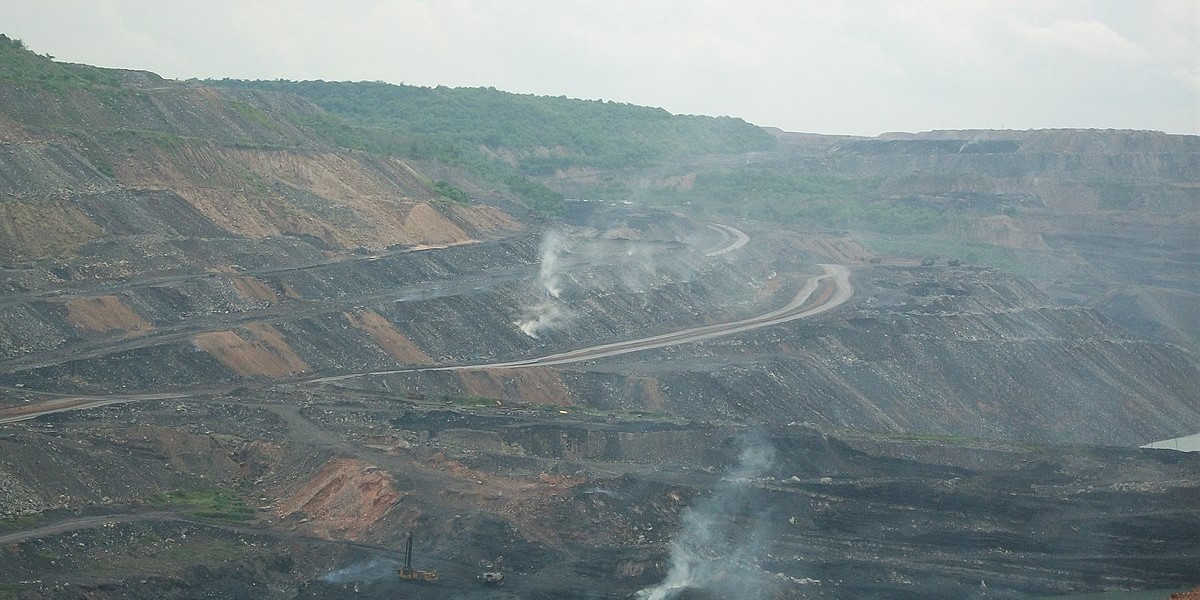
According to Telangana’s Fiscal Policy Statement 2026-27, royalties and seigniorage from mines and minerals form a major part of its non-tax revenue.

Synopsis: The Mines and Minerals (Development and Regulation) Amendment Act, 2026, has drawn sharp opposition from several states over its curbs on their power to tax mineral rights and mineral-bearing lands. The stakes are incredibly high for Telangana, as mines and minerals contribute heavily to its revenue. While INC’s national leadership said Telangana will join Karnataka and Kerala in a joint Supreme Court challenge, the Telangana government has yet to comment on the law or its fiscal impact.
The Mines and Minerals (Development and Regulation) Amendment Act, 2026, passed by Parliament on 13 August 2026, received the Presidential assent on 17 August. The controversial amendment drew sharp pushback across the country, with several states expressing concerns that it could fundamentally restrict how they regulate and tax their natural resources.
Keralam’s Chief Minister VD Satheesan wrote to Prime Minister Narendra Modi, calling the law a direct encroachment on the State List and warning that making state taxation powers dependent on central criteria weakens state autonomy. Jharkhand Chief Minister Hemant Soren labelled the legislation a “black Bill,” and asserted that the land and minerals belong exclusively to the states.
Telangana’s mineral wealth has always been a key driver of its revenue, with ₹5,507.72 crore generated in district-wise mineral revenues in the 2024-25 fiscal year. This revenue engine is now in jeopardy under the new amended Act.
Also Read: Mines and Minerals Amendment Bill and how it threatens states’ fiscal autonomy
At its core, the new amendment is being viewed as a violation of state governments’ rights. Under the Indian Constitution, the power to regulate mines and tax mineral rights is shared between the Union and the states under Entry 54 of the Union List and Entries 23 and 50 of the State List.
Crucially, land is a state subject under Entry 18, and state legislatures hold the independent, exclusive power to tax land under Entry 49. In 2024, a landmark nine-judge Constitution Bench of the Supreme Court in the Mineral Area Development Authority case reaffirmed this fiscal autonomy. The apex court held that royalty is not a tax and ruled that states have the constitutional authority to tax mineral-bearing lands based on mineral yield or value. The court also said that Parliament can exert control over states’ power to tax mineral rights under Entry 50.
By inserting “and mineral-bearing lands” into Section 2 of the MMDR Act, the Centre has brought these lands directly under its regulatory control. Additionally, the newly introduced Section 9D prohibits state governments from imposing any independent tax, cess, or levy on mineral rights or mineral-bearing lands, unless they comply with conditions prescribed by the central government.
Also Read: Keralam faces potential revenue loss, reduced powers under new Mines and Minerals Bill
The stakes are incredibly high for Telangana because of its vast and diverse geological makeup.
According to data from the Geological Survey of India (GSI) and the state’s Mines and Geology Department, Telangana is home to a vast inventory of both major and minor minerals. The state holds massive reserves of major minerals such as coal, limestone, iron ore, manganese ore, garnet, and stowing sand distributed across its various districts.
Telangana is also heavily endowed with minor minerals, particularly building materials and decorative stones including granite (featuring the highly prized pink and black varieties), quartz, feldspar, laterite, dolomite, calcite, marble, sandstone, fuller’s earth, road metal, gravel, morrum, ordinary earth, and the durable limestone slabs popularly marketed as Shahbad stones.
Geological exploration has also mapped precious indicative mineral deposits of gold and diamonds in the districts of Mahabubnagar, Nalgonda, and Suryapet.
In the 2024-25 financial year, the state generated a total of ₹5,507.72 crore in district-wise mineral revenue. When sand sales proceeds from the Telangana State Mineral Development Corporation (TSMDC) are excluded, the state’s core mineral revenue stood at a substantial ₹4,769.47 crore.
According to Telangana’s Fiscal Policy Statement 2026-27, royalties and seigniorage from mines and minerals form a major part of its non-tax revenue. In the 2023-24 financial year, the state earned ₹2,978.22 crore in royalties on major minerals and ₹1,088.74 crore on minor minerals. The state also collected a cess of ₹139.67 crore from mineral-bearing lands during the period.
Also Read: Why Wayanad landslide has put the focus on Kerala’s missing mineral and mining policy
The state’s primary economic asset, coal, is concentrated in Bhadradri-Kothagudem, Jayashankar Bhupalpally, Khammam, Komaram Bheem Asifabad, Mancherial, and Peddapalli districts, collectively known as the coal belt.
In the 2024-25 fiscal year, even with lower yields, coal revenue brought in ₹2,960.69 crore, making up over 53.7% of the total ₹5,507.72 crore mineral collection. Almost all of this coal is mined by the Singareni Collieries Company Limited (SCCL), a historic state-owned enterprise jointly held by the Government of Telangana (51% controlling stake) and the Government of India (49% stake).
SCCL operates 17 open-cast and 22 underground mines in the Pranahita-Godavari Valley, employs over 40,000 workers, and produces nearly 10% of India’s domestic coal. Royalties from SCCL form a major source of income for Telangana.
According to company data, the state collected ₹13,105.22 crore between 2014-15 and 2018-19 in the form of royalty, taxes, dividend, and other payments. Of this, ₹8,678.82 crore came from SCCL purely as royalty. SCCL’s total payments to both the state and central governments combined touched ₹27,467.70 crore during this period.
Also Read: Fight for equitable revenue sharing
Telangana is now barred under Section 9D from imposing any independent cess or levy on major mineral rights, based on mineral quantity, mineral value, royalty or any other basis, unless it adheres to conditions prescribed by the Centre. This could potentially deliver a major blow to the state’s income from coal, its most prized asset.
Section 9D(2) also retroactively invalidates any state-level mineral cesses that were levied but not fully collected before the Act’s commencement. This directly overrides the 2024 Supreme Court ruling that allowed states to recover past dues from 1 April 2005. By deeming any uncollected or unpaid cess invalid, the Act forgives non-compliant mining companies and shrinks the state’s exchequer significantly.
Another severe casualty of the amendment is Telangana’s independent authority to levy cesses on mineral-bearing lands. The 2026-27 state budget estimates revenue of Rupees 200 Crore from the levy of cess on mineral-bearing lands, which could be at risk under the new amendment.
This transition represents a fundamental shift in administrative control for a mineral-heavy state like Telangana. While the Centre makes rules to dictate land use, states are left with the burden of mineral extraction.
Also Read: Glaring gap between what southern states give and receive
Senior Congress leader and Member of Parliament Jairam Ramesh confirmed that the party is preparing to legally challenge the MMDR Amendment Act through the state governments of Telangana, Karnataka, and Kerala. Ramesh said a joint petition will be filed in the Supreme Court to challenge the Act’s constitutional validity.
Jharkhand’s Finance Minister Radhakrishna Kishore said the amendment would cause a revenue loss of ₹14,000 crore to the state’s exchequer and adversely affect its welfare schemes. He also said the state plans to move the Supreme Court seeking relief.
In Odisha, BJD President and Leader of Opposition Naveen Patnaik accused the Centre of endangering the state’s economy. He said that stripping states of these powers leaves them bearing all the environmental, displacement, and social burdens of mining while the economic benefits are centralised.
Despite being part of the planned joint petition to the Supreme Court, the Telangana government has not yet issued any official public response or statement regarding the MMDR Act, 2026, or its fiscal impact on the state’s exchequer.
(Edited by Majnu Babu).



