

Published Aug 18, 2026 | 9:00 AM ⚊ Updated Aug 18, 2026 | 9:00 AM

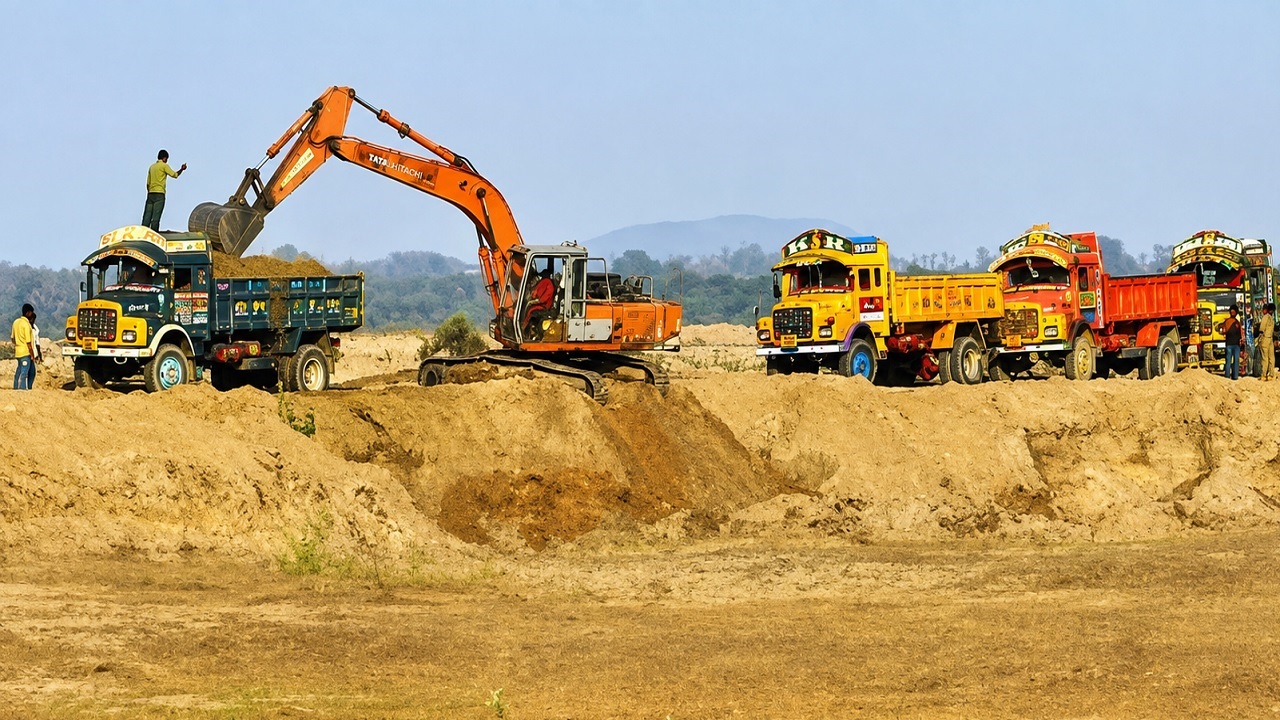
The MMDR Amendment Bill, 2026 has sparked a fresh Centre-state row, with Keralam warning it could curb its powers.

Synopsis: The Mines and Minerals (Development and Regulation) Amendment Bill, 2026, has triggered a fresh Centre-state dispute in Keralam. The state government has opposed provisions that it says could curtail its powers over mineral-bearing land and affect its revenue from mining. The proposed changes have also raised concerns among environmental and fishing communities over expanded mining activities, particularly black sand mining along Keralam’s coast.
The Mines and Minerals (Development and Regulation) Amendment Bill, 2026 has opened a fresh Centre-state dispute, with Keralam opposing provisions that it said could restrict its constitutional powers over mineral-bearing land and weaken the state’s revenue-raising capacity.
Chief Minister VD Satheesan has written to Prime Minister Narendra Modi seeking an immediate review of the provisions.
The Chief Minister has particularly objected to proposed Section 9D, under which the state’s power to impose taxes, cess and other levies on mineral-bearing land would be subject to norms prescribed by the central government.
For Keralam, the issue is significant despite the state accounting for only a small share of India’s overall mineral output.
The state’s mineral sector generates revenue primarily through royalties, permits, seigniorage and other administrative charges, while quarrying, mineral-based industries and public-sector enterprises contribute to the wider economy.
Also Read: Keralam CM Satheesan urges PM Modi to review mining Bill provisions
Satheesan has argued that the proposed provisions could curtail powers constitutionally vested with the states. Land is a subject under Item 18 of the State List, while states currently exercise powers including granting mining leases and fixing non-royalty fees.
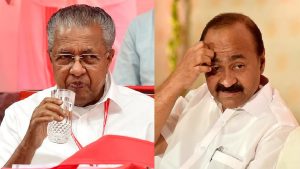
Pinarayi Vijayan and VD Satheesan
He has also objected to the proposed definition of mineral-bearing land, saying that the absence of exclusions for coastal areas and forests could amount to an attempt by the Centre to take over areas falling within the states’ jurisdiction.
He has cited the Supreme Court’s 2024 judgment, which held that royalty payable on mining rights is not a tax.
Satheesan said the judgment recognised the states’ power to impose taxes on mineral rights under Entry 50 of List II of the Seventh Schedule. The Supreme Court also recognised the states’ authority to levy taxes on mineral-bearing land based on the quantity or value of mineral production under Entry 49 of List II.
The Chief Minister has warned that provisions bringing mineral-bearing land under greater central control, along with provisions for eliminating outstanding state taxes could have significant financial implications for Keralam.
He has also flagged the possible impact on the tax revenue of local self-government institutions.
The Opposition has demanded that the UDF government be prepared to approach the Supreme Court if the amended provisions are implemented. Opposition leader Pinarayi Vijayan said preventing states from imposing additional taxes or cess on mining rights and mineral-bearing land would amount to an assault on the federal structure.
He also alleged that the legislation could facilitate private monopolies in strategic rare-earth mineral mining.
The Keralam Matsyathozhilali Aikyavedi has separately called for a united campaign against the legislation, warning that the proposed changes could give private interests greater access to the state’s black sand deposits and offshore areas.
Also Read: Mines and Minerals Amendment Bill and how it threatens states’ fiscal autonomy
Keralam’s mineral wealth is diverse, although much of its economic activity is concentrated in a few resources.
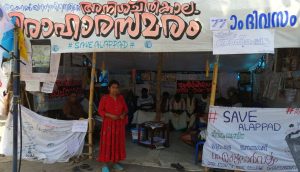
Save Alappad protests against decades of mining that have caused severe coastal erosion.
The coastal belt of Kollam and Alappuzha, particularly the Chavara-Neendakara region, is known for heavy mineral sands containing ilmenite, rutile, monazite, zircon and sillimanite.
Ilmenite and rutile are important raw materials for titanium-based industries, while monazite contains thorium and rare-earth elements, giving these deposits strategic significance.
Keralam also has significant deposits of china clay or kaolin, particularly in parts of Thiruvananthapuram, Kollam and Kannur. It is used in industries including ceramics and paper.
Other resources include limestone, limeshell and silica sand, used in cement, chemical, glass and other industries.
Granite, laterite, building stone and dimension stone are extensively extracted across the state, particularly in the midland and highland regions.
Gold occurrences have been reported in Wayanad, Nilambur and Attappady, although these deposits are generally not considered large enough for extensive commercial-scale mining. Keralam also has smaller occurrences of bauxite, graphite, iron ore and lignite though their economic exploitation remains limited.
Speaking to South First, Swatantra Matsyathozhilali Federation member Cletus Michael warned that mining could seriously damage Keralam’s black sand deposits and offshore areas. He said there had been repeated attempts to mine sea sand from three blocks off Kollam, but the fishing community had resisted the tendering process.
He said the impact of black sand mining was already evident in Alappad, where decades of mining had caused severe coastal erosion and significantly narrowed the coastal strip.
According to Michael, the area of Alappad panchayat has also reduced drastically over the years due to mining activities by Indian Rare Earths Limited (IREL) and Kerala Minerals and Metals Limited (KMML).
Also Read: How ‘donations’ to politicians, kin are ruining environment
Keralam’s direct contribution to India’s total mineral output value is around ₹31 crore annually, accounting for roughly 0.02% of the country’s total mineral output value.
However, the revenue generated in Keralam through mineral extraction is considerably higher. According to figures available with the Department of Mining and Geology, annual collections from major and minor minerals have ranged from around ₹160 crore to more than ₹190 crore in recent years, with minor minerals accounting for the overwhelming share.
In 2018-19, the department collected ₹171.29 crore, including ₹165.94 crore from minor minerals and ₹5.35 crore from major minerals.
In 2019-20, total collection stood at ₹160.11 crore, of which ₹151.35 crore came from minor minerals.
In 2020-21, collections rose to ₹192.13 crore, including ₹183.74 crore from minor minerals and ₹8.38 crore from major minerals.
Ministry of Mines data shows Keralam’s royalty accrual was:
2017-18: ₹8.51 crore
2018-19: ₹5.29 crore
2019-20: ₹8.75 crore
2020-21 (P): ₹8.18 crore
2021-22 (P): ₹10.61 crore.
Also Read: Who owns the wealth beneath the land?
Keralam’s minor mineral framework has evolved separately within the broader national mining policy framework.
India’s mineral policy began with the Mineral Policy Conference of 1947, followed by the Mines and Minerals (Regulation and Development) Act, 1948.
After the Constitution came into force on 26 January 1950, Entry 54 of List I gave the Centre powers to regulate mining and the development of minerals, while Entry 23 of List II gave states powers subject to List I.
The Mines and Minerals (Regulation and Development) Act, 1957, subsequently required states to frame rules governing minor minerals.
Tamil Nadu and Rajasthan enacted their minor mineral rules as early as 1959, while Keralam introduced the Kerala Minor Mineral Concession Rules in 1967.
According to retired deputy director of the Department of Mining and Geology Biju Sebastian, ordinary earth was classified as a minor mineral when the KMMC Rules, 1967, were enacted. It was removed from the classification in 1977 and classified again as a minor mineral in 2012.
Also Read: Kerala demands withdrawal of Centre’s offshore atomic mineral rules
For granite (building stone) and other minerals, royalty was earlier specified both per tonne and per cubic metre until 31 March 2023.
The royalty rate schedule shows that the specific gravity of granite (building stone) was initially taken as 1.8, later increased to 2, and subsequently to 2.5. From 1 April 2023, royalties for all minor minerals, except Granite Dimension Stone, have been specified per tonne.
Sebastian also noted that royalty rates for all minor minerals remained unchanged for 17 years, from 1997 to 2015.
The average annual increase in royalty was ₹1.22 per year, while the percentage increase in royalty for granite (building stone) ranged from 50% to 300%.
For Keralam the latest amendment is not only about control over mineral-bearing land. It also raises questions over the state’s ability to collect taxes, cess and other levies from a sector in which minor minerals account for the overwhelming share of mineral-related revenue.
Beyond government collections, state-owned enterprises also contribute to the sector’s economic value. Keralam Minerals and Metals Ltd has recorded turnover of more than ₹1,000 crore and has contributed dividends to the state exchequer.
Keralam’s share of India’s overall mineral output may be small, but the state’s concerns centre on the revenue and powers attached to its mineral resources.
Satheesan has therefore urged the Prime Minister to review the provisions that, according to the state government, could restrict constitutional powers of the states and weaken their financial position.
(Edited by Majnu Babu).



