
Published May 07, 2026 | 8:00 AM ⚊ Updated May 07, 2026 | 8:00 AM

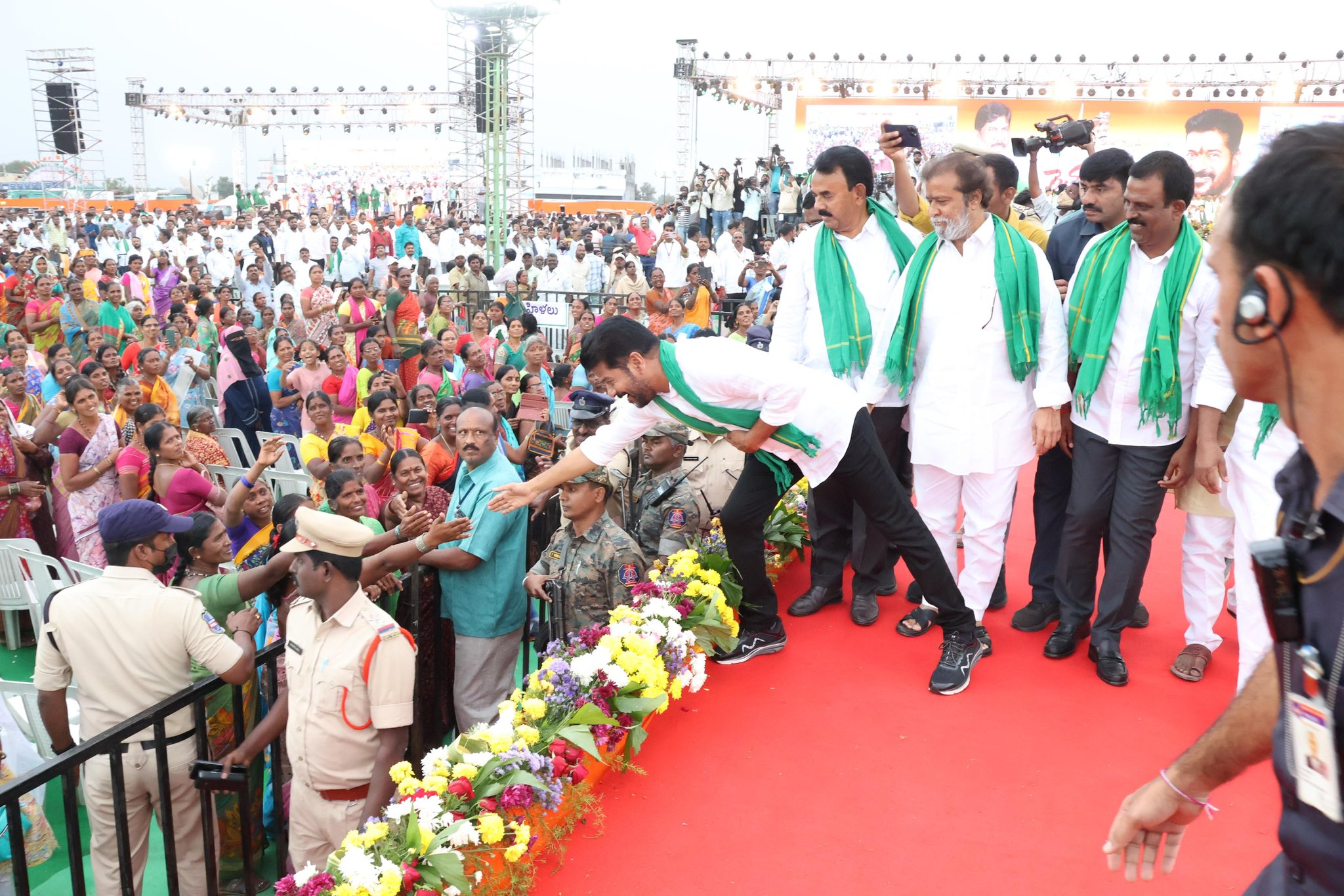
Telangana Chief Minister A Revanth Reddy at the "farmers festival" in Mahabubnagar. (File photo)

Synopsis: Politics in India, especially in agrarian states, rewards short-term populism. Genuine long-term solutions— better irrigation, crop diversification, market reforms, insurance, and skill training—need patience and investment. These do not provide quick photo opportunities. Protesting is easier than governing. Every party knows the voter’s memory is short, and the next grievance can be weaponised.
In the sun-baked fields of Telangana, the kanduva, the traditional green or white shoulder cloth worn by farmers, is more than just cloth. It is a symbol of sweat, resilience, and the backbone of rural life. But in politics, this “green kanduva” has become a strategic tool.
Parties wrap themselves in it when they sit in the opposition, loudly championing farmer grievances, only to loosen their grip once in power. This “Green Kanduva Gambit” is a familiar cycle in Telangana politics, where farmer-friendly talk wins votes but delivery often falls short.
Telangana’s economy relies heavily on agriculture. Paddy, cotton, maize, and chillies feed millions. Farmers face issues such as irregular power supply, loan burdens, delayed procurement, fertiliser shortages, land record problems, and low prices. Political parties know this pain well and use it masterfully.
When in opposition, they organise protests, dharnas, and padayatras. They wear the green kanduva, stand with farmers under the hot sun, and promise the moon. Once in government, the same issues return, and the cycle repeats with new players.
Also Read: KCR bets on farmers, Telangana pride to mount comeback against Congress
Take the Bharat Rashtra Samithi (BRS), formerly TRS. Under K Chandrashekar Rao (KCR), the party led the Telangana statehood movement, promising a farmer-friendly state. In power from 2014 to 2023, BRS introduced landmark schemes such as Rythu Bandhu, investment support of ₹5,000 to ₹8,000 per acre per season, later increased, and Rythu Bima, a life insurance scheme.
Free power to agriculture and loan waivers were among the highlights. These helped BRS win rural support for years.
But cracks appeared. Critics pointed to issues with the Dharani portal for land records, which many farmers found complex and error-prone. There were complaints about incomplete benefits and a focus on big irrigation projects such as Kaleshwaram while smaller needs lagged. When BRS lost power in the 2023 elections to Congress, the party quickly picked up the green kanduva again.
Now in the opposition, BRS leaders such as KTR and Harish Rao lead protests almost every week. They highlight Congress failures on farm loan waivers, Rythu Bharosa payments, the renamed support scheme, paddy procurement delays, and urea shortages.
In 2024 and 2025, BRS organised statewide protests with empty urea bags, blocked roads, and held farmer meetings such as Rythu Sangrama Sadassu. They accuse the government of betraying promises made in the 2022 Warangal Declaration. Harish Rao has repeatedly pointed out that many farmers are still waiting for loan waivers and support payments.
The Congress party, now in power under Chief Minister A Revanth Reddy, followed the same playbook when it was in the opposition. Before 2023, Congress leaders fiercely criticised BRS on farmer issues.
They promised a full farm loan waiver of up to ₹2 lakh, higher Rythu Bandhu support, and better implementation. Revanth Reddy and others held rallies wearing farmer symbols and highlighted suicides, debt, and power cuts.
In government, Congress has delivered partially. It has disbursed Rythu Bharosa and waived thousands of crores in loans for lakhs of farmers. Yet, the opposition and even some farmers complain of delays, incomplete coverage, fund shortages, and new problems such as land acquisition for industries. BRS now uses these gaps to attack Congress, just as Congress once attacked BRS.
The BJP, though smaller in Telangana, also plays the game. When out of power at the state level, it organises protests on farmer woes, delays in central schemes, and alleged neglect. It challenges both BRS and Congress on unfulfilled promises.
This gambit works because farmers form a huge voting bloc. Telangana has more than 60 lakh farmer families. A well-timed protest, a photograph with distressed farmers wearing the green kanduva, or a fiery speech on loan waivers can swing rural seats. Media coverage amplifies it.
But once in power, harsh realities hit: limited budgets, bureaucratic hurdles, monsoon dependence, and national market prices. Promises get diluted. New priorities such as industry and urban growth take over. The green kanduva is quietly folded away until the next election cycle.
Also Read: Telangana to seek Maharashtra’s consent to raise Tummidihatti barrage height to 150 metres
Politics in India, especially in agrarian states, rewards short-term populism. Genuine long-term solutions, such as better irrigation, crop diversification, market reforms, insurance, and skill training, need patience and investment. These do not provide quick photo opportunities. Protesting is easier than governing. Every party knows the voter’s memory is short, and the next grievance can be weaponised.
The real losers are the farmers. They get temporary relief but face the same struggles year after year. Power cuts during peak seasons, middlemen eating into profits, and uncertain weather continue. Debt traps persist despite waivers. Land disputes through portals such as the earlier Dharani, now Bhu Bharati, add to the frustration.
To break this gambit, voters must demand accountability beyond symbols. Parties should be judged on outcomes: timely procurement at good prices, quality seeds and fertilisers, transparent land records, and sustainable income support. Civil society and farmer unions can play a bigger role by staying non-partisan and pushing for policy continuity.
The green kanduva represents honour and hard work. It should not become a political prop worn only when convenient. Telangana’s farmers deserve leaders who champion their cause in power, not just in the opposition. Until parties move from gambits to genuine governance, the cycle of protests and broken promises will continue, leaving the fields, and the farmers, waiting for real change.



