

Published Apr 30, 2026 | 7:04 PM ⚊ Updated Apr 30, 2026 | 7:04 PM

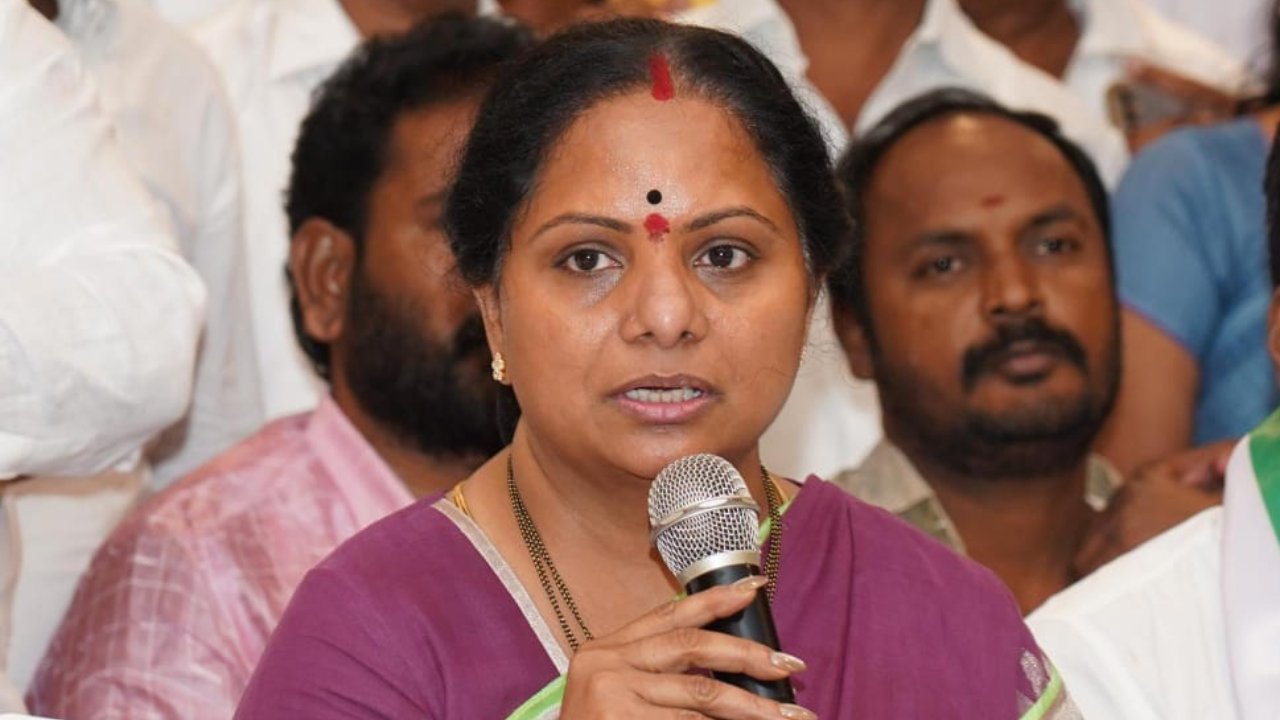
K Kavitha. (x.com/RaoKavitha)

Synopsis: Announcing a name that was neither proposed to the ECI nor cleared even for public notice has been termed a serious lapse in political communication. Some accused Kavitha of attempting to “appropriate a legacy brand” without following due process, while others saw it as a sign of disarray in the yet-to-be-registered party’s planning.
Kalvakuntla Kavitha’s shifting claims about the name of her proposed political party have sparked a political controversy in Telangana, with records from the Election Commission of India (ECI) contradicting her public statements.
At a meeting of Telangana Praja Jagruthi on 25 April, Kavitha announced that her party would be named “Telangana Rashtra Sena” (TRS). However, documents submitted to the ECI for the approval of the party’s name did not include the announced nomenclature.
In a letter dated 28 April, the ECI permitted the name “Telangana Rakshana Sena” for the limited purpose of issuing a public notice — not “Telangana Rashtra Sena,” as Kavitha had claimed.
The letter, addressed to her, stressed that the clearance was only a preliminary step under Section 29A of the Representation of the People Act, 1951.
It allowed the applicant to publish a public notice inviting objections within 30 days. It did not amount to registration or final approval of the party’s name.
Related: Kavitha launches new party, BRS dubs it ‘duplicate’
The discrepancy became more pronounced when compared with Kavitha’s application to the ECI. The list of proposed names included “Telangana Praja Jagruti,” “Telangana Jagruti,” “Telangana Rakshana Sena,” “Telangana Rashtra Jagruti,” and “Telangana Praja Shakti.”
Notably, “Telangana Rashtra Sena”— the name she publicly announced — did not feature anywhere in the submission.
The contradiction drew criticism, with opponents accusing her of creating a misleading impression about the party’s identity and approval status.
Kavitha has also suggested that she received formal approval from the ECI for “Telangana Rashtra Sena.” However, the Commission’s letter made no such claim. It only permitted the issuance of a public notice for “Telangana Rakshana Sena,” subject to objections and further scrutiny.
Also Read: Kavitha’s political gamble faces test of credibility
Sources familiar with the process stressed that such permission was routine and procedural. It could not be construed as approval. Presenting it otherwise, they argued, was misleading.
Adding to the controversy was the mode of communication. While Kavitha reportedly implied a more formal or urgent conveyance, the document itself showed that it was sent by Speed Post, undermining any suggestion of special consideration by the ECI.
The episode also revived sensitivities around the acronym “TRS,” historically associated with the Bharat Rashtra Samithi. Any attempt to use a similar acronym might invite objections, particularly given the continued public association of the party with its former name.
Kavitha’s announcement had, in fact, already triggered protests from BRS leaders, who viewed the use of “TRS” as politically loaded and potentially confusing to voters.
The episode reflected poor coordination and premature messaging. Announcing a name that was neither proposed to the ECI nor cleared even for public notice has been termed a serious lapse in political communication. Some have gone further, accusing her of attempting to “appropriate a legacy brand” without following due process, while others saw it as a sign of disarray in the yet-to-be-registered party’s planning.
Procedurally, the mismatch could also complicate matters. Any deviation between the name proposed to the ECI and the one projected in public could invite objections during the notice period, potentially forcing revisions or even fresh applications.
The sources said that the episode underscored the importance of precision in political communication, especially in matters involving statutory procedures. In a politically charged environment like Telangana, even minor inconsistencies could quickly snowball into major controversies.
As the 30-day public notice period unfolds, attention will be on whether Kavitha aligns her public messaging with official records or risks further political and procedural setbacks.
(Edited by Majnu Babu).



