

Published Apr 15, 2026 | 1:10 PM ⚊ Updated Apr 15, 2026 | 1:10 PM

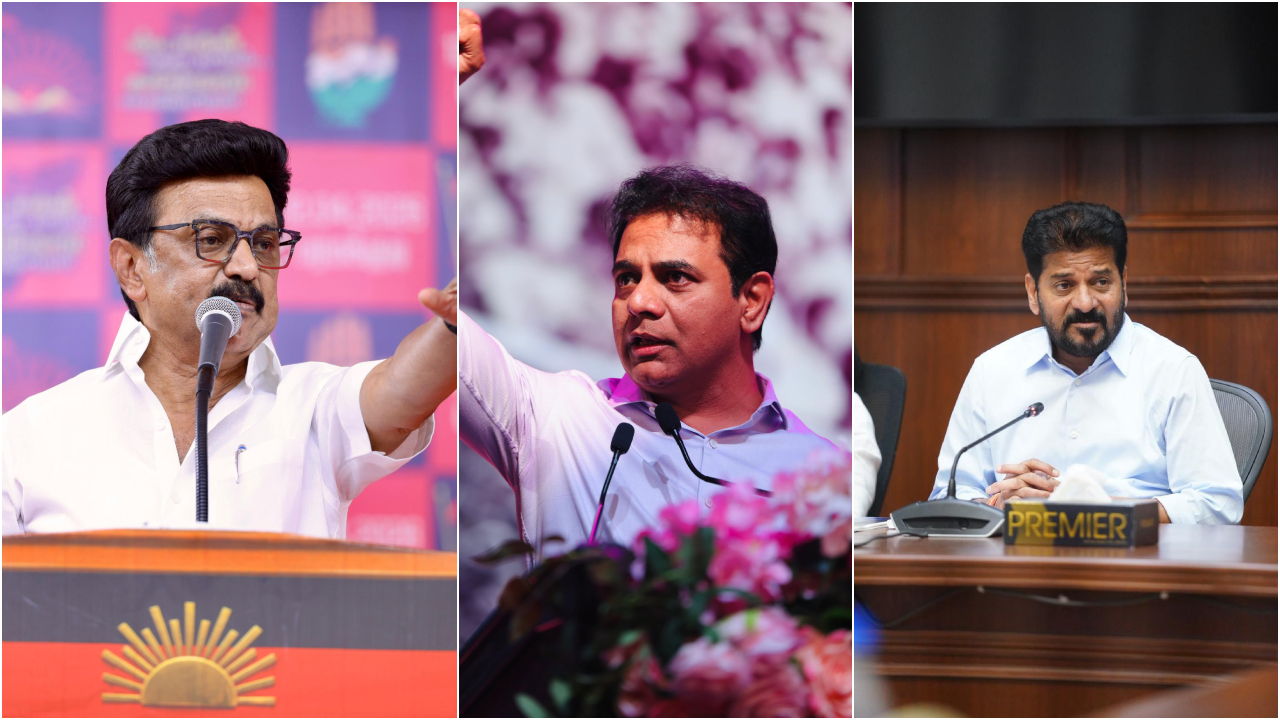
KTR’s post reflects a broader southern consensus against a purely population-based approach.

Synopsis: BRS working president KTR on 15 April, 2026, reaffirmed his party’s unchanged stand against population-based delimitation, warning it could spark a strong people’s movement across southern India and suppress the region’s parliamentary voice. Southern leaders echoed the concern: Tamil Nadu CM MK Stalin threatened massive protests that could bring the state to a standstill, while Telangana CM Revanth Reddy urged a united southern front and proposed a hybrid model for fair seat allocation.
Bharat Rashtra Samithi (BRS) working president KT Rama Rao on Wednesday, 15 April, reiterated his party’s long-standing stand against any delimitation exercise that could diminish southern states’ representation in Parliament, warning once again of a potential “strong people’s movement” across South India.
In a post on X, KTR quoted his own statement from September 2023 and declared, “This was the BRS stand three years ago. And it remains unchanged.”
This was the BRS stand three years ago
And it remains unchanged https://t.co/v0Qx6bNgZh
— KTR (@KTRBRS) April 15, 2026
KTR’s 2023 statement read: “This delimitation (if the numbers reported are right) will lead to a strong people’s movement in the entire Southern India. We are all proud Indians & representatives of the best performing states of India. We will not remain mute spectators if the voices and representation of our people in the country’s highest democratic forum are suppressed. Hope wisdom prevails and Delhi is listening.”
The fresh reaffirmation comes amid an intensifying national debate over the impending delimitation of Lok Sabha constituencies, expected after the next Census.
South India — which has successfully controlled population growth while contributing disproportionately to the national economy — fear they will lose relative parliamentary seats to northern states with higher population increases, potentially weakening their influence in national policy-making.
Also Read: MK Stalin issues ‘final warning’ to PM Modi over delimitation plans
KTR’s post reflects a broader southern consensus against a purely population-based approach. Several key leaders from the region have stepped up their opposition in recent days.
Our stand on delimitation has been clear from day one.
States contributing more to national growth must be rewarded.
Fiscal strength must be factored in, not population alone.
pic.twitter.com/mUkTCH1qH8— KTR News (@KTR_News) April 15, 2026
Tamil Nadu CM and DMK president MK Stalin has been among the most vocal critics. He has described delimitation as a “sword” hanging over southern states and warned that Tamil Nadu would launch protests if the exercise results in reduced representation.
Dear brother @Revanth_Anumula,
Our unity is to protect our state rights and secure a just and equitable future for our generations to come.
The South will stand together, speak with one voice, and uphold the true spirit of federalism.#Delimitation #TNWillFightTNWillWin https://t.co/ty6VbA9cbf
— M.K.Stalin – தமிழ்நாட்டை தலைகுனிய விடமாட்டேன் (@mkstalin) April 14, 2026
On Wednesday, Stalin convened an emergency video-conference meeting of DMK MPs to discuss the issue, followed by a meeting with district secretaries.
He has repeatedly stated that DMK “will not stand by and watch any attempt that places the rights of the southern States at stake while handing greater power to the north.”
Stalin’s Telangana counterpart, Revanth Reddy has taken concrete steps to forge a united southern front.
On 14 April, Tuesday, he wrote to his counterparts in Tamil Nadu, Andhra Pradesh, Karnataka, Kerala, and Puducherry — MK Stalin, N Chandrababu Naidu, Siddaramaiah, Pinarayi Vijayan, and N Rangasamy — urging them to present a coordinated response.
“A fragmented fight won’t work,” he stressed, warning that the current proposal risks institutionalising regional imbalances and eroding the South’s voice in Parliament.
The Constitution (131st Amendment) Bill is extremely ill-timed and poses serious questions that the Modi government must answer.
Under the garb of bringing forward women’s reservations, the BJP is looking to bulldoze a deeply flawed, unconstitutional and anti-federal…
— K C Venugopal (@kcvenugopalmp) April 14, 2026
Reddy also wrote to PM Modi, calling for an all-party meeting and proposing a hybrid model for seat allocation.
“50 percent of any increase in Lok Sabha seats based on population and the remaining 50 percent linked to each state’s GSDP contribution”, he added. Reddy argued that women’s reservation, national delimitation, and seat expansion are separate issues being “deliberately mixed” to confuse the public.
The concerns echo across other southern states. Karnataka CM Siddaramaiah and Kerala CM Pinarayi Vijayan have previously voiced apprehensions that a population-centric delimitation would penalise states for effective family planning and development efforts.
Meanwhile, Congress veteran and Rajya Sabha MP P Chidambaram called delimitation “mischievous and diabolical move”.
“When the strength of the Lok Sabha is increased by 50% from 543 to 815, the strength of TN will seemingly increase from 39 to 58. But this is an illusion. When delimitation takes place, it will reduce to 46 Uttar Pradesh’s strength will first increase from 80 to 120 and, after delimitation, it will further increase to roughly 140 All the Southern States that have currently a representation of 24.3% will find their representation reduced to 20.7%,” Chidambaram posted on X.
The apprehensions I had voiced in the last week have proved right
When the strength of the Lok Sabha is increased by 50% from 543 to 815, the strength of TN will seemingly increase from 39 to 58. But this is an illusion. When delimitation takes place, it will reduce to 46
Uttar…
— P. Chidambaram (@PChidambaram_IN) April 15, 2026
Also Read: Centre proposes Bill to hike Lok Sabha seats from 543 to 850, bypasses post-2026 delimitation
The delimitation freeze, extended by the 84th Constitutional Amendment until after the first Census post-2026, is now under active discussion.
While the Centre has given assurances — including from Union Home Minister Amit Shah — that no southern state will lose existing seats, southern parties remain unconvinced without explicit safeguards or alternative formulas that recognise economic performance and demographic responsibility.
As the row deepens, political observers say it could sharpen the North-South divide ahead of key elections and test the federal fabric of Indian democracy.



