

Published Apr 30, 2026 | 1:46 PM ⚊ Updated Apr 30, 2026 | 1:46 PM

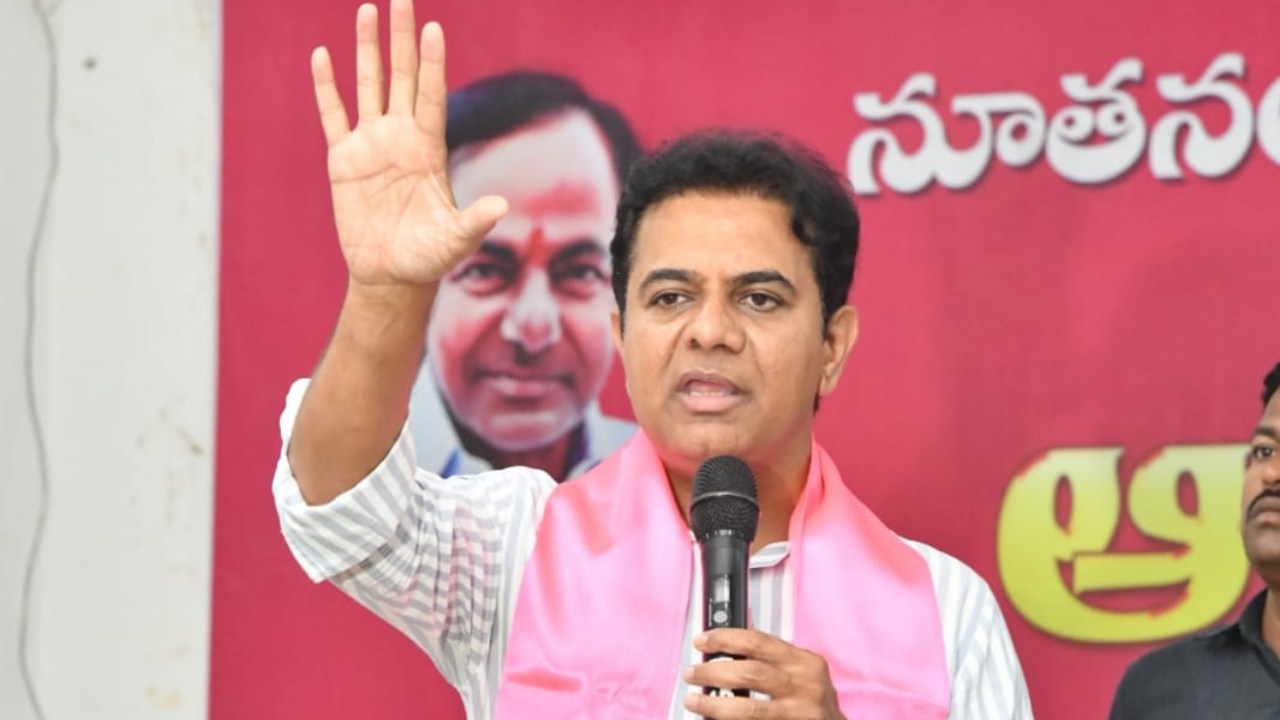
BRS working president KT Rama Rao. Credit: x.com/BRSparty

Synopsis: BRS is pursuing a twin-track revival in Telangana—organisational reset and agrarian agitation. Following its 27 April overhaul, the party is mobilising cadres for a 6 May Warangal farmers’ convention, timed against Congress’ “Rythu Declaration” anniversary. By highlighting procurement delays, fertiliser shortages, and farmer distress, BRS aims to reclaim the agrarian narrative and sharpen its opposition role.
The Bharat Rashtra Samithi (BRS) has moved swiftly to convert internal consolidation into political mobilisation following its 27 April State Executive Committee meeting.
The twin-track strategy—organisational reset and issue-based agitation— unveils an attempt by the regional party to regain initiative over the ruling Congress in Telangana.
At the centre of this approach is a farmers’ convention scheduled for 6 May in Warangal. The choice of venue and timing is calibrated. The event coincides with the anniversary of the Congress’ 2022 “Rythu Declaration,” allowing BRS to reframe that moment as a benchmark for accountability rather than promise.
By returning to the same political ground, BRS is attempting to turn symbolism into visceral dissection of the Congress performance on the agriculture front. The convention will be addressed by party working president KT Rama Rao, who has emerged as the principal face of BRS’ renewed offensive.
His declares unequivocally that Congress government has failed to translate pre-election assurances into tangible outcomes for farmers. The Warangal platform is expected to make this line amply clear, while serving as a show of cadre strength.
Also Read: BRS reset: KCR bets on farmers, Telangana pride to mount comeback against Congress
The Warangal mobilisation follows a sweeping organisational overhaul led by party chief K Chandrashekar Rao at the party’s executive meeting on 27 April.
మే 6న వరంగల్లో రైతు సభ
డిక్లరేషన్ల పేరిట రాష్ట్రంలోని అన్ని వర్గాలను మోసం చేసిన కాంగ్రెస్..
డిక్లరేషన్లు ప్రకటించిన చోటే బీఆర్ఎస్ సమరశంఖం 🔥నాలుగేండ్ల కింద రాహుల్ గాంధీ వరంగల్ వేదికగా ప్రకటించిన డిక్లరేషన్తో తెలంగాణ రైతాంగాన్ని వంచించిన రైతుద్రోహి రేవంత్!
వరంగల్లో రైతు… pic.twitter.com/vlumoKLQix
— BRS Party (@BRSparty) April 29, 2026
In a crucial move, BRS dissolved all its committees except the State Executive, effectively resetting the party’s internal structure. This “wipe-the-slate-clean” approach is designed to address stagnation, re-energise cadres, and rebuild the party from the grassroots.
A membership drive and cadre training programmes are already underway. The emphasis is on reconstructing the party’s organisational pyramid—from village units upwards—while tightening discipline and improving communication channels. This back-to-basics strategy suggests that BRS views its recent electoral setbacks not merely as political losses but as symptoms of organisational drift.
Substantively, BRS is seeking to reclaim the agrarian narrative that was the fulcrum of its decade-long rule. The party has compiled a list of farmer-centric grievances to challenge the Congress government: fertiliser shortages, concerns over seed quality, delays in procurement of paddy and maize, and power supply disruptions affecting irrigation.
BRS leaders also point to reports of farmer suicides as evidence of systemic distress. By framing these issues as interconnected rather than isolated, the party is constructing a broader argument of administrative strain under the current regime.
Leaders in the erstwhile Warangal district cite bottlenecks in procurement centres—shortages of gunny bags, logistical gaps in transportation, and delays that force farmers into distress sales. Such granular feedback is being used to lend credibility to the party’s narrative and sharpen its campaign messaging.
Also Read: Kavitha launches new party— Telangana Rashtra Sena (TRS), BRS dubs it ‘duplicate’
A key element of BRS’ strategy is to juxtapose current conditions with its own record in power. KT Rama Rao has repeatedly invoked the tenure of K Chandrashekar Rao to argue that procurement was more efficient and state support more robust. The claim that “every grain” was procured under the previous regime is central to this comparative discourse, even as Congress is expected to contest such assertions.
Parallel to its issue-based campaign, BRS is investing in electoral groundwork. With the Greater Warangal Municipal Corporation elections on the horizon, the party is focusing on booth-level management and voter roll verification. KTR has instructed party cadres to engage closely with the SIR of electoral rolls, emphasising two objectives — inclusion of all eligible voters and elimination of duplicate or ineligible entries.
The appointment and training of Booth Level Assistants (BLAs) is being done on priority, reflecting a recognition that electoral outcomes often hinge on micro-level organisation.
The party is also drawing lessons from past controversies, including allegations surrounding voter rolls in earlier elections. Senior leaders, including Talasani Srinivas Yadav, have been tasked with overseeing these efforts in key urban centres like Hyderabad.
Taken together, these developments point to a coordinated attempt by BRS to reposition itself as a credible and combative opposition. By combining organisational restructuring with a targeted agrarian campaign, the party is seeking to rebuild momentum and reconnect with its core constituencies.
The 6 May Warangal convention will be an early test of this strategy. Its success will not be measured solely by turnout, but by whether BRS can effectively shift the political narrative and compel the ruling Congress to respond on its terms.



