

Published Oct 04, 2026 | 10:02 PM ⚊ Updated Oct 04, 2026 | 10:02 PM

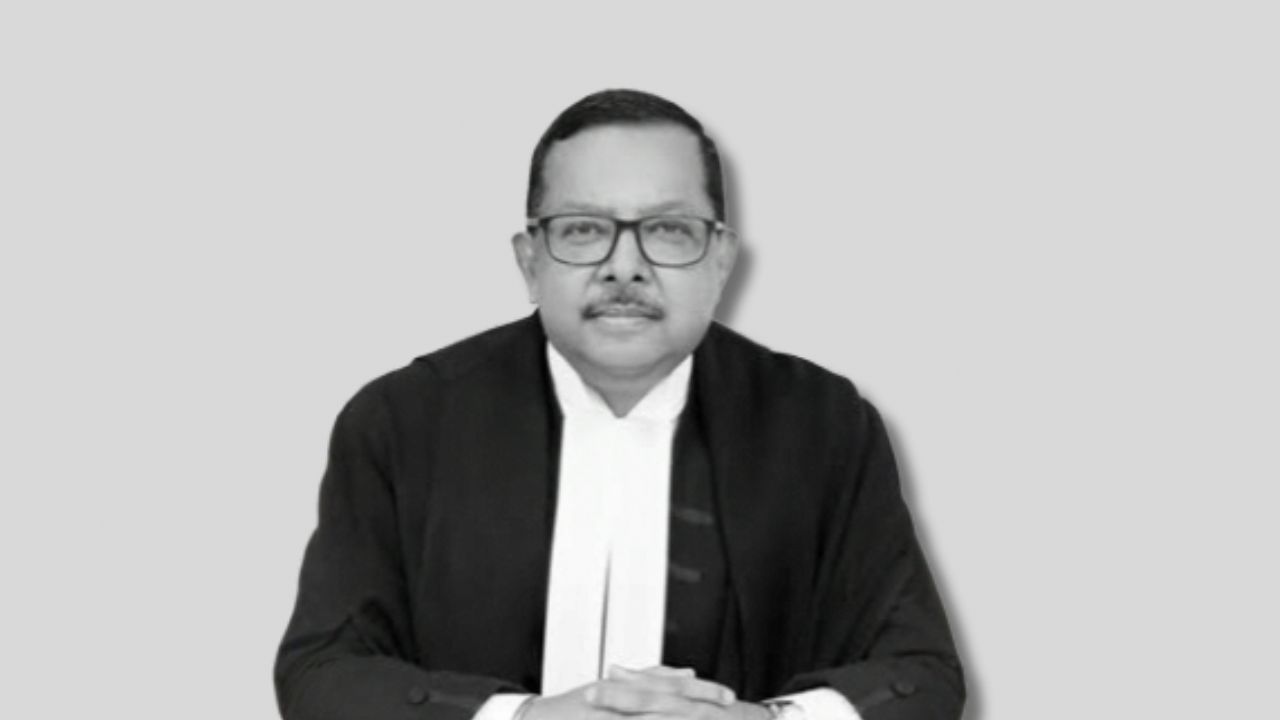
Justice Ujjal Bhuyan.

Synopsis: Supreme Court Justice Ujjal Bhuyan has criticised the Election Commission’s Special Intensive Revision of electoral rolls, saying any process that disenfranchises millions of citizens is “intrinsically arbitrary” and violates the constitutional order. He said voters’ names cannot be removed without notice and a hearing, except in the case of a dead voter, and that no authority or court is above the Constitution.
Supreme Court Justice Ujjal Bhuyan has said that any process that disenfranchises millions of Indian citizens is “intrinsically arbitrary” and amounts to a negation of the constitutional order, in a striking criticism of the Election Commission of India’s (ECI) ongoing Special Intensive Revision (SIR) of electoral rolls.
“If any process results in disenfranchising millions and millions of Indian citizens, making them second-class citizens in their own country in the sense of being citizens without voting rights, such a process is intrinsically arbitrary. No amount of whataboutery can justify it,” Justice Bhuyan said while delivering the valedictory address at the 19th NALSAR-Justice BR Sawhney Memorial Moot Court Competition at NALSAR University of Law, Hyderabad, according to Bar and Bench.
“It strikes at the very heart of the Constitution and I would go to the extent of saying that it is a negation of the constitutional order which we have adopted under the Constitution of India,” he said.
Justice Bhuyan said the Constitution does not recognise separate classes of citizens based on their voting rights.
“Indian Constitution does not provide for two classes of citizens: citizens with voting rights and citizens without voting rights. Any process which leads to wholesale disenfranchisement of Indian citizens, making them citizens without voting rights, would be violative of Articles 326 and 14 of the Constitution of India,” he said.
“No authority can do it; no court can condone it. No one is above the Constitution.”
The SIR was first undertaken in Bihar in June 2025 and has since been extended across most of the country in three phases. The ECI has struck more than 13 crore names from the draft electoral rolls in 30 States and Union Territories.
The scale of the deletions, apart from the very legality of the exercise, have put the Commission and its handling of the SIR under intense public scrutiny.
Justice Bhuyan said an existing voter’s name could not be removed from the electoral roll without notice and an opportunity to be heard, except in the case of a dead voter.
“Except in the case of a dead voter, the name of a voter once enlisted in the electoral roll cannot be deleted without notice and hearing. From the persona of an Indian citizen, the right to vote or right to be included in the voters list cannot be detached. It will be like taking out the soul from the body,” he said, adding that the right to vote forms part of the basic structure of the Constitution.
The Supreme Court has held in several judgments that voting is not a fundamental right, while recognising it as a constitutional right. Justice Bhuyan said this distinction did not diminish its constitutional importance.
“Therefore, in my view, the right of an Indian citizen to cast his vote is central to the basic structure doctrine itself,” he said.
“Indian citizens’ right to vote is intertwined with India’s long years of struggle against foreign rule. It is a manifestation of our freedom achieved after so much of struggle and sacrifice. Article 326 cannot be tinkered with at all.”
(Edited by Dese Gowda)



