

Published Apr 19, 2026 | 1:10 PM ⚊ Updated Apr 19, 2026 | 1:10 PM

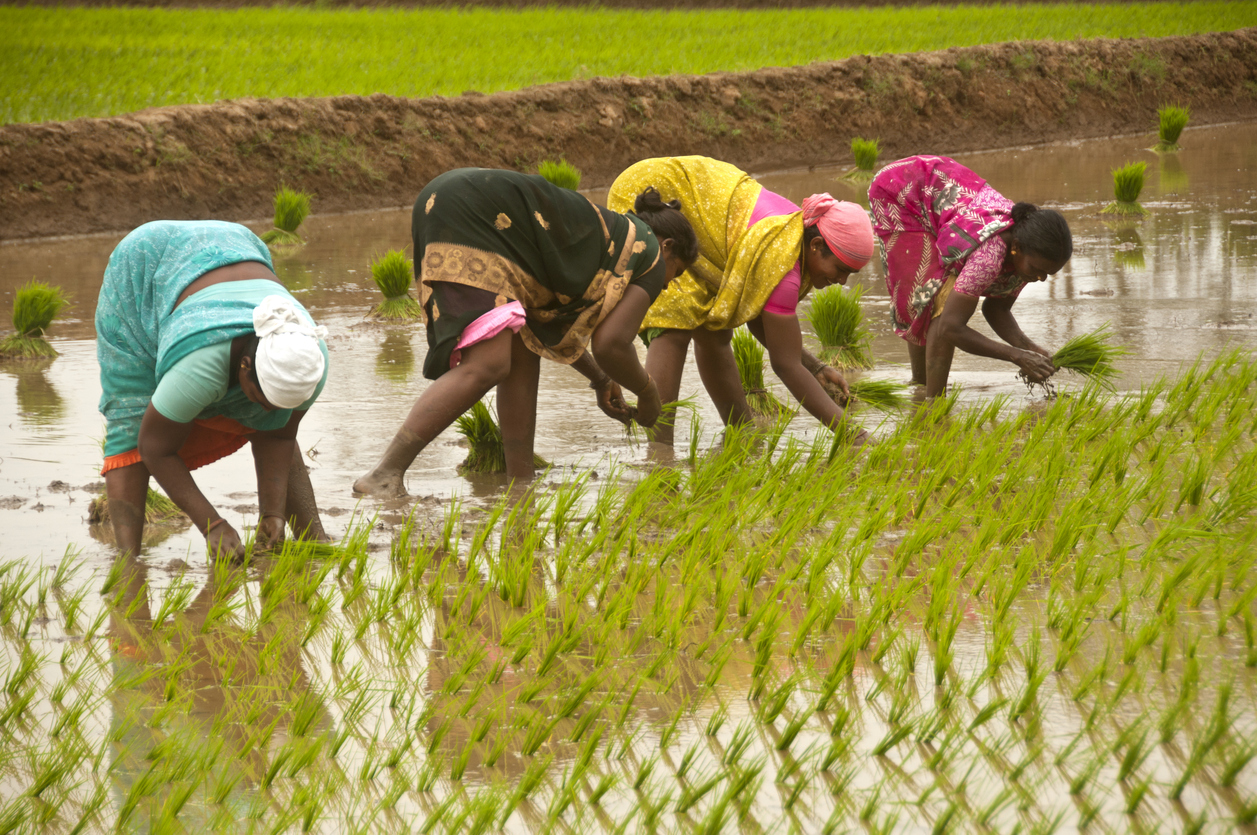
Representational image. credit: iStock

Synopsis: The Telangana SEEEPC Survey 2024 reveals stark caste-linked land disparities. OC Reddys own nearly triple their population share of land, while SCs and Shaik Muslims remain disadvantaged. Irrigated land concentrates among privileged castes, skewing welfare schemes like Rythu Bharosa. Experts urge shifting from land-based benefits to education-focused, data-driven support to reach the most deprived households effectively.
In Telangana, the ground beneath your feet determines more than what you grow. It determines what the government gives you.
The OC Reddy community forms 4.8 percent of Telangana’s population. It owns 13.5 percent of the state’s land, nearly three times its population share. It also receives a larger share of the state’s agricultural welfare schemes than Scheduled Caste communities, whose backwardness score runs at three times that of General Castes.
This is one of the findings that sits at the centre of the Telangana Socio, Economic, Educational, Employment, Political and Caste (SEEEPC) Survey 2024, the most detailed caste census any Indian state has conducted. The survey covered 3.55 crore people across 242 caste groups.
The Independent Expert Working Group (IEWG), constituted by the Telangana government in March 2025 to analyse the data, described what it found as a severe indictment of existing land-linked development models.
The survey maps land ownership across every caste group in the state and what it finds is a distribution that mirrors the caste hierarchy with precision.
OC Reddys own 13.5 percent of Telangana’s land at 4.8 percent of the population. OC Velamas own 1.0 percent of land at 0.4 percent of the population, two and a half times their share.
At the other end, the SC Madiga community forms 10.3 percent of the population, the largest standalone community in the state, and owns 6.5 percent of the land. The BC-E Shaik Muslim community forms 7.9 percent of the population and owns 2 percent of the land. That land deficit for Shaik Muslims represents the sharpest single disparity the survey records.
The IEWG describes these figures as reflecting a legacy of privilege or exclusion that communities have inherited over time. Landholding and wealth accumulation have followed caste lines across generations and the survey data shows that no policy intervention has substantially altered that distribution.
Also Read: Telangana caste survey finds high rate of under-18 marriages of girls in OC Iyengars
The survey goes further than counting acres. It maps what kind of land each community holds and that distinction carries as much weight as ownership itself.
The average General Caste family owns 0.42 acres of irrigated land. The average Scheduled Caste family owns 0.20 acres. 44.1 percent of land held by General Castes is irrigated, against 32.9 percent for Scheduled Tribes.
Irrigated land produces year-round. It generates surplus. It builds the kind of economic stability that compounds across generations. Dry land does neither.
This is where the survey’s most counter-intuitive finding lands. Scheduled Tribes report the highest percentage of households with land at 58.1 percent, far above the state average of 35.6 percent and the General Caste average of 33.7 percent. On paper, more ST families own land than any other group in Telangana.
In practice, their land is predominantly dry, unirrigated or forest land. The ST Kolam community, which records the state’s lowest irrigation rate at 8.3 percent of its land, owns acres that cannot sustain the agricultural livelihoods they are supposed to support. The
IEWG identifies this as a land paradox: asset rich on paper, income poor in practice. Mere ownership of land, the report states, does not translate into reducing overall backwardness.
90.5 percent of Scheduled Caste families and 85.0 percent of Backward Class families own less than five acres. General Caste households are nearly four and a half times more likely than Scheduled Caste households to own more than 20 acres. Large-scale landholding in Telangana concentrates among communities that already hold every other advantage.
The land distribution alone would be a significant finding. What makes it a policy failure is how welfare schemes interact with it.
Telangana runs several flagship agricultural welfare programmes. The survey tracks who benefits from each of them and the pattern it finds runs consistently in one direction.
Rythu Bharosa, the state’s farm investment support scheme, links eligibility to land titles. 13 percent of its beneficiaries belong to General Caste communities, which is higher than their population share of 12 percent. Scheduled Castes, who record a Composite Backwardness Index score of 96, the highest in the state, represent only 14 percent of beneficiaries despite forming 17.4 percent of the population.
Free electricity for agriculture follows the same pattern. General Castes capture 15 percent of beneficiaries. This happens because the scheme requires borewells and pump sets to access it, assets that OC communities own at higher rates because they own more irrigated land. The scheme rewards those who already hold productive infrastructure.
Rythu Bhima, the state’s agricultural insurance programme, also over-represents General Castes at 13 percent of beneficiaries.
The IEWG notes that while OC communities hold the lowest backwardness score in the state at 31, their historical landholding advantage allows them to capture a larger share of agricultural welfare than communities with backwardness scores three times higher.
The welfare architecture was built around land. Land was never distributed equally. The result is a system that channels resources toward those who need them least and away from those the system was designed to reach.
Also Read: Caste survey: Telangana’s Dalits and Adivasis go to the Gulf, forward castes fly to the US and UK
The survey does identify one pathway that breaks this pattern. Communities that moved away from land as their primary source of wealth and toward education have achieved mobility that land-poor communities have not.
BC-B Goldsmiths and BC-C SC Christians own very little land but record far lower backwardness scores overall. They shifted toward English-medium education and professional employment. BC-B Kuruba Kuruma communities hold high land ownership at 63.6 percent of households but remain more backward because their small dry plots have not translated into educational or occupational advancement.
The IEWG describes this as a shift from land centrality to education centrality. For communities locked out of productive land, education has functioned as the only available escalator.
The report argues that the state needs to move from what it calls a social justice well, broad resources poured into general categories, toward a social justice tap. A system that uses the survey’s granular Composite Backwardness Index data to deliver resources directly to the most deprived households, whether or not they hold a land title.
For a landless Madiga family or an ST household farming dry soil in Mulugu, that shift would mean the difference between being counted in the welfare system and being bypassed by it.



