

Published Sep 27, 2026 | 12:26 PM ⚊ Updated Sep 27, 2026 | 12:28 PM

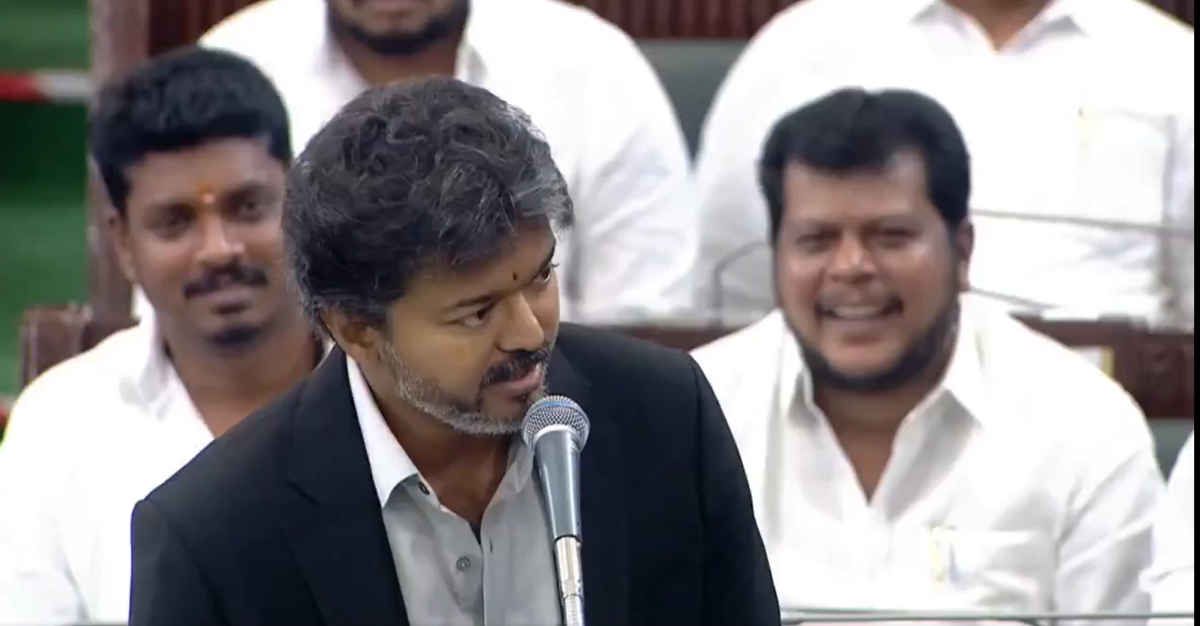
TN CM Vijay in Assembly. (Screengrab)

Synopsis: Tamil Nadu’s TVK-led government has exempted the Public (Law and Order) Department from the RTI Act by classifying it as an “Intelligence and Security Organisation.” The move restricts public access to information on sensitive law-and-order matters, including communal clashes, preventive detention and custodial deaths, drawing criticism from Congress and CPI(M).
Chief Minister C. Joseph Vijay-led Tamilaga Vettri Kazhagam (TVK) government in Tamil Nadu has issued an order exempting the Public (Law and Order) Department from the purview of the Right to Information (RTI) Act, 2005, by declaring it an “Intelligence and Security Organisation.”
The order was issued under Section 24(4) of the RTI Act, 2005. The order was issued by the Human Resources Management Department and notified in the Government Gazette.
According to the Gazette notification, the provisions of the RTI Act will no longer apply to the department, subject to the exceptions provided under the Act.
“In exercise of the powers conferred by sub-section (4) of section 24 of the Right to Information Act, 2005 (Central Act 22 of 2005), the Governor of Tamil Nadu hereby specifies the Public (Law and Order) Department being an Intelligence and Security Organization established by the Government of Tamil Nadu for which the said Act shall not apply,” the order said.
Also Read: Gem Veeramani case: DMK–TVK blame game, questions over earlier probe and what survivors need now
The government action means several key law-and-order-related details will no longer be accessible under the RTI Act. This includes details regarding sensitive matters such as communal and caste clashes, political agitations and preventive detention cases under the Conservation of Foreign Exchange and Prevention of Smuggling Activities Act (COFEPOSA) and the National Security Act (NSA).
The Public (Law and Order) Department also deals with representations and habeas corpus petitions filed by the detenus or on their behalf in the High Court and Supreme Court.
It also examines enquiry reports into police firing incidents, custodial deaths, custodial torture and deaths of remand prisoners. It also looks into references made by the National Human Rights Commission (NHRC) concerning matters dealt with by the Law and Order wing.
The department conducts monthly law and order review meetings and special law and order meetings as per the instructions of the Chief Secretary. It is responsible for monthly reports sent to the Centre regarding law and order and communal incidents in the state and furnishing responses to questions raised in Lok Sabha and Rajya Sabha. It also deals with agitations by students, agricultural labourers and political parties.
It handles requests for withdrawal of cases registered on political grounds and matters relating to sanction of prosecution for defamatory articles, news items, and speeches.
Also Read: Does TN Law Minister CTR Nirmal Kumar want to end the Kurian Joseph Committee?
The TVK-led government’s move has invited criticism, even from its own ally Congress.
In a post on X, Congress MP Karti P. Chidambaram described the RTI Act as a “landmark decision” brought in by the UPA government to strengthen democratic accountability across India and argued that the TN government’s move “does not set a good precedent.”
“The Law and Order Department handles crucial matters such as examining inquiry reports on police firing, custodial deaths, torture, and deaths of remand prisoners, security-related detention cases, communal and caste clash reports, requests for withdrawal of politically sensitive cases and matters relating to sanction of prosecution for defamatory articles, news items, and speeches. This crucial information is now being shielded from the public,” he wrote.
“Such rollbacks are not in line with transparent governance. RTI must be expanded, not restricted,” he added.
The @TVKVijayHQ government’s move to exempt the Public (Law and Order) Department from the RTI Act does not set a good precedent. It’s worth recalling that RTI was a landmark decision brought in by the @INCIndia headed UPA government, intended to strengthen democratic…
— Karti P Chidambaram (@KartiPC) September 27, 2026
Coming down heavily on the Vijay-led government, Communist Party of India (Marxist) leader and Madurai MP Su. Venkatesan said the move deserves severe condemnation. He claimed it was part of an “overt attempt to turn Tamil Nadu into a police state” and called for the immediate withdrawal of the decision.
“Government officials are ordering surveillance of leftist organizations. Custodial deaths are occurring. The education department has been ordered to suppress student protests. The police are entering college campuses and arresting students. Struggles for legitimate rights are being suppressed through violence. In this context, exempting law and order matters from the Right to Information Act is deserving of severe condemnation,” he wrote in a post on X.
தகவல் அறியும் உரிமைச் சட்டத்திலிருந்து பொதுத்துறையின் சட்டம் ஒழுங்கு விவகாரங்களுக்கு மட்டும் விலக்களிக்கப்பட்டுள்ளது.
இடதுசாரி அமைப்புகளைக் கண்காணிக்க அரசு அதிகாரிகள் உத்தரவிடுகிறார்கள்.
காவல் மரணங்கள் நடக்கின்றன.
மாணவர் போராட்டங்களை ஒடுக்க கல்வித்துறைக்கு… pic.twitter.com/30RNisRZWQ
— Su Venkatesan MP (@SuVe4Madurai) September 27, 2026
“This is an overt attempt to turn Tamil Nadu into a ‘police state’. The government must immediately withdraw this order,” he said.
(Edited by Fayisa CA)



