

Published Sep 27, 2026 | 11:30 AM ⚊ Updated Sep 27, 2026 | 11:30 AM

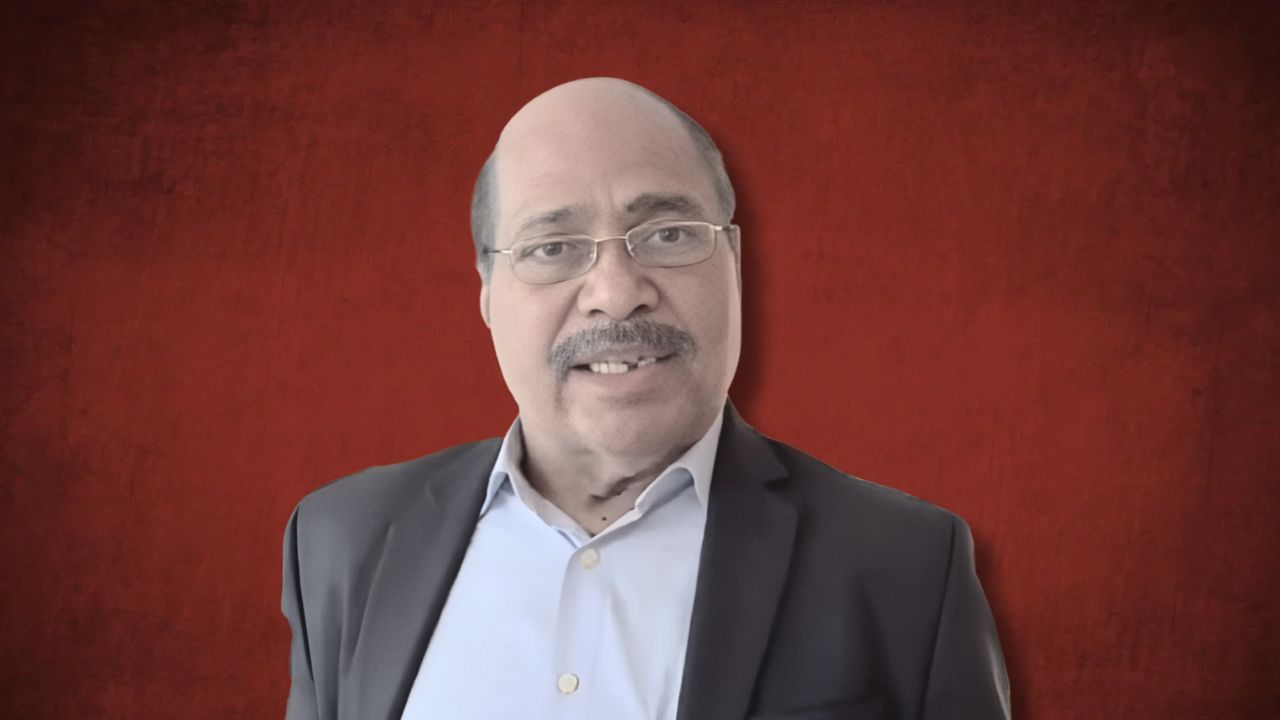
The case has now also become a political flashpoint, with the ruling TVK and the opposition DMK passing the buck over the handling of the case.

Synopsis: The POCSO case involving industrialist R Veeramani has sparked a DMK–TVK blame game, but questions over the earlier investigation, Assistant Commissioner Yasmin’s “further action dropped” report and the handling of evidence remain unanswered. An SIT is now probing the 2024 complaint and the 2025 investigation. What happened at each stage and whether the system is doing enough to ensure justice and long-term support for survivors.
The sexual assault case registered under the POCSO Act against octogenarian granite businessman R. Veeramani in Tamil Nadu has raised questions not only over the alleged offences but also over the manner in which the case was investigated in its initial stages.
A report submitted by Anti-Vice Squad (AVS) ACP MA Yasmin in February 2026 stated that the organisation’s office, which initially received the evidence, had no CCTV cameras and that cameras in the surrounding areas were not functioning.
The Indian Community Welfare Organisation (ICWO), a non-profit, claimed that an unidentified man delivered the pen drive containing the alleged acts of the businessman to its office on 6 October 2025.
On Saturday, 26 September 2026, South First visited the West Anna Nagar locality where ICWO’s office is located. CCTV cameras were seen at several houses along the street.
The non-availability of CCTV footage was one of several mysteries surrounding the earlier investigation, which was followed by a “further action dropped” report in February and the subsequent reopening of the case on the orders of the POCSO court.
The case has now also become a political flashpoint, with the ruling Tamilaga Vettri Kazhagam (TVK) and the opposition Dravida Munnetra Kazhagam (DMK) passing the buck for the earlier handling of the case.
But beyond the political blame game, two questions remain central: What happened during the initial investigation, and what does the system need to do now to protect and support the survivors?
The ‘Gem’ Veeramani case came to light after an unidentified person handed over a pen drive containing a video and a note naming Veeramani and Shanti as alleged accused, according to ICWO secretary AJ Hariharan.
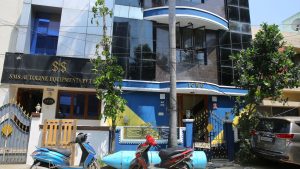
The Indian Community Welfare Organisation (ICWO) office is in Vallalar Nagar Sixth Street, West Anna Nagar.
Hariharan told South First that the pen drive was handed over to their organisation on 6 October 2025.
ICWO staff who viewed the video felt the incident involved a serious offence against a minor. The video and accompanying note were subsequently handed over to the AVS
Hariharan said an AVS officer advised the organisation to submit a formal complaint. An FIR was subsequently registered.
According to ACP Yasmin’s closure report, police registered the first information report under the POCSO Act on 7 October 2025.
The report said investigators carried out an investigation. It also mentioned recording the complainant’s statement.
It also stated that investigators tried to examine CCTV footage from the ICWO’s neighbourhood to identify the person who handed over the pen drive.
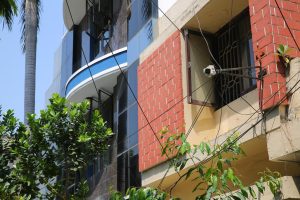
CCTV cameras installed at houses along Vallalar Nagar Sixth Street
The report said no cameras were installed at the ICWO office. None of the CCTV cameras in the surrounding area was functioning, it added.
However, according to locals and Hariharan, the CCTV cameras had been installed and were functioning at the time of the incident.
Hariharan also told South First that investigators did not question him.
“From the beginning until now, nobody asked us questions,” he said.
Hariharan said that after filing the complaint, he followed up on the matter twice.
“In February, a report was submitted before the POCSO court stating that the case was being completely dropped as there was no evidence. After that, following Judge Padma Shanmugasundaram’s order, the case was reopened. In August, I was called and taken to the location where the investigation was conducted,” he said.
South First visited the ICWO office located on Vallalar Nagar Sixth Street in West Anna Nagar and found that CCTV cameras were installed at several houses along the street.
Also Read: ‘Those are all young children’: Vijay brings up Veeramani POCSO case in Maduranthakam campaign
The question of when the case was effectively brought to an end, and who made the decision, has now become a major point of political contention.
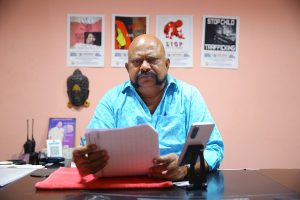
“Political games are being played instead of ensuring justice for survivors,” A.J. Hariharan said.
TVK has claimed on social media that although the case was registered in 2025, no meaningful action was taken for several months and that the police submitted a report seeking to close the case during the previous DMK government.
The issue turned political when Chief Minister C Joseph Vijay referred to the case during his election campaign in Maduranthakam on Friday, 25 September, and criticised the DMK.
The DMK pointed to what happened in court after the TVK government came to power.
The Opposition party argued that the public prosecutor under the TVK-led government had, on 19 June, even argued for the closure of the case. It was reopened only after Judge Padma Shanmugasundaram rejected the final report and ordered further investigation.
“If any evidence or witnesses are obtained in future in connection with this matter, appropriate action will be taken in accordance with the orders of the above court,” the closure report submitted in February 2026 said.
The report remained on record when the case came up for hearing in June 2026. No appeal had been filed against the report during this period.
When the case came up before the court on 19 June, Judge Shanmugasundaram rejected the report. “Final report not accepted. Further investigation is ordered. Investigation shall be completed, or progress shall be reported in four weeks,” the court ordered.
Following the court’s directive, the investigation proceeded. Investigators identified survivors and recorded their statements. Investigators subsequently arrested four people, including Veeramani, and remanded them to judicial custody.
Two processes unfolded simultaneously.
On one side, investigators identified survivors, recorded their statements, and took steps to protect them. On the other, they identified and arrested the accused.
At the same time, investigation details continued to emerge through different channels and spread widely.
Child rights activists said the unabated circulation of sensitive information could further affect the survivors, particularly when details relating to children and their experiences become public.
“Neither this government nor the previous government has shown any concern for the children or initiated any steps to ensure justice for them. No one is thinking about providing justice for the survivors or how to prevent such incidents from happening again. Instead, political games are being played,” Hariharan said.
For him, the political battle between the DMK and the TVK government over responsibility would not address the larger problem.
The more immediate question, he argued, was whether the state has a strong support system to help children and their families deal with the consequences of sexual abuse.
According to child rights activists, Tamil Nadu’s support system for abused children remains weak compared with some other states.
Hariharan pointed to Kerala’s allocation for its Commission for Protection of Child Rights, which he said was around ₹7 crore annually.
In Tamil Nadu, he said, the corresponding allocation was only around ₹40 lakh, inadequate given the long-term impact such cases can have on survivors and their families.
“Children who have suffered sexual abuse or other forms of harassment may have to deal with the consequences throughout their lives. The government must provide a proper support system for POCSO survivors for a specific period,” he said.
Hariharan pointed to the provision for a “support person”, whose role included assisting the child through the legal process, accompanying the child to court and helping with various procedures.
“But for carrying out these responsibilities, the amount allocated for the child is only ₹10,000 for two years. That is not even enough for a month,” Hariharan said.
“The child is not the only person affected. The entire family can be affected, and their livelihood can also suffer. The government needs to consider all these factors and allocate adequate funds,” he added.
Also Read: CPI(M) stages protest over Gem Veeramani case, demands court-monitored SIT
Hariharan also alleged that operators working for Tamil Nadu’s Child Helpline 1098 often went three or four months without salary.
He argued that strengthening the support system should be the priority rather than limiting the response to individual criminal cases.
For him, preventing such incidents required intervention at multiple levels.
First, children required greater awareness about abuse and how to seek help. Second, the government must increase funding for child protection mechanisms; third, it must impose stronger punishment on the guilty.
The case has now entered another phase with the formation of a Special Investigation Team (SIT), expected to examine not just the allegations against Veeramani but also the way the case was handled at different stages.
One key issue before the SIT is Congress leader MP Ranjan Kumar’s claim that he submitted a complaint about Veeramani in 2024, well before the POCSO case was registered in October 2025.
The SIT is expected to establish the content of the 2024 complaint, who received it, what action was taken, and whether any information or evidence available at that stage was acted upon.
The team will also examine the circumstances surrounding the 2025 investigation, including how police handled the initial complaint, the evidence available to them, and the investigative steps that ultimately led to the “further action dropped” report.
For the survivors, however, the most important issue may be what comes after the headlines fade: whether the state can provide the protection, financial assistance, legal support and long-term care they may need to rebuild their lives.
(Edited by Majnu Babu).



