


It was also argued that the single judge’s order contained personal observations and overlooked binding Supreme Court precedents.

Published Dec 15, 2025 | 7:05 PM ⚊ Updated Dec 15, 2025 | 7:05 PM

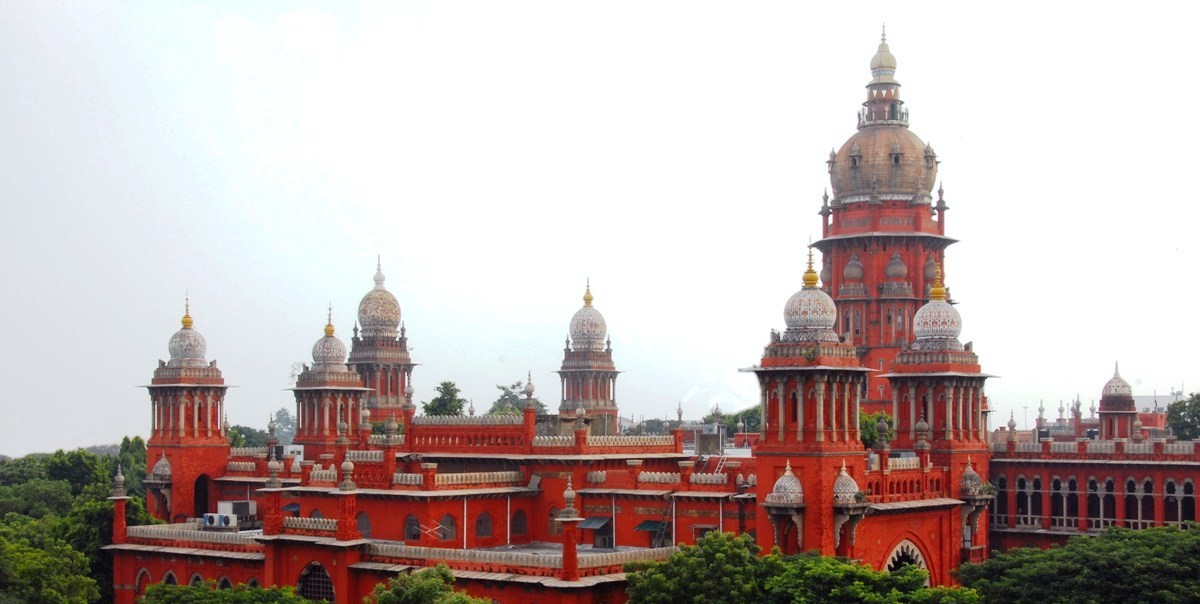
Madras High Court. (Wikimedia)
Synopsis: Appearing for the Thirupparankundram Devasthanam, senior counsel submitted that the temple administration alone has the exclusive authority over temple rituals and customs, and that no individual can claim a personal right to alter or enforce religious practices. It was argued that temple rituals are governed by Agama rules, statutory provisions and regulations under the Hindu Religious and Charitable Endowments (HR&CE) Act, and cannot be interfered with through individual claims.
The hearing on the appeals concerning the lighting of Karthigai Deepam at the summit of Thirupparankundram hill began on Monday, 15 December, before the Madurai Bench of the Madras High Court.
The Division Bench comprising Justice G. Jayac handran and Justice K.K. Ramakrishnan heard the matter, and adjourned the case to Tuesday, 16 December.
Appearing for the Thirupparankundram Devasthanam, senior counsel submitted that the temple administration alone has the exclusive authority over temple rituals and customs, and that no individual can claim a personal right to alter or enforce religious practices. It was argued that temple rituals are governed by Agama rules, statutory provisions and regulations under the Hindu Religious and Charitable Endowments (HR&CE) Act, and cannot be interfered with through individual claims.
The Devasthanam contended that in the earlier proceedings, individual arguments were heard at length, while the Dargah side was neither properly heard nor initially impleaded. It was pointed out that the court later impleaded the Dargah on its own. While the single judge had observed that lighting a Deepam forms part of Tamil culture, the Devasthanam argued that Karthigai Deepam is inseparably connected to temple culture and Agamic tradition.
Senior counsel S. Sridhar submitted that for more than a century, the Karthigai Deepam has been traditionally lit only at the Uchchipillaiyar Temple. He questioned whether the single judge had obtained expert opinions before issuing directions, and argued that the petitioner was attempting to change long-standing temple customs, which is not a legally enforceable individual right.
He further stated that lighting a lamp on a hill as part of a temple ritual cannot be equated with lighting a lamp in a private household, and that the petitioner had treated Karthigai Deepam as a domestic act rather than a regulated temple ritual.
It was also argued that the single judge’s order contained personal observations and overlooked binding Supreme Court precedents.
Further, reference was made to a 2021 Supreme Court judgment which held that High Courts cannot directly interfere in temple administration. The Devasthanam submitted that individuals cannot invoke writ jurisdiction to claim rights over daily worship or ritual practices, and that such disputes must be adjudicated before a civil court. “Any grievance relating to temple customs must first be raised with the temple administration.”
The Devasthanam relied on several Supreme Court judgments relating to prominent temples and pointed out that even in the case of Tirupati Devasthanam, the apex court has categorically held that Agama rules cannot be violated.
Introducing new practices contrary to Agama norms requires broad consultation and consensus. It was argued that the petitioner had failed to establish that lighting a Deepam on the hilltop structure was ever an Agama-sanctioned practice.
The Devasthanam maintained that the single judge failed to consider the arguments advanced by the temple, the State and the HR&CE Department, while the administration was otherwise approaching the issue with caution due to its sensitive nature.
Senior counsel Jyothi, appearing for the HR&CE Department, also advanced detailed submissions. She stated that the Tamil Nadu HR&CE Act clearly prescribes procedures for religious practices and temple administration. Responding to a query from the Bench, the department confirmed that the HR&CE-appointed trustee board is currently in office.
Counsel cautioned that religious matters are highly sensitive and should not be allowed to create unnecessary tension, and argued that temple trustees were being unfairly portrayed as persons lacking devotion or attachment to the temple.
The HR&CE Department placed extensive historical and archaeological materials before the court.
Reference was made to a book written in 1920 by a scholar named Bose, which records the traditional location where Karthigai Deepam was lit. A 1981 publication of the Tamil Nadu Archaeology Department, with a foreword by renowned scholar Nagaswamy, was also submitted.
These works describe a Deepa Thoon located along the hill pathway, which the public traditionally believed to be positioned above the deity’s head. The texts also identify a Nayak-period Deepa Thoon, bearing a Hanuman figure, situated midway along the hill path, and clarify that the structure near the Uchchipillaiyar Temple is the authentic Deepa Thoon associated with the temple.
When the Bench queried the identity and characteristics of the structure, the HR&CE Department stated that the only recognised Deepa Thoon at Thirupparankundram is the Nayak-period Deepa Thoon and that other structures on the hill are not temple lamp pillars.
It was argued that the single judge’s direction to light the Deepam on a structure near the Dargah, located in a public space, raises serious legal and practical concerns. Traditionally recognised Deepa Thoons bear inscriptions of Nayak rulers, whereas the structure at the hilltop carries no such inscriptions.
The department further submitted photographic and documentary evidence showing similar structures across several Jain hills. Reliance was placed on the works of noted historian Mayilai Seeni Venkatasamy, including his book
Samanamum Tamizhum, which documents the extensive presence of Jainism in and around Madurai, including Thirupparankundram, Nagamalai, Pasumalai, Azhagarmalai, Siddharmalai and Samanarmalai. These works explain that such pillars were used by Jain monks for lighting lamps during night-time discussions and habitation in secluded hill regions.
It was argued that there is overwhelming historical and archaeological evidence to show that the structure near the Dargah on the hilltop is a Samana Deepa Thoon and not a temple Deepa Thoon meant for Karthigai Deepam.
The HR&CE Department contended that while substantial evidence supports the traditional location where the Deepam is currently lit, the petitioner failed to produce any historical or Agamic proof to establish that the hilltop Samana Deepa Thoon was ever used for lighting the Karthigai Deepam.
Further, senior counsels appearing for the Dargah continued their arguments opposing the single judge’s order permitting the lighting of Karthigai Deepam on the stone pillar at the hilltop.
The Bench questioned the Dargah counsel on the exact distance between the Dargah and the disputed stone pillar and sought clarity on whether it lay beyond 15 metres. The judges also asked about the terms of the 1994 agreement allegedly entered into between the Dargah and the temple administration.
The Dargah side submitted that the temple administration had earlier sought permission to light the lamp near Kuthirai Sunai, following which peace committee meetings were held, but permission was denied. It was argued that the consistent stand of the temple administration has been that no one other than the temple authorities should light lamps, a position reflected in earlier agreements.
Counsel pointed out that organisations such as Hindu Munnani and Hindu Tamil Peravai had repeatedly filed similar petitions in earlier years and that the present petitioner, Rama Ravikumar, had only refiled the same request. It was emphasised that no other individuals had sought permission to light Karthigai Deepam at the hilltop.
The Dargah side contended that the stone at the hilltop has been variously described as a survey stone or a Jain-era pillar, but in any event, it is not a Deepa Thoon (lamp pillar). They referred to earlier attempts by Hindu organisations to light lamps near the Dargah, which were denied permission by the Madurai District Collector, who had officially described the structure only as a stone pillar.
It was further argued that objections raised earlier regarding animal sacrifice near the Dargah and Muslim prayers at Nellithoppu were matters for adjudication by civil courts, and the same principle should apply to the present dispute over lighting the lamp.
The Dargah counsel objected to the single judge’s observation describing past events as “encroachment” or “invasion,” stating that such remarks were prejudicial to the Muslim community. Reference was also made to a 1920 judgment, under which the Dargah administration has been compelled to continuously assert its rights.
Another senior counsel for the Dargah, Prabhu Rajadurai, argued that the single judge’s order was passed without granting sufficient time to the Dargah administration and the Wakf Board to file counter affidavits, despite statutory provisions allowing four weeks’ time.
He questioned how reliance could be placed on an alleged 2005 peace committee decision permitting lamp lighting 15 metres away, when the boundaries of the Dargah itself have never been formally demarcated.
The Bench observed that there is a distinction between inspections conducted by commissioners or officials and a judge personally visiting a site. However, it was also noted that there are precedents permitting judges to conduct site inspections in appropriate cases.
Senior advocate Lajapathi Roy, appearing in the matter, cautioned the court to be mindful of communal sensitivities, citing past incidents of religious violence in the country. He urged that the dispute be resolved without allowing emotions to escalate.
The court observed that multiple complex questions have arisen in the case, including historical, archaeological, and religious aspects, and that these issues would need to be conclusively addressed. References were made to inscriptions and research studies cited in the single judge’s order, including those relating to Jain history and Brahmi inscriptions.
Arguments were also advanced by intervening counsels supporting the Dargah, reiterating that religious practices cannot be interfered with by persons other than the lawful authorities concerned.
The Bench directed that arguments by the District Police Commissioner and the Wakf Board be taken up the next day. It also made it clear that no further impleading petitions would be entertained and instructed all parties to conclude their submissions by the following day.
(With inputs from Subash Chandra Bose)


