

Published Jul 17, 2026 | 4:56 PM ⚊ Updated Jul 17, 2026 | 4:56 PM

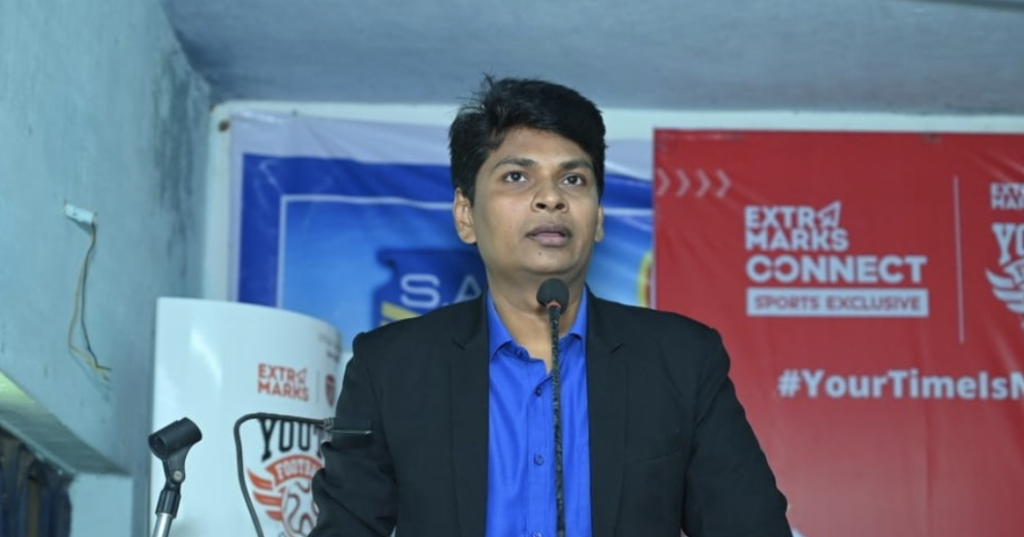
Vijayan, the journalist whose questioning has drawn flak.

Synopsis:The questioning of Puthiya Thalaimurai Senior News Editor Vijayin Ramalingam in the alleged TVK MLA poaching case has sparked widespread criticism from journalists, press bodies and political leaders. Critics have questioned the manner in which the police conducted the interrogation, calling it an attack on press freedom and due process.
The questioning of Vijayan Ramalingam, Senior News Editor and Anchor at Puthiya Thalaimurai, in connection with the case registered over allegations that legislators of the ruling Tamilaga Vettri Kazhagam (TVK) were offered between ₹35 crore and ₹50 crore to switch sides, has triggered widespread criticism from journalists, political leaders and press bodies.
The case had been registered based on a complaint filed by N Elayaraja, the TVK MLA from Uthangarai, who alleged that attempts were made to poach MLAs by offering huge sums of money. However, the focus of the case has now shifted to the manner in which police handled the questioning of journalist Vijayan Ramalingam.
According to allegations made by journalists and media organisations, the Chennai Police summoned Vijayan late at night, seized his mobile phone and later kept him at the police station for almost an entire day without questioning him, drawing sharp criticism from several quarters.
Samas, Editor at Puthiya Thalaimurai, detailed the sequence of events in a lengthy post.
He described Vijayan as one of Tamil television’s respected anchors, known for conducting balanced debates that provide space for all sides of the political spectrum. He also described him as a Tamil activist and an accomplished public speaker who had built a reputation for fairness.
According to Samas, it was this journalist who was subjected to “a serious act of intimidation” by the Tamil Nadu Police.
Samas explained that Thirunavukkarasu, who conducted political opinion surveys and frequently appeared as a political commentator on television debates, had been a familiar face across multiple news channels, including Puthiya Thalaimurai. It was Thirunavukkarasu, who allegedly introduced himself as the head of a survey agency, Indian Political Democratic Strategies (IPDS), that Elaiyaraja named in his complaint as the person who contacted him.
Like many political analysts and commentators, Thirunavukkarasu maintained a professional relationship with Vijayan and occasionally shared his political assessments and survey findings through WhatsApp.
One day, Thirunavukkarasu reportedly sent Vijayan a message claiming that efforts were underway to topple the TVK government.
Samas said Vijayan merely asked what exactly was happening. He also casually mentioned this information during the editorial discussion held before the channel’s political debate programme, remarking, “Something seems to be happening.”
Since rumours about attempts to destabilise the newly-formed TVK government had already been circulating widely in political circles, no one in the newsroom treated the message as significant.
A few days later, Thirunavukkarasu was arrested. Even then, newsroom discussions reportedly remained limited to wondering what exactly was happening.
According to Samas, on July 15, police served a summons on Vijayan asking him to appear as a witness in the MLA poaching investigation.
Vijayan immediately informed the management of Puthiya Thalaimurai. After discussions, the media organisation decided to extend their full cooperation, considering witness examination to be a legitimate part of any criminal investigation.
Vijayan cancelled his scheduled programmes for the day and voluntarily appeared before investigators that night, accompanied by colleagues and his lawyer. During questioning, he reportedly explained the nature of his professional interactions with Thirunavukkarasu and showed investigators all their WhatsApp conversations.
The questioning continued until around midnight.
Samas said that by the end of the questioning, the investigating officer informed Vijayan that he could return home.
Up to that point, Samas noted, everything appeared to be within legal procedure.
According to him, the controversial moves came after this.
While Vijayan was returning home, police allegedly called him back to the station. He was reportedly questioned again until around 2 am, when investigators allegedly repeated the same questions before seizing his mobile phone.
Police then instructed Vijayan to return the following morning at 11 am.
When he appeared at the station as directed, Samas alleged, he was made to remain there until around 7 pm without being questioned.
As news spread that Vijayan had been kept inside the Triplicane Police Station throughout the day without being questioned, office-bearers of the Chennai Press Club and several journalists gathered outside the station and staged a protest.
Following the protest, police allowed Vijayan to leave after directing him to appear again whenever required for further investigation.
The incident prompted condemnation from several political parties as well as journalist organisations.
Speaking to South First, Chennai Press Club General Secretary M Haseef alleged that the tone of the interrogation suggested investigators wanted Vijayan to name someone.
“As a journalist, one has to maintain contacts with people from various political backgrounds. Thirunavukkarasu presented himself as a political strategist and someone close to former BJP state president K Annamalai. Vijayan treated him as one of his sources. He had also appeared on programmes anchored by Vijayan. Beyond that, there was no special relationship between them,” Haseef said.
He added that Thirunavukkarasu had occasionally sent political information to Vijayan and had once forwarded the message alleging attempts to buy MLAs.
According to Haseef, Vijayan did not believe the claim and reportedly dismissed it by telling him not to make childish statements.
“If Vijayan had taken the information seriously, he might have questioned him further or pursued the story. Instead, he ignored it. So how can he now be portrayed as someone connected to the alleged conspiracy?” Haseef asked.
Haseef further argued that although police have every right to summon anyone for questioning, there are established procedures that must be followed.
“Even if Vijayan himself said he would come at night, the police should have asked him to appear the next morning. Instead, they questioned him late into the night, seized his phone and then asked him to return again on the following morning, only to make him wait until evening without questioning him. That is where serious doubts arise,” he said.
From the beginning of the MLA poaching case, the DMK and several other political parties have questioned the very basis of the investigation, arguing that the case rests primarily on WhatsApp conversations without substantial corroborative evidence.
Amid these criticisms, demands have also been raised for transferring the investigation to the CBI.
Meanwhile, the focus of public debate has increasingly shifted away from the alleged poaching conspiracy to the police’s treatment of journalist Vijayan Ramalingam.
Haseef wondered whether the handling of the journalist reflected an attempt to divert attention from the weaknesses in the investigation.
“There have been issues with this case from the very beginning. The way Vijayan has been treated raises doubts about whether investigators were looking for a diversion. That may explain why they chose to act this way even against a journalist. This appears to be a clear violation of established procedures,” he said.
He further alleged that investigators repeatedly pressed Vijayan to reveal names.
“Even after Vijayan handed over his phone records, investigators repeatedly asked him who had instructed this MLA, which other MLAs had been contacted and to reveal their names. It almost appeared as though they wanted him to mention any name so that they could use it to move the investigation in another direction,” Haseef alleged.
He warned that such methods could have a chilling effect on journalism and pose a serious threat to press freedom.
In his post, Samas argued that the issue extended far beyond the treatment of one individual journalist.
He said the police action had damaged the dignity and public reputation of a journalist who came from an ordinary background and built a respectable career through professional conduct.
According to him, the official police communication relating to the case, issued without conclusive evidence, amounted to a serious attack on an individual’s reputation and human rights by creating defamatory implications through carefully worded language.
In its official statement, the Tamil Nadu Police said the investigation had found that the accused, Thirunavukkarasu, along with others, had allegedly conspired under a plan referred to as the “Meghalaya Project” to offer large sums of money to around 15 TVK MLAs in an attempt to destabilise the government.
The statement further alleged that Vijayan Ramalingam, Senior News Editor at Puthiya Thalaimurai, had sent “objectionable” messages to Thirunavukkarasu and had remained in continuous contact with him during the alleged conspiracy.
Samas questioned how the police could describe WhatsApp exchanges about possible attempts to topple the government as “objectionable messages” when ministers of the ruling party had repeatedly spoken publicly about alleged efforts to destabilise the government. He pointed out that leaders of the DMK and AIADMK had also been making similar claims for weeks.
Samas further stressed that journalists routinely communicate with people across the political spectrum, including individuals accused of crimes, security officials and intelligence agencies, because maintaining diverse sources is fundamental to journalism.
At the time of the WhatsApp conversations, he pointed out, Thirunavukkarasu was neither known as an accused nor did he have any criminal record. Therefore, portraying a normal professional communication with him as evidence of criminal conspiracy, Samas argued, amounted to character assassination.
He said the issue was not merely about Vijayan Ramalingam but about broader concerns relating to press freedom, the right to information, individual dignity, institutional accountability and the independence of journalism.
Samas argued that summoning journalists in such a manner could intimidate witnesses, encourage self-censorship within the media and normalise the use of official institutions to tarnish reputations.
He said treating a journalist summoned merely as a witness as though he were a criminal amounted to institutional intimidation and an assault on democratic values.
Finally, Samas expressed concern over what he described as the growing national perception of the Tamil Nadu Police, arguing that repeated allegations involving custodial deaths, encounter killings, preventive detention laws being used against free expression and custodial violence were damaging not only the image of the police force but also that of the Tamil Nadu government.
He urged Chief Minister Vijay, who holds the Home portfolio, along with senior police officials, to undertake meaningful police reforms, strengthen accountability at every level and ensure strict action against officials found guilty of procedural violations.
Also Read | Vijay’s June 23 Assembly speech: When performance trumped governance
(Edited by R Rajesh Kumar.)



