

Published Jul 12, 2026 | 7:31 PM ⚊ Updated Jul 12, 2026 | 7:31 PM

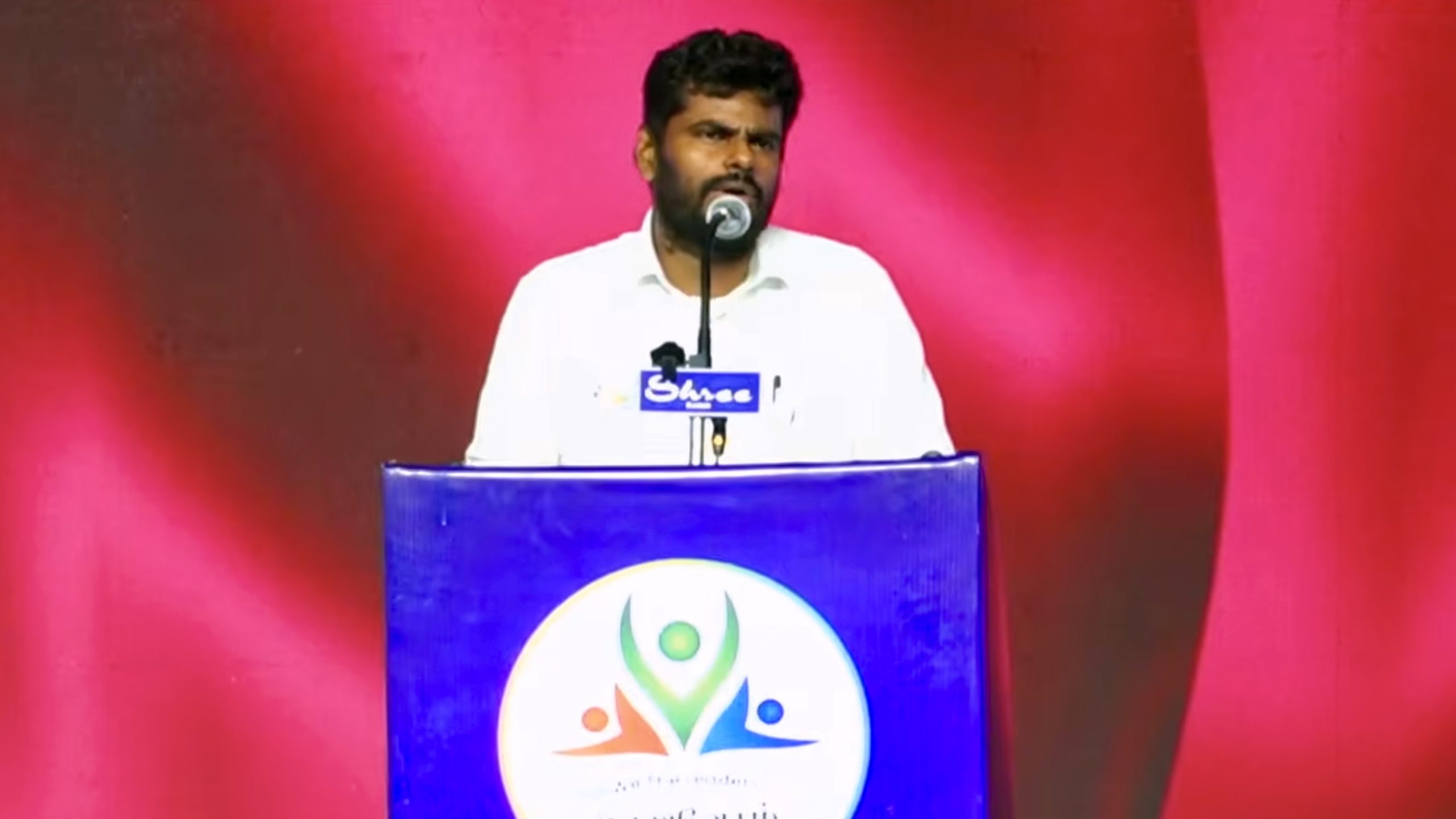
Annamalai said he completely supports CJP “in terms of the questions it wants to raise”.

Synopsis: We The Leaders, founded by K Annamalai, adopted six resolutions at its inaugural State conference in Coimbatore, calling for stronger action against drug abuse, tighter regulation of alcohol sales and expanded rehabilitation measures. The organisation announced that every July would be observed as “White Band Month” as part of a statewide anti-drug campaign.
We The Leaders, the organisation founded by K Annamalai, adopted six resolutions at its inaugural State conference here on Sunday, 12 July, calling for measures to curb drug abuse, tighten regulation of alcohol sales, strengthen rehabilitation efforts and expand awareness programmes across Tamil Nadu.
The conference was the first meeting of We The Leaders after Annamalai announced on 5 June that he was leaving the BJP. He had earlier said We The Leaders, which he founded in 2020, would eventually become a political party and contest the next general election.
Among the resolutions, the organisation announced that every July would be observed as “White Band Month” as part of an anti-drug campaign.
It said it would expand the White Band Movement into a statewide public awareness initiative, with members taking a pledge not to consume drugs and to discourage others from substance abuse. The organisation said the campaign was intended to work towards a drug-free Tamil Nadu.
The conference urged the Tamil Nadu government to conduct a fresh review of TASMAC outlets situated near educational institutions, places of worship and bus stands. While the government had stated that 717 such outlets had been closed, the organisation alleged that its field survey in parts of Chennai found several TASMAC shops continuing to operate in prohibited locations. It called for the immediate closure of such outlets.
Also Read: Modi’s Tamil version: Was Annamalai BJP’s failed experiment or missed opportunity?
In another resolution, the organisation sought the effective implementation of anti-drug committees in schools and colleges. Referring to a 2025 government order mandating the formation of these committees, it urged the government to identify all committees that had been constituted, publish their details on the Higher Education Department website, evaluate their functioning and ensure that institutions without such committees establish them within three months.
The conference also called on the government to address the alleged increase in workers, daily wage earners and young people consuming alcohol in the morning.
It sought stringent action against the sale of illicit liquor and urged the government to eliminate the circulation of cannabis and synthetic drugs in the State.
Another resolution focused on government-approved FL2 liquor outlets. Alleging that some licence holders were operating in a manner similar to retail liquor shops, contrary to the conditions of their licences, the organisation urged the government to enforce the licence conditions more strictly, take action against violations and refrain from issuing any new FL2 licences.
The final resolution proposed strengthening the State’s anti-drug framework by constituting district-level anti-drug committees and incorporating drug awareness education into educational institutions.
It also called for the expansion of rehabilitation centres, greater public-private participation in rehabilitation and social reintegration programmes, employment opportunities for people recovering from addiction, and the adoption of technology-based and family-oriented drug prevention initiatives.
(With inputs from Subash Chandra Bose)



