

Published May 07, 2026 | 7:00 AM ⚊ Updated May 07, 2026 | 7:00 AM

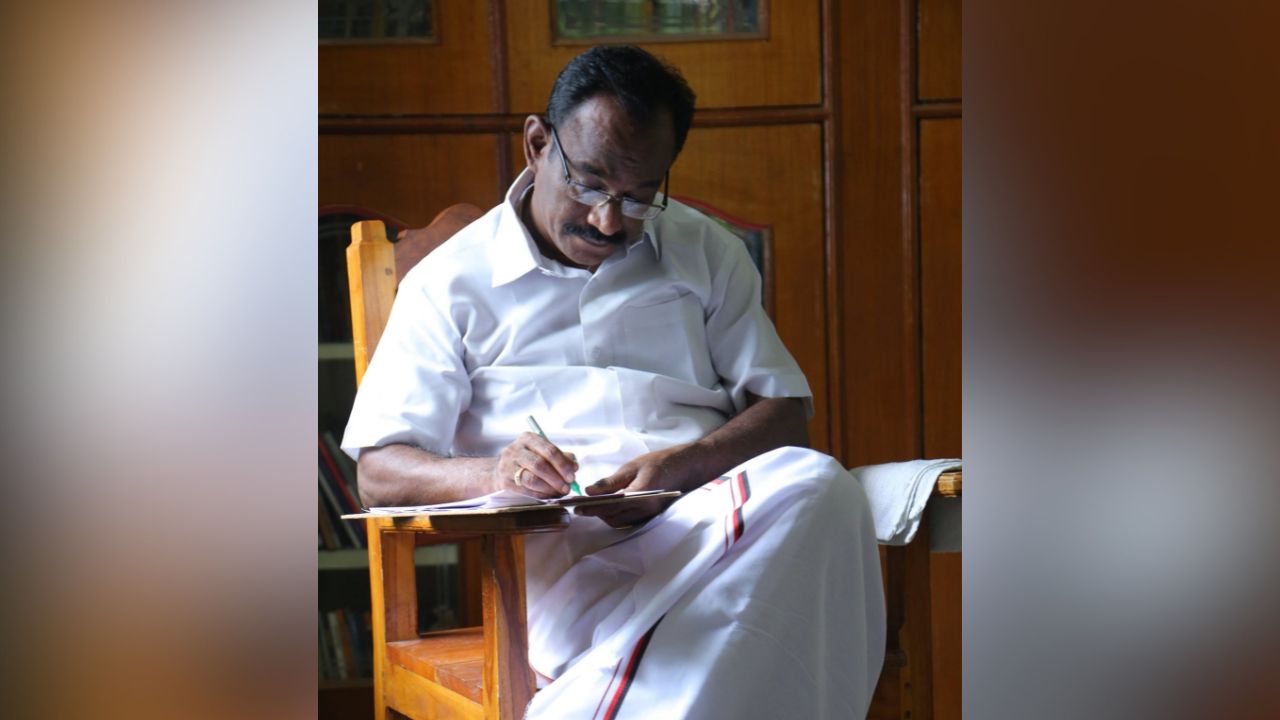
Imayam.

Synopsis: Tamil Nadu SC/ST Commission Chairman (in-charge) Imayam outlines the government body’s efforts to tackle caste atrocities, ensure legal protection, and remove caste-based identifiers from public records. He also addresses bureaucratic resistance, persistent caste bias in institutions, and asserts that the law will be applied equally, warning that “no one will be spared” in cases of injustice, including violations involving Panchami land.
Tamil Nadu has long projected itself as a champion of social justice, but the persistence and visibility of caste-based discrimination continue to raise difficult questions. From caste killings and everyday untouchability practices to structural inequalities embedded in official records, the challenge remains both deep-rooted and evolving.
It is within this context that writer Imayam (V Annamalai), who currently serves as the in-charge Chairman of the Tamil Nadu SC/ST Commission, offers a candid assessment of the state’s response. Drawing from his tenure at the Commission and his lived experiences, Imayam speaks about legal interventions, bureaucratic resistance, caste realities across rural and urban spaces, and the politics surrounding identity and reform.
In this interview with South First, he discusses the Commission’s work on the ground, the push to remove caste markers from public records, and why, despite laws and policies, the fight against caste discrimination is far from over.
Also Read: Vijay thanks Tamil Nadu voters for TVK’s ‘historic mandate’
Q: You have been part of the SC/ST Commission for the past two years. During the DMK government’s five-year tenure, what measures were taken for the advancement of SC/ST communities and to prevent atrocities against them?
A: After the DMK came to power under Chief Minister MK Stalin in 2021, Viduthalai Chiruthaigal Katchi (VCK) leader and MLA Sinthanai Selvan raised a demand in the Assembly, pointing out that other states had SC/ST Commissions and Tamil Nadu should establish one as well. On the same day, the chief minister announced that such a commission would be set up soon. Accordingly, the Tamil Nadu SC/ST Commission was established on 13 September 2021.
The Commission is headed by a retired Chief Justice and has six members. The fundamental objective of this body is to ensure legal protection for Adi Dravidar, Arunthathiyar, and tribal communities in Tamil Nadu if they face caste-based, economic, or psychological violence from other sections of society.
I have been a member for the past 14 months. If we look at our work, our successes, failures, and efforts, we have directly visited and investigated cases such as the murder of a student in Vengaivayal, killings in Madurai, and incidents where people were targeted for so-called untouchability while walking on public roads.
While financial compensation is secondary, we have focused primarily on ensuring legal protection and securing the rights of victims. Wherever caste atrocities have occurred, we have gone there directly. For example, in Tiruvannamalai district, when a community was denied permission to carry a body through a public pathway, we intervened and ensured that a road facility was provided within a single day.
Even this year, we have facilitated access roads to burial grounds in eight villages for Adi Dravidar communities. Whether the victims are students, ordinary citizens, the elderly, or survivors of sexual harassment, whenever an act humiliates someone based on caste, this Commission stands as the first line of response.
In the past two years alone, we have helped secure around ₹8 crore as relief compensation for victims. We operate three courts, handling an average of 20–30 cases per day. We ensure immediate relief for genuine victims. If FIRs are not registered, we ensure they are filed. The police are often reluctant to register cases, especially under the SC/ST (Prevention of Atrocities) Act, but since this Commission became active, more cases are now being registered under this law.
We are also taking steps to ensure that perpetrators are punished and imprisoned.
Beyond this, one of the biggest achievements of the Commission came after I assumed office. During a meeting with the chief minister at the Secretariat, I raised a crucial issue. Across Tamil Nadu, there are settlements named Adi Dravidar Colony, Harijan Colony, Arunthathiyar Colony, Mettu Colony, Old Colony, and so on. I urged that these names must be changed.
Similarly, there are village names like Paraiyankulam, Pallankulam, Chakkiliyampatti, and Navithanpatti, which carry caste identities. I insisted that such caste-based names must be removed. Terms like “Harijan Colony” are outdated, yet they still exist in official records and everyday speech, revealing deep-rooted caste attitudes.
I made an emotional appeal to the chief minister, saying that this reform would secure him a place in history and have an impact for over a thousand years. Historically, the term “cheri” meant a place where people lived together. Today, it refers to areas inhabited by Adi Dravidar communities. In other contexts, “colony” simply means a residential area for all communities, like Railway Colony or SBI Colony. But in rural Tamil Nadu, “colony” carries a caste-based meaning.
I requested the chief minister to bring in legislation to remove such terms. He assured immediate action. In the last Assembly session, a resolution was passed stating that it is unacceptable to humiliate the indigenous Adi Dravidar people of this land — whether mentally, physically, economically, or socially. It was announced that such terms would be removed from all government records, including school certificates.
For instance, my own school certificate and voter ID say “Old Colony.” In seven different government documents, such terms still exist. When I submit these documents at a bank or government office, people cannot identify my caste through my appearance or speech, but the moment they see these documents, their mindset changes. It creates an opportunity for discrimination and humiliation. I asked the chief minister to free us from this indignity, and he acted on it.
A Government Order (GO) was issued in the Assembly, and it was decided that before the elections, such names would be changed across the state. New names would avoid political or caste identities and could instead be based on flowers, poets, or preferences of local residents.
We have implemented these changes in several places as quickly as possible.
Q: Despite the Government Order, many villages still retain caste-based names. Where is the delay—among officials or politicians?
A: The problem is not at the political level; it lies with the officials.
Q: Why? Are they unwilling to comply, or do they themselves hold caste biases?
A: Certainly, caste bias exists. Who in Tamil Nadu is completely free from caste consciousness?
Even now, a case is ongoing in Madurai where we have sought to include the SC/ST Commission as a petitioner. The opposing side argues: “There are colonies in Chennai and Puducherry, what will you do about those?” But in metropolitan cities like Chennai, the term “colony” does not carry humiliation or segregation; people of all communities live together. In villages, however, it is very different.
Take Virudhachalam, for example. There was an area called “Mettu Colony.” We have renamed it “Senthamizh Nagar.” Similar changes have been made in places like Thittakudi. We have changed names wherever possible. But some officials are not cooperating, whether due to workload or lack of interest, we do not know.
Still, this change is essential. It will ensure that future generations are not humiliated through their own documents. Chief Minister Stalin has achieved something unprecedented in his lifetime. A similar order was issued in 1970, but was never implemented effectively. Now, for the first time, it is being executed with speed.
Even in the Madurai case, the court has not stayed the order; it has only pointed out certain ambiguities.
Changing records cannot happen overnight. Even something like a MICR-linked address system reflects these names. In many places, terms like “Arunthathiyar Colony,” “Paratheru,” “Pallatheru,” and “Paracheri” still exist in records.
People often ask: “What difference does a name make?” But this is social psychology; it reinforces humiliation repeatedly.
For example, in Coimbatore, two individuals from the Gounder community were arguing and used a slur referring to the Paraiyar community. What does that mean? To insult someone, another caste is invoked. Instead of insulting each other directly, they use another community as a tool for humiliation.
This is why the Commission brought this Government Order to remove such historical markers of humiliation. We are working to implement it, though there have been a few lapses. Recently, we identified an issue in North Achampatty and have written to the District Collector. Notices have also been sent to the Election Commission and collectors in districts like Tiruvarur and Coimbatore. They have been given one week to act, failing which the Commission is ready to initiate legal action.
Importantly, officials alone are not responsible. The government has brought a major law, and I am personally fighting to implement it, but no media has taken note. I have written articles in English and spoken across platforms about this issue.
Even the media hesitates; they are also shaped by caste biases. If a film actor does something, it becomes news. But when a term that humiliates 18 percent of Tamil Nadu’s population is removed, no one is ready to support it.
Even more striking, Opposition Leader Edappadi K Palaniswami has said that if the AIADMK returns to power, he will revoke this Government Order. A former chief minister opposing such a reform speaks volumes.
Also Read: TN SC/ST Commission seeks explanation over ‘Paracheri’ tag in Virudhunagar village
Q: What benefit would he gain from such a stance?
A: It helps consolidate his community vote. You need to show an “enemy” to unite people; this is a strategy to mobilise along caste lines.
Q: Other states established SC/ST Commissions long ago. Why was Tamil Nadu — ruled for decades by parties advocating social justice — so late in setting it up? Secondly, despite various initiatives, atrocities against SC/ST communities have reportedly increased, especially by 2023. Should this be seen as better reporting or an actual rise in incidents?
A: If I compare the caste atrocities I faced in my youth with what exists today, I would say the situation now is far better. Today, almost everyone has a mobile phone. People record videos and share them instantly, so incidents become visible immediately. Earlier, many such incidents came to light only much later.
Take major atrocities like the Melavalavu massacre or Vachathi; none of them surfaced easily at the time. Today, with cameras in everyone’s hands, incidents become known instantly. Now, we can act quickly.
For example, in the Chengalpattu district, a nurse was sexually assaulted and murdered. Within an hour, we issued instructions to the SP, ensured the arrest of the accused, and secured ₹25 lakh as compensation for the victim’s family.
We take up such issues suo motu; we don’t wait for victims to file complaints. Whether it appears on WhatsApp, Facebook, or television news, we treat it as a case and act on it.
For instance, even when AIADMK spokesperson Sathyam used an inappropriate term during a TV debate, we issued a notice. He immediately obtained a stay from the high court. But no one asks whether what was said was wrong — stays are granted quickly.
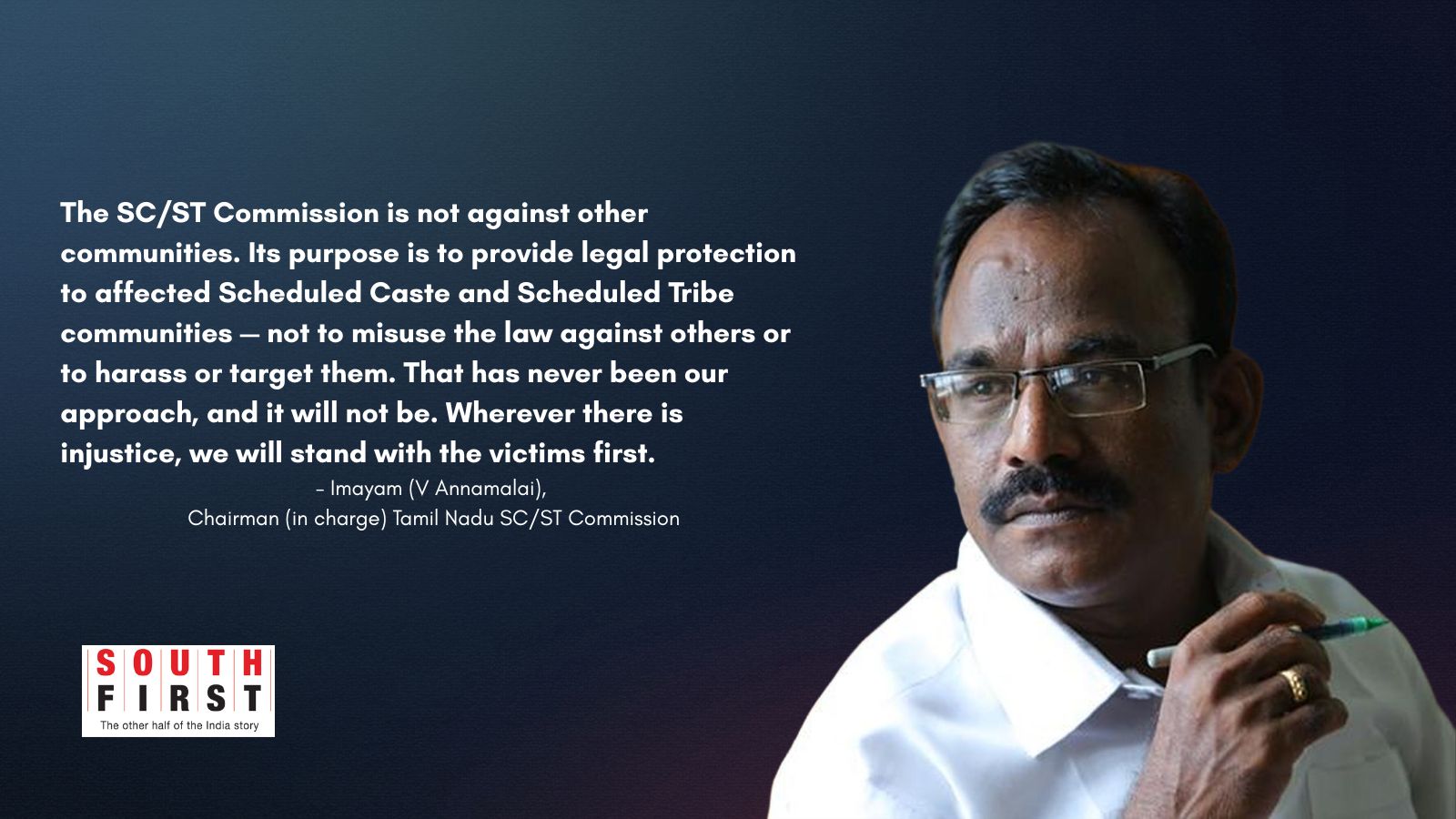
The SC/ST Commission is not against other communities. Its purpose is to provide legal protection to affected Scheduled Caste and Scheduled Tribe communities — not to misuse the law against others or to harass or target them. That has never been our approach, and it will not be. Wherever there is injustice, we will stand with the victims first.
Q: Can this Commission truly function without bias? Critics say that since you are associated with the DMK, your functioning may reflect party interests.
A: I am not here as a DMK member or even as a writer. I am here as someone who gives voice to the oppressed. We act in the interest of justice.
Even though this is a Commission for SC/ST communities, it does not promote hostility against other communities. In this position, I have neither party affiliation nor caste identity; I am here to deliver justice.
Q: So, if a crime is committed, even by the DMK, will it still be treated as a crime?
A: Absolutely. It doesn’t matter which party or which caste is involved. If anyone commits violence against oppressed communities, they will be punished under the law. There is no ambiguity in that.
This institution functions like a court; we even have courts here. The same procedures followed in courts are followed here. I have been in this role for 14 months. Have you seen any bias in my functioning?
When someone comes to us in tears, my effort would be to understand the cause of that pain, wipe those tears, and ensure such suffering does not recur. My caste is irrelevant. The law is not governed by caste, and government institutions must not be either.
At the same time, this system exists specifically to protect these communities. There is a clear difference in how Adi Dravidar people are treated compared to others — in policing, hospitals, and government offices. We are fighting to end that humiliation, not to create it or support those who perpetuate it.
Even in my office, I ensure that people are not made to wait or stand unnecessarily. Whether or not we can fully resolve their issue, they must be treated with dignity.
At my core, I am a writer. Does a writer have a caste? A party? A religion? What matters is compassion; that is my foundation.
Q: What is the most severe caste atrocity you have personally experienced?
A: There are many. I have even written about them.
In my childhood, it was considered “untouchability” if someone from another caste urinated in the same place I had used. When I was in sixth standard, a boy from another community who put his arm around my shoulder was scolded and taken away.
When I went for wage labour, people said I was good for grazing cattle. Once, when I drew water from a well, I was beaten with a whip for being a “Paraiyan,” and the pot I used was thrown into the well.
There are hundreds of such incidents. Even today, in villages, people call us by our father’s name, “son of Venkattan”, instead of our own names. There is hesitation in addressing a person from the Adi Dravidar community compared to someone from another caste, even if both hold positions like MLA or minister.
In the Athur constituency, a DMK candidate once sat in a chair meant for the chairman in an office; the clerk who allowed it was dismissed. I am not targeting any one party; casteism exists across all parties. Does the Congress not have casteists? Does the AIADMK not have them?
Even Edappadi Palaniswami reflects caste politics in his stance. AIADMK spokesperson Sathyam’s remarks also show caste bias.
I participated in a TV debate where a man openly said he would kill his daughter if she married outside her caste. How many such incidents do we hear? People openly threaten violence over inter-caste marriages.
Some say caste exists only in rural areas, not in cities. That is not true.
Q: In the past eight years, Tamil Nadu has seen over 57 caste killings. Many demand a separate law to prevent such crimes. What is your view?
A: The law already exists. What is needed is proper and timely implementation. The chief minister can enact laws, but the officials responsible for implementation often carry caste biases. They delay enforcement as much as possible.
Even if a new law is introduced, who will implement it? In the Divya–Ilavarasan case, how many DSPs and SPs supported the perpetrators? Didn’t they use the phrase “our people”?
Are there no caste networks among IAS officers? Among IPS officers? Of course there are.
Also Read: 19-year-old Tamil Nadu woman found dead; fiancé alleges caste killing
Q: How do such officials respond to you?
A: We question them legally, and they are obligated to respond. We have the authority to summon and investigate officials (except District Collectors and Superintendents of Police).
We do not deal only with caste atrocities, we also handle issues like lack of housing, electricity, pensions, and workplace discrimination.
For example, in a village in Tiruvannamalai district, people were denied free electricity, so we intervened and ensured supply. In Tiruvallur, we ensured land pattas were issued. Across Tamil Nadu, we have facilitated around 700 to 900 pattas.
We also address issues in government offices and private companies. In government colleges, we intervene in caste-based discrimination among faculty and recommend action where necessary.
Q: What is the ultimate solution to caste-based issues?
A: I have written an article urging people to use the SC/ST Commission. This is your institution, use it, give it life, bring it into the public eye.
Even an email or a partial complaint is enough, we will take it up. We send notices to concerned officials and demand immediate action. If they fail, we recommend departmental action.
Since the Commission was established, most SC/ST-related cases have seen quicker resolution and better protection for victims. Even if a few cases slip through, people can always approach us.
We also handle cases arising from inter-caste marriages. For instance, women working in the IT sector sometimes marry for love and later face issues when caste differences emerge, leading to disputes or divorce.
Often, FIRs are not registered in such cases. We apply pressure to ensure they are filed. In Chennai, in one such case, a police inspector delayed filing an FIR and even helped the accused obtain bail before registering the case. We escalated the matter to the SP and pushed for departmental action.
Similarly, in Athur, action was taken against a police officer for failing to file a case under the SC/ST Act. Across Tamil Nadu, we are taking strict action against such lapses.
Q: Do you believe these efforts will lead to lasting solutions?
A: Certainly. We can provide detailed records of the number of SC/ST cases we have handled, compensation that has been given, pattas that have been issued, roads and burial pathways that have been created, drinking water issues that have been resolved, and officials we have summoned.
We have also made significant progress in reclaiming Panchami lands. These lands were originally assigned around 1901. We are now ensuring they are put to proper use and that Dalit communities can access them, often with police protection.
In districts like Coimbatore, Theni, Tiruppur, and Namakkal, many Dalits still cannot fully access their land. For instance, even a company run by “Lottery Martin” in Coimbatore operates on Panchami land — we have filed a case against it.
The law is the same for everyone. It does not matter who you are or which party you belong to, if there is wrongdoing, action will be taken.
Just as people place trust in the courts, we are building that same trust in this Commission.
(Edited by Muhammed Fazil.)



