

Published Aug 16, 2026 | 5:04 PM ⚊ Updated Aug 16, 2026 | 9:18 PM

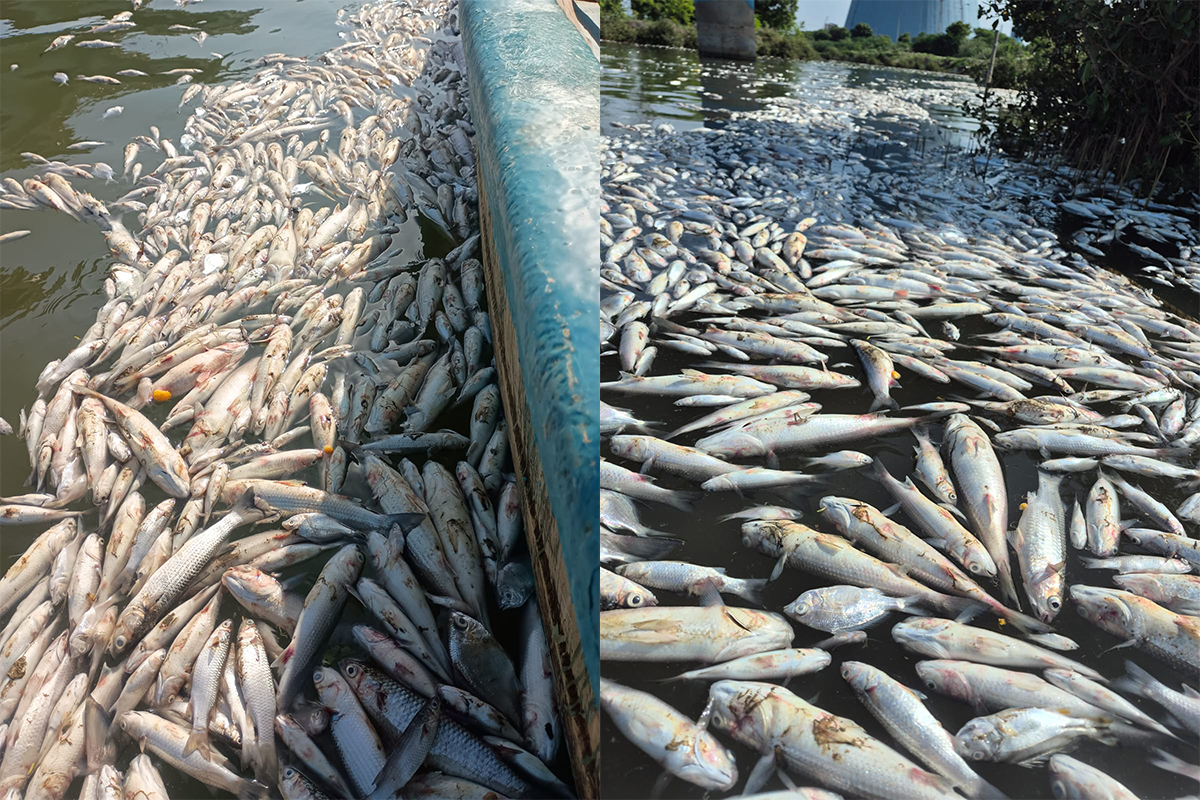
Several species of fish and other aquatic life, including mullet, ladyfish, silver biddy, karva, prawns and crabs, have been found dead.

Residents of eight fishing villages near the Ennore estuary have been staging a road blockade on the Thalanguppam Highway after tonnes of dead fish were found floating in the Kosasthalaiyar River from the morning of August 15, allegedly after a heavily contaminated industrial discharge entered the water body. The chemicals allegedly entered the river through the nearby Buckingham Canal.
The fishermen have been staging protests demanding accountability from the authorities over continuous pollution of the river. They stated that no government officials have visited or met the affected fishermen so far.
The dead fish started appearing and spread across over 6 kms in the river from the Buckingham Canal near Kattukuppam, past the North Chennai Thermal Power Station and towards the Kulikkam/Kulivakkam area. Several species of fish and other aquatic life, including mullet, ladyfish, silver biddy, karva, prawns and crabs, have been found dead.
According to a DT Next report citing local residents, the latest incident has been of a much larger extent compared to previous instances of fish deaths caused by chemical contamination of the water.
“This happens continuously, frequently. This time it is a bit more. Water mixed with chemicals is being released from the Manali side through a canal. It mixes with the backwaters and, during low tide, comes towards the sea,” R.L. Srinivasan, president of the Ennore Fishermen Co-operative Society, was quoted as saying by the report.
Fishermen have alleged that the chemicals, including industrial waste, were released into the water body during the night so as to prevent the residents from detecting it. They say the continuous pollution of the water bodies, especially due to waste from fertiliser factories, has largely impacted their livelihood.
“First, it started with releasing the hot water decades ago. Now, they are sending all kinds of chemical water into the backwaters,” a fisherman was quoted as saying.
Also Read: Lantana camara: The elephant-size problem hiding in India’s green forests
An “aquatic heat wave” caused by hot-water discharge from NTECL’s Vallur thermal power plant may have contributed to the fish kill, according to Kattukuppam fishers and the Save Ennore Creek Campaign.
A field study conducted by the groups on August 9 recorded water temperatures of up to 40.8°C at four locations around Kuruvimedu Canal and the Railway Bridge. The highest temperature was recorded at the Railway Bridge canal, 585 metres from NTECL Vallur’s discharge point.
Another location along the same canal recorded 40.6°C, while a site around 900 metres from the discharge point recorded an average temperature of 39.7°C.
The groups said the readings point to severe thermal stress in the shallow, mangrove-fringed estuarine channels used by fishers and aquatic life. They alleged that the unusually high water temperatures, along with possible chemical discharge from the power plant, may have contributed to the fish deaths reported in the creek.
Fishers also reported skin irritation, exhaustion and dehydration while working in the water. During the sampling, they reported seeing a fish with blood around its mouth and detecting what they described as a chemical-like smell.
The campaign and fishers further alleged that the canals have been severely encroached upon and silted up due to construction associated with the Vallur power plant and TANTRANSCO transmission towers. They said the narrowing and shallowing of the waterways could intensify thermal pollution, as shallow water bodies are more vulnerable to rapid temperature increases.
Save Ennore Creek Campaign and Kattukuppam fishers demanded an immediate halt to hot-water discharge from NTECL Vallur and North Chennai Thermal Power Station into the creek, compensation for the damage sustained, and urgent implementation of the National Green Tribunal’s July 2022 order directing the eco-restoration of Ennore Creek with meaningful participation of local fishers.
The study was conducted on August 9 during a falling tide and did not include a control site or high-tide comparison. The groups have therefore presented the findings as evidence of severe thermal stress and a possible contributor to the fish kill, rather than as definitive proof of its cause.
(Edited by Fayisa CA)



