

Published Aug 22, 2026 | 10:22 PM ⚊ Updated Aug 22, 2026 | 10:22 PM

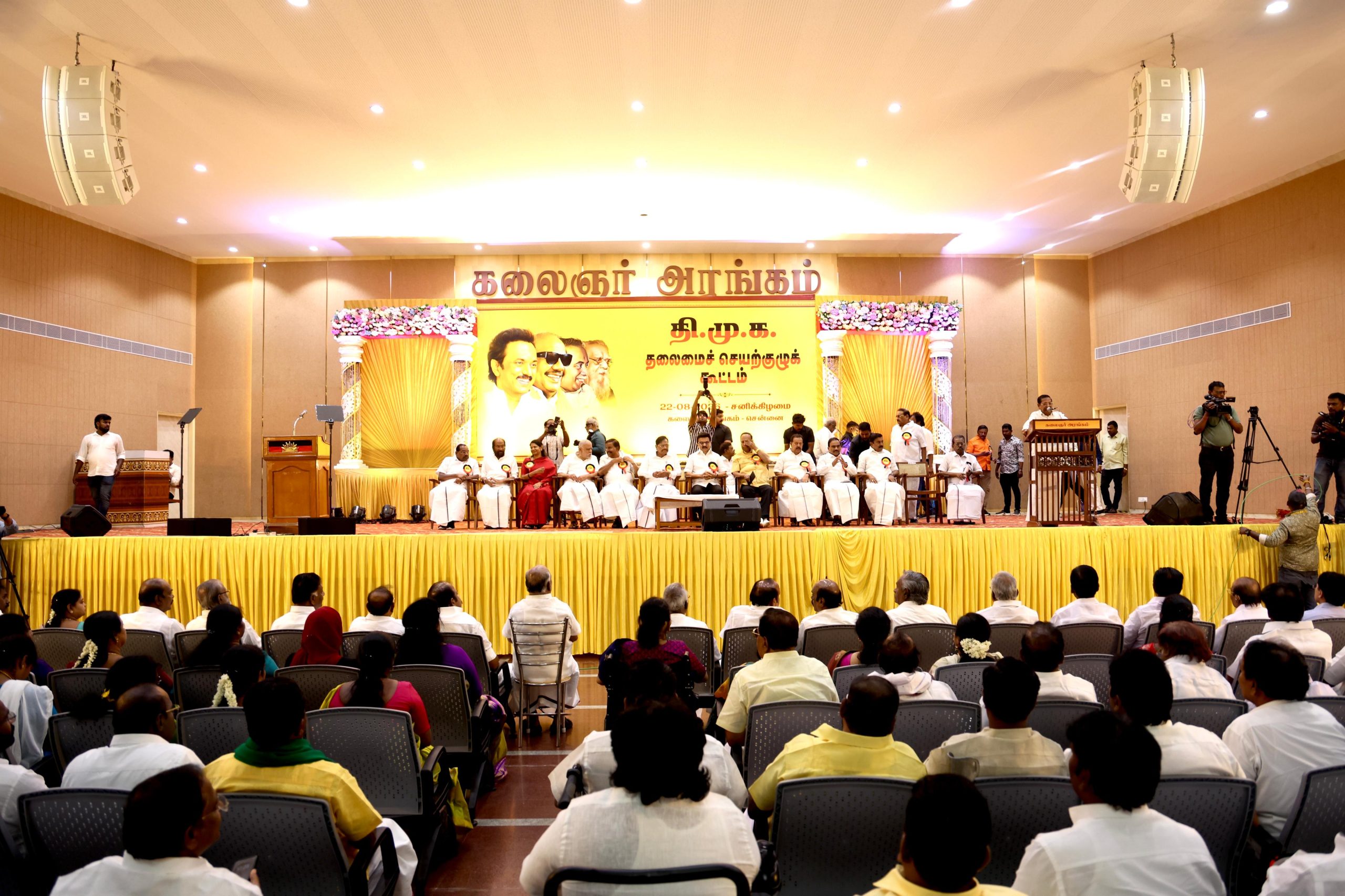
DMK chief MK Stalin chaired the meeting in Chennai.

Synopsis: The Opposition DMK in Tamil Nadu is preparing for a major organisational overhaul, including age and term limits, more opportunities for young leaders, district restructuring, and the possible retirement of senior functionaries. The revamp follows an internal review of the party’s electoral defeat, while discussions over greater representation for women and a possible leadership reshuffle involving Kanimozhi Karunanidhi and Udhayanidhi Stalin fuel speculation.
Several resolutions aimed at restructuring and strengthening the party organisation were adopted at the Dravida Munnetra Kazhagam Executive Committee meeting held at Anna Arivalayam in Chennai on Saturday, 22 August.
As part of the organisational revamp, the party has decided to introduce age limits and term restrictions for several party posts.
Sources familiar with the discussions said that the party leadership may relieve several senior leaders above the age of 70 from their organisational responsibilities.
Also Read: Inside the quiet downsizing of DMK’s digital empire
Several suggestions were made during the meeting, particularly on providing greater representation to women and creating more opportunities for young leaders within the party organisation.
The maximum age for branch secretaries has been fixed at 45, and a person can hold the post for a maximum of two terms. New branches will also be formed to strengthen ward-level party structures in Chennai, Coimbatore, Madurai, Tiruchirappalli and Salem corporations, as well as in other corporations based on local requirements.
The maximum age for ward secretaries in corporations, municipalities and town panchayats has been fixed at 50. They will also be allowed to serve for only two terms. In Chennai, each ward will have an average of 10,000 voters, while wards in other corporations will have an average of 5,000 voters.
The maximum age for town panchayat secretaries has been fixed at 60. Area-level and municipal party secretaries will also have a maximum age of 60 and a two-term limit.
Similarly, union party secretaries and city party secretaries will have a maximum age of 60 and can serve for a maximum of two terms. A union party unit will be formed for every 30,000 voters on average, while city units will have an average of 40,000 voters.
The party has also decided to restructure its district-level organisation based on revenue districts, with one party district for every two Assembly constituencies. If only one constituency remains after the division, it will be attached as a third constituency to a suitable party district within the same revenue district.
The maximum age for district secretaries has been fixed at 70, with a maximum of two terms. The post of Chennai/Corporation district secretary will be abolished.
Against this backdrop, sources familiar with the discussions said the DMK leadership is considering retiring several senior functionaries, including EV Velu and MR Gandhi.
The resolutions stated that once party president MK Stalin announces the 110 party districts, district executive committee meetings will be held. Within 15 days, the union, city, area and ward-level party units must be reorganised according to the guidelines issued by the party headquarters.
At the meeting, a functionary from the party’s women’s wing reportedly demanded 33% reservation for women in leadership positions within the DMK.
“DMK has played a major role in creating reservations for women at various levels in Tamil Nadu. Similarly, there should be 33% reservation for women in leadership positions within our party,” she said.
However, the party did not decide on the demand.
Sources close to Udhayanidhi Stalin said a team under him is actively working on the appointment of district secretaries.
“The team has prepared a list after analysing the social backgrounds, popular support and various other data points of those being considered for appointment as district secretaries in each district,” the sources said.
The DMK had earlier formed a 36-member committee to examine the functioning of the party organisation across all districts in Tamil Nadu and identify the reasons behind its electoral defeat. The committee has already submitted its report to the party leadership.
According to the report, internal disputes, negligence and lack of accountability among district secretaries, among other factors, were identified as reasons for the party’s defeat in several districts.
Sources said the organisational changes now being considered are likely to be based on these findings. The DMK is expected to make several changes, including providing greater opportunities for young leaders and dividing party districts based on administrative requirements.
Also Read: BJP is passé; in Tamil Nadu, TVK is turning into the new political ‘washing machine’
Amid the proposed organisational changes, questions have also emerged about whether the party’s top leadership structure could change.
DMK general secretary Duraimurugan has reportedly been facing difficulties due to his advancing age for some time. Against this backdrop, sources close to Deputy General Secretary Kanimozhi Karunanidhi told us she is being considered for the post of general secretary and that several quarters within the party support her candidature.
When asked whether such a move would be possible given the presence of Udhayanidhi Stalin, the source said there were indications that Udhayanidhi Stalin had given a “green signal” to Kanimozhi becoming general secretary, provided he is given the post of working president.
However, while such discussions are taking place within the party, DMK president Stalin, while addressing the meeting, said, “When it comes to making a comeback, we are the best.”
DMK sources say Stalin is expected to continue leading the party with renewed vigour as it prepares for the next phase of its political and organisational journey.
(Edited by Majnu Babu).



