


Meteorologists expect Ditwah to travel parallel to the Tamil Nadu–Puducherry coastline over the next 24 hours, remaining between 30 and 60 km from land.

Published Dec 01, 2025 | 7:50 PM ⚊ Updated Dec 01, 2025 | 7:50 PM

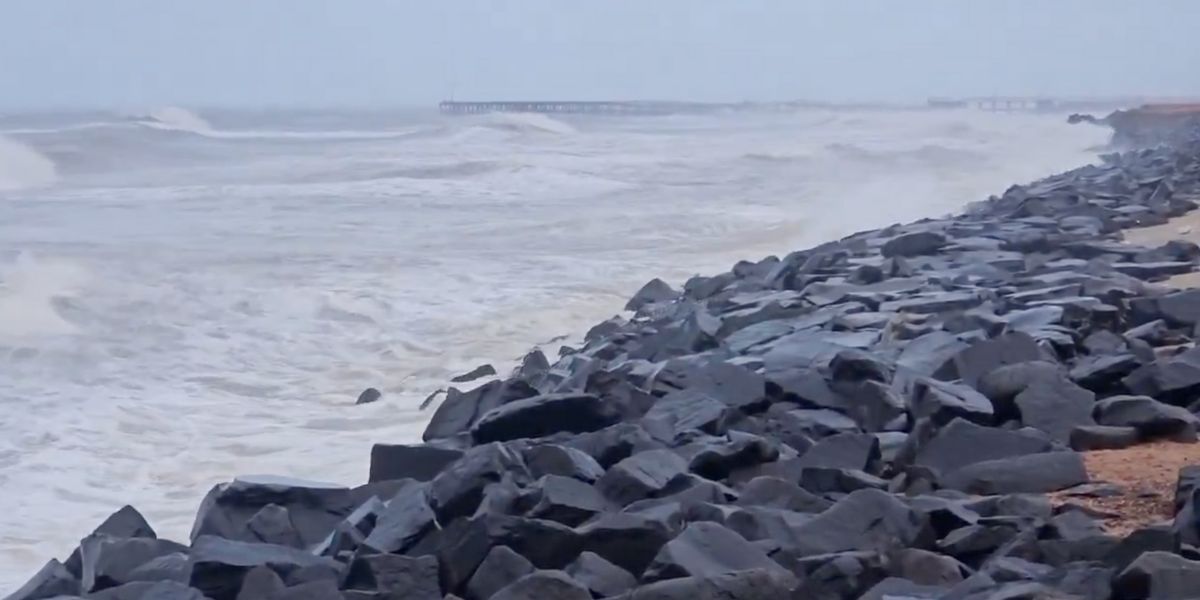
Rain triggered by Cyclone Ditwah lashed Tamil Nadu’s coastal and delta districts.
Synopsis: Cyclone Ditwah continued to influence weather conditions across Tamil Nadu on Sunday, 30 November, unleashing intense rainfall over several districts and causing three rain-related deaths.
In view of heavy rainfall caused by Cyclone Ditwah, one day holiday has been declared for schools and colleges in Chennai, Tiruvallur, Chengalpattu, and Kanchipuram, on Tuesday, 2 December, as a precautionary measure.
Cyclone Ditwah continued to influence weather conditions across Tamil Nadu on Sunday, 30 November, unleashing intense rainfall over several districts and causing three rain-related deaths.
The worst impact was reported from Ramanathapuram and Nagapattinam, where waterlogging in low-lying areas—particularly in Rameswaram and nearby coastal towns—disrupted normal life.
According to update on Monday, 1 December morning, the cyclone remains over the southwest Bay of Bengal and is moving slowly northward at around 7 kmph.
The system is currently located about 100 km off the coasts of Cuddalore and Karaikal, and roughly 170 km south-southeast of Chennai.
Meteorologists expect Ditwah to travel parallel to the Tamil Nadu–Puducherry coastline over the next 24 hours, remaining between 30 and 60 km from land.
The Regional Meteorological Department has sounded an orange alert for multiple districts, cautioning residents about the likelihood of heavy to extremely heavy rainfall.
The warning covers Cuddalore, Nagapattinam, Mayiladuthurai, Villupuram, Chengalpattu, Chennai, Kancheepuram, Tiruvallur, Ranipet and several other delta regions.
Strong winds may also accompany the downpour, with gusts reaching speeds of up to 80 kmph. Fishermen have been strictly advised to stay away from the sea.
A total of 28 disaster response teams, including State Disaster Response Force (SDRF) and National Disaster Response Force (NDRF) units, have been kept on standby, and plans are underway to airlift 10 more teams from other states. The Air Force and Coast Guard have been alerted, and monitoring teams will be sent to affected districts.
As many as 6,000 relief camps have been set up, he said, adding that while there have been no fatalities, 16 livestock deaths and 24 damaged huts have been reported.
Meanwhile, 14 NDRF teams have already been deployed across vulnerable districts, including Villupuram, Chengalpattu, Tiruvallur, Nagapattinam, Tiruvarur, Thanjavur, Pudukottai and Mayiladuthurai, with additional teams allotted to Chennai and Puducherry. Fishermen in coastal regions such as Chennai, Rameswaram, Pamban and Nagapattinam stayed ashore for the second day due to rough sea conditions.
Agricultural areas in the delta districts faced severe impact, with farmers reporting that paddy crops raised on nearly one lakh acres were submerged.
Authorities in Chennai have decided to release surplus water from the Chembarambakkam and Poondi reservoirs as a precautionary measure.
Flight operations were also hit, with 54 flights cancelled from Chennai airport following IMD warnings of heavy to very heavy rainfall and strong winds.
Train services saw disruptions as well, with Southern Railway announcing changes in schedules for December.
However, wind speeds at the Pamban Bridge have receded to safe limits, and train traffic to Rameswaram is expected to resume soon. The district administrations have urged people to avoid unnecessary travel, and tourists have been advised not to visit Dhanushkodi.
The IMD said the cyclone, which was moving north-northwest at eight kmph, was located 190 km from Karaikal, 300 km from Puducherry and 330 km from Chennai, and is likely to approach the coasts of North Tamil Nadu, Puducherry and south Andhra Pradesh by early Sunday morning.
A red alert is already in place in Tamil Nadu, Puducherry, and Andhra Pradesh.
(With inputs from Subash Chandra Bose and Veni)


