


Published Feb 25, 2026 | 5:54 PM ⚊ Updated Feb 25, 2026 | 5:55 PM

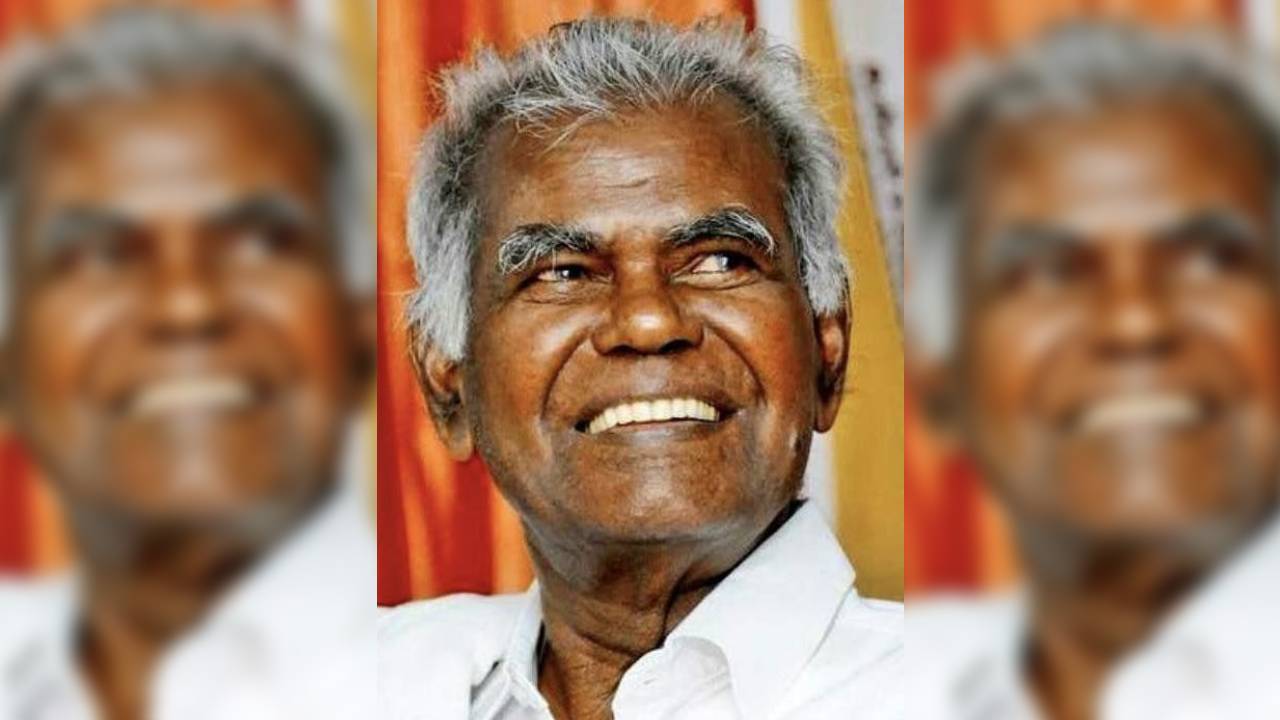
Communist leader R Nallakannu (26 December 1924 - 25 February 2026)
Synopsis: Beyond ideological lines and party divisions, Comrade RNK was respected by political leaders and ordinary citizens alike. He was the embodiment of simplicity, a model of ethical public life, and a man whose politics never drifted away from the people.
Veteran leader of the Communist Party of India (CPI) R Nallakannu passed away in Chennai on Wednesday, 25 February.
Fondly known as Comrade RNK, the 101-year-old freedom fighter had been admitted to the Rajiv Gandhi Government General Hospital since 1 February. The end came at 1.55 pm on Wednesday.
The body will be handed over to the Rajaji Government Hospital, Chennai, on Thursday.
Nallakannu is survived by daughters Andal and Kasi Bharathi
Born in an agricultural family as the third son of Ramasamy and Karuppayi on 26 December 1924, Nallakannu took to politics at a young age.
While studying at the Coronation High School, a 12-year-old Nallakannu campaigned for labour causes, collected rice for workers, and opposed war mobilisation during World War II.
He participated in anti-colonial protests and civil resistance movements. His activism later led to expulsion from college — a consequence he accepted without regret.
In 1943, he joined the Communist Party of India, beginning a political association that would last more than eight decades — one of the longest uninterrupted commitments in Indian political life.
He organised peasants in Nanguneri and Kalakkad, worked in agricultural unions, and lived underground during periods when the party was banned.
In 1946, he was assigned to work for party publications. After Independence, repression continued. In 1949, he was arrested from his hideout.
Nallakannu was hiding at a comrade’s house in Puliyurkurichi near Nanguneri after the community party was banned. Most of the party leaders and cadres have gone underground. On 20 December 1949, police arrested Nallakannu.
Nallakannu was sporting a thick moustache to hide a scar above his lip, which would have given him away. During interrogation, a police officer burnt it with a lit cigarette as Nallakannu refused to reveal the whereabouts of his comrades. From that day onwards, he never grew a moustache.
In the Nellai conspiracy case, he was Prisoner No. 9658. After his release in 1956, he actively participated in social struggles until the very end.
In jail, he devoted his time to literature and studying political theories. He studied classical Tamil, Sangam poetry, Marxist philosophy, and the works of Subramania Bharati. He earned scholarly recognition even within prison walls.
In 1958, in a modest ceremony in Tirunelveli, he married Ranjitham, daughter of a social reformer. She worked as a teacher and sustained the family. They had two daughters.
He never cared for money or material comfort. At his daughter’s ear-piercing ceremony, when relatives asked about the customary gold earrings from the father, he realised he had not even thought of buying them. Quietly, without embarrassment, he stepped out, borrowed a small sum from a friend, purchased a simple imitation ornament, and returned.
That moment was not an exception — it was his life in miniature. Wealth never guided his choices, and possession never defined his dignity. Until his final breath, he lived the same way: austere, unadorned, untouched by accumulation. He never built or owned a house with his own earnings, choosing instead a life where principles mattered more than property.
When party members raised ₹1 crore for him on his 80th birthday, he returned the entire amount to the party. When the Tamil Nadu government honoured him with cash awards, he distributed the funds to the party and agricultural labour unions. Even the compensation given after his father-in-law was killed in caste violence was donated for the education of the riot-affected children.
His public life was defined by struggles that spanned decades:
During the caste violence that engulfed southern districts in the mid-1990s, tragedy struck his family when his father-in-law, Annasamy, was murdered. Yet, he tried to defuse the situation, travelling through riot-affected villages, urging peace.
He rejected collective blame. Crimes committed by individuals, he insisted, could not justify condemning entire communities.
In those tense months, he consoled widows, comforted children, and appealed for calm. Those who accompanied him recall that while he was usually emotionally restrained, he could not hold back tears at the sight of ordinary people destroyed by hatred.
Age never stopped Nallakannu. In 2010, at 86, he personally argued before the Madurai Bench of the High Court against illegal sand mining in the Thamirabarani river.
His arguments blended legal reasoning with lived memory, childhood days by the river, villages dependent on its flow, and ecosystems at risk.
The court subsequently imposed a five-year ban on sand quarrying.
He had earlier opposed environmentally destructive commercial projects near Courtallam through writing in the 1980s. Even in his 90s, he continued raising his voice against mineral exploitation. To him, the river was not a resource; it was civilisation.
Nallakannu was as much a cultural figure as a political one. He was deeply influenced by Subramania Bharati, Bharathidasan, and Thiru. Vi. Kalyanasundaram and Vivekananda.
He played a vital role in sustaining the annual Bharati festival in Ettayapuram. He wrote essays, poetry, and a book introducing poet Tamil Oli to wider audiences.
Books travelled with him wherever he went. If he read a powerful article, he would call the writer and offer praise. If he noticed errors, he corrected them gently.
Even at 100, he spoke less about himself and more about ideology, class struggle, and the dangers of communal division.
Nallakannu unsuccessfully contested three elections. In Ambasamudram and later in Coimbatore, he faced defeat amid difficult political currents.
He refused to moderate his ideological positions for electoral advantage. He openly defended minority rights despite sustained propaganda.
Within the party, he served in nearly every major organisational capacity, branch secretary, district leader, agricultural union head, state secretary, and national executive member.
For more than 80 years, he remained with the Communist Party of India, through bans, alliances, ideological shifts, and generational change.
During the 2015 Chennai floods, water entered his modest home in CIT Colony. When a rescue boat arrived, he asked them to save others first.
More than 2,000 books on politics, philosophy, and classical literature were destroyed in the floodwaters. That loss, he said, was the greatest sorrow the rain had brought him.
In 2022, he received the Thagaisal Tamilar Award from the state government. He donated the prize money, adding his own contribution, to relief funds.
Even past 90, he travelled across Tamil Nadu, attending protests, public meetings, book releases, etc., with undiminished energy.
Beyond ideological lines and party divisions, he was respected by political leaders and ordinary citizens alike. He was the embodiment of simplicity, a model of ethical public life, and a man whose politics never drifted away from the people.
In the southern districts of Tamil Nadu, many saw him not merely as a leader but as a moral guardian.
(Edited by Majnu Babu).


