

Published Sep 13, 2026 | 7:00 AM ⚊ Updated Sep 13, 2026 | 7:00 AM

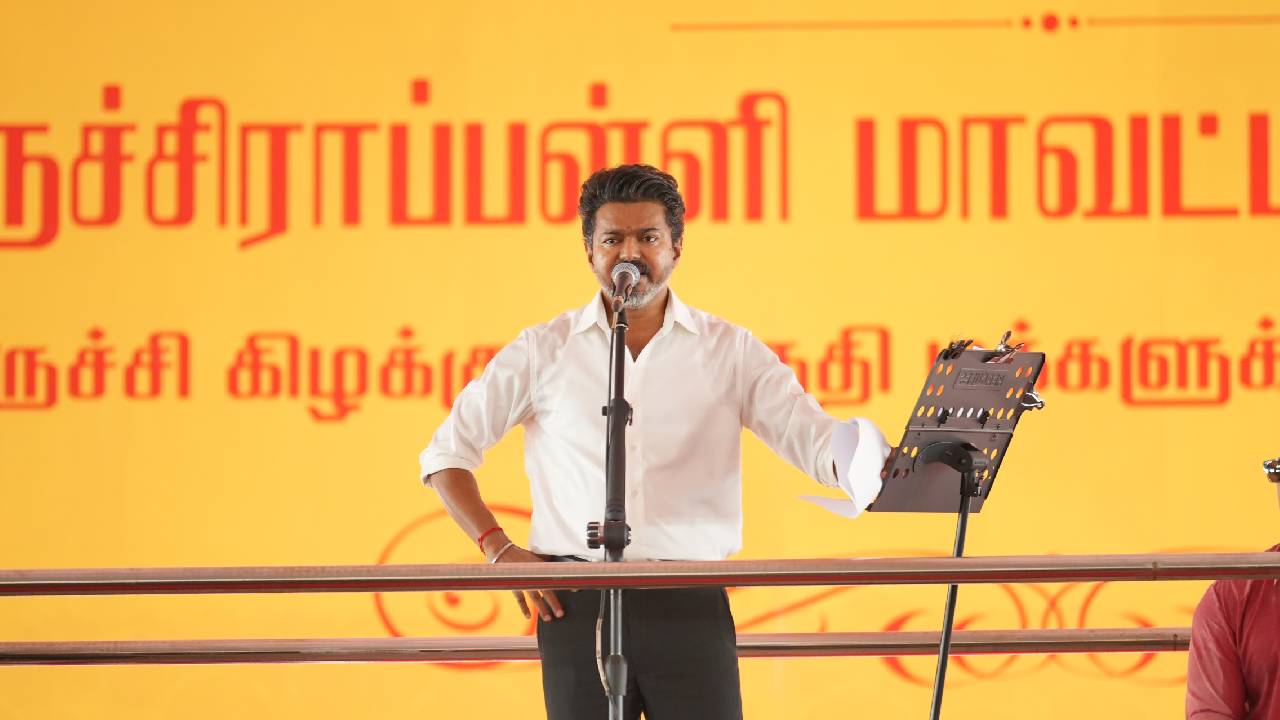
Vijay has the opportunity to bring a new approach by making the protection of dignity and equality a central concern of governance.

Synopsis: Vijay has infused a new political energy in Tamil Nadu, particularly among younger sections of the electorate. At the same time, the broad Secular Social Justice Victory Alliance brought together parties with established political and social-justice traditions. Social justice must mean effective implementation of laws protecting marginalised communities, swift action against caste-based violence, stronger institutional mechanisms for addressing discrimination and meaningful representation in political and administrative structures. It must also ensure that welfare reaches those who need it and that access to education, employment, and economic opportunities is not determined by social background. Vijay’s challenge now is not to define social justice rhetorically, but to make it visible in governance.
Tamil Nadu’s political landscape is witnessing a significant realignment. The formation of the Secular Social Justice Victory Alliance, led by Tamilaga Vettri Kazhagam (TVK) chief and Chief Minister C. Joseph Vijay, has brought together TVK, the Indian National Congress, Viduthalai Chiruthaigal Katchi (VCK), Marumalarchi Dravida Munnetra Kazhagam (MDMK), and the Indian Union Muslim League (IUML).
This new alliance’s significance goes beyond electoral arithmetic. Some of these parties were earlier part of the DMK-led alliance and have now joined a political formation led by Vijay, indicating a shift in Tamil Nadu’s political alignments. The new alliance is also significant because TVK is already in government.
Vijay is not approaching social justice merely as an electoral promise; he now has the responsibility and institutional authority to translate his political commitments into governance. The inclusion of VCK and IUML representatives in the government, along with the creation of a dedicated Social Justice portfolio, gives the alliance’s stated commitment an institutional dimension.
This raises a larger question: Can Vijay redefine social justice politics in Tamil Nadu by giving it a stronger contemporary meaning through governance?
The question is not whether Tamil Nadu has a history of social justice. It clearly does. The question is how that politics can be strengthened, expanded and implemented more effectively in a society where caste discrimination, inequality and exclusion continue to exist alongside considerable social progress.
Also Read: CPI, CPI(M) boycott TVK alliance meeting
Movements that challenged caste hierarchy, demanded representation and expanded access to education and public institutions have shaped Tamil Nadu’s political history. From the Self-Respect Movement and the Dravidian movement to struggles for reservation, welfare, and political representation, social justice has remained central to the state’s political vocabulary.
A political legacy, however, cannot be measured by its historical achievements alone. Its continuing relevance depends on how effectively its principles respond to contemporary realities. Social justice must be experienced in everyday life, not merely invoked in political speeches.
This is where TVK’s emergence becomes significant. Vijay has infused a new political energy in Tamil Nadu, particularly among younger sections of the electorate. At the same time, the formation of a broad alliance brought together parties with established political and social-justice traditions.
Congress brings its secular political legacy, VCK represents a strong anti-caste and Dalit political tradition, MDMK carries a long association with Dravidian and Tamil politics, and IUML brings an important minority representation to the coalition. Their coming together under a TVK-led government creates a political combination different from the conventional alliance arrangements that have dominated Tamil Nadu politics.
Parties earlier associated with the DMK-led alliance shifting to shape the new formation also indicates Vijay’s emergence as a significant political centre in the state. The alliance, therefore, has the opportunity to become more than a mechanism for electoral coordination. It can develop a broader political programme around secularism, equality, representation and social justice.
Also Read: Iyothee Thass and the intellectual roots of Dalit assertion in Tamil Nadu
Vijay’s most important test will now be governance. In Tamil Nadu, social justice carries enormous political significance, but its deeper meaning depends on how effectively the state responds to discrimination, exclusion and unequal access to opportunity.
Caste-based violence and atrocities against Dalits, discrimination in villages and institutions, and attempts to suppress the assertion of Dalit identity show that caste inequality continues to shape everyday social life. Incidents involving the desecration or targeting of Dr B.R. Ambedkar’s statues further reveal the continuing hostility faced by Dalits when their identity, dignity and assertion become visible in public life.
Vijay has the opportunity to bring a new approach by making the protection of dignity and equality a central concern of governance, strengthening the implementation of legal safeguards, ensuring accountability for caste-based discrimination and responding more firmly to atrocities against Dalits.
The real measure of his commitment to social justice will be whether his government can make these principles more meaningful in the everyday lives of communities that continue to face caste-based discrimination. This is where Vijay’s government has an opportunity to make a difference.
Social justice must mean effective implementation of laws protecting marginalised communities, swift action against caste-based violence, stronger institutional mechanisms for addressing discrimination and meaningful representation in political and administrative structures. It must also ensure that welfare reaches those who need it and that access to education, employment, and economic opportunities is not determined by social background.
The creation of a dedicated Social Justice portfolio and the inclusion of VCK’s Vanni Arasu, in charge of Social Justice, Adi Dravidar Welfare and Hill Tribes, alongside IUML’s AM Shahjahan, handling Minorities Welfare, give the government an institutional framework to address these concerns. The significance of these appointments will ultimately depend on how effectively these institutions function and how much political priority they receive.
The challenge, therefore, is not to define social justice rhetorically but to make it visible in governance.
Also Read: How Tamil Nadu’s digital landscape glorifies caste pride, violence
Vijay also has an opportunity to broaden the meaning of social justice for a new generation. The social and economic circumstances facing young people today are different from those faced by earlier generations.
Alongside caste discrimination and social inequality, young people confront unemployment, educational competition, rising economic pressures, technological change and uncertainty in the future of work. A contemporary social-justice agenda must respond to these realities without losing sight of the structural inequalities that continue to shape Tamil society.
Public education remains central to this project. Access to quality higher education, scholarships, hostels, and professional opportunities can determine whether historically marginalised communities can achieve genuine social mobility. Similarly, social justice in employment must extend beyond government recruitment to include opportunities in the private sector, emerging industries, entrepreneurship and the digital economy.
Women must also remain central to this agenda. Social justice cannot be complete if women continue to face unequal access to education, employment, property, political representation and personal freedom.
Similarly, minority rights must be treated as an integral part of equal citizenship rather than as a separate political concern. This broader approach can help Vijay’s government connect Tamil Nadu’s social-justice politics with the aspirations of a younger generation.
The objective should be to move beyond the narrow understanding of social justice as reservation or welfare alone and towards a wider politics of dignity, representation, opportunity and substantive equality.
The presence of VCK, Congress, MDMK and IUML within the alliance allows Vijay to draw upon different political experiences. The VCK’s anti-caste politics, Congress’s secular tradition, MDMK’s Dravidian political legacy and IUML’s representation of minorities can contribute to a broader understanding of social justice. The challenge is to turn this diversity into collective political strength rather than allowing the alliance to remain merely an electoral arrangement.
Also Read: Caste, colour, and anti-caste politics in mainstream cinema
The Secular Social Justice Victory Alliance’s future will ultimately depend on whether it can convert its political commitments into a coherent governing project. An alliance can be created through negotiations, but a durable political formation requires a shared vision of society and governance.
For Vijay, this is an important moment. He has already shown that TVK can become a major political force in Tamil Nadu and that established parties are willing to join a coalition under its leadership. The next stage is to demonstrate what that leadership can mean for social justice.
Vijay has not claimed to have invented Tamil Nadu’s social-justice politics, and he need not. The important question is what he does with the opportunity before him now.
The state’s history provides a foundation, but contemporary governance will determine whether that foundation can be strengthened. If his government can respond firmly to caste atrocities, protect the dignity and rights of Dalits and other marginalised communities, strengthen representation, expand educational and economic opportunities, protect minorities, advance women’s equality and ensure that social-justice policies reach those at the margins, TVK can give a more substantive meaning to its political promise.
The significance of the new alliance will therefore be measured not simply by how many parties stand together on a political platform, but by whether they can collectively build a government in which secularism and social justice shape policy and public institutions.
Tamil Nadu’s political history shows that social justice can transform society when political commitments become institutions and sustained public policy. Vijay now has the opportunity to take that process further by addressing both persistent inequalities and new forms of exclusion emerging in a rapidly changing society.
The real question is not whether Vijay can claim the legacy of social justice. It is whether his government can make social justice more effective, more inclusive and more deeply rooted in everyday governance.
If he succeeds, the TVK-led alliance could become more than a new electoral combination. It could represent a new phase in Tamil Nadu’s long journey towards equality, dignity and social justice.
(Views are personal. Edited by Majnu Babu).



