

Published Dec 07, 2023 | 6:12 PM ⚊ Updated Dec 07, 2023 | 6:12 PM

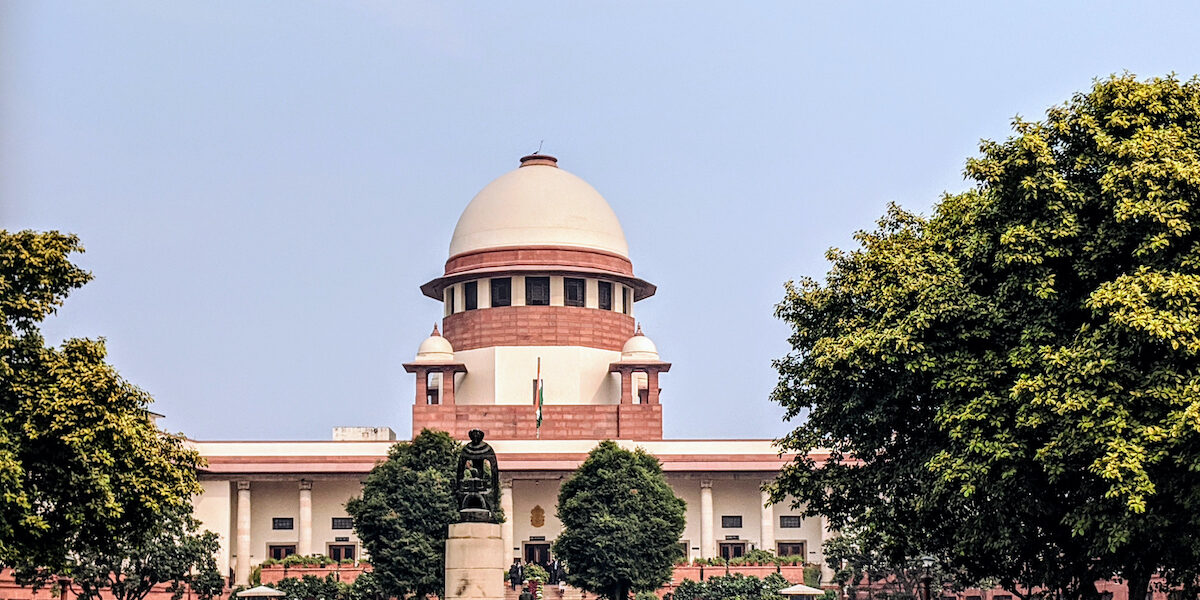
The Supreme Court of India. (iStock)

The Supreme Court has allowed the Kerala government’s plea seeking review of its 2022 verdict which banned mining activities in protected forests such as national parks and wildlife sanctuaries, and made it mandatory for them to have an Eco-Sensitive Zone (ESZ) of 1 km.
A bench of Justices Sanjiv Khanna, BR Gavai and Aniruddha Bose, on its 5 December order said, “The review petition is disposed of by modifying the judgment under review in terms of the directions and findings recorded in the order dated 26 April, 2023 passed in various interlocutory applications ”
The top court had on 26 April this year modified its directions issued in the 2022 verdict on a plea by the Centre and different states, and said its directive will not be applicable where national parks and sanctuaries are located on inter-state borders and share common boundaries.
It had said the 2022 directions will also not apply to the draft and final notifications in respect of national parks and sanctuaries issued by the environment ministry as well as the proposals that have been received by the ministry.
The court had directed the Centre to give wide publicity to the draft notification issued by it so all those interested are in the know.
The Kerala government had filed a review petition for modification of the 3 June, 2022 verdict of the apex court and sought exclusion of inhabited areas from the proposed ESZ.
In its 2022 verdict, the top court issued a slew of directions and said the role of the State cannot be confined to that of a facilitator or generator of economic activities for the immediate uplift of its fortunes.
It had ordered that no permanent structure would be allowed within such ESZ and said if local laws or rules provide for an ESZ of more than 1 km, then the earlier provision would continue to apply.
Each protected forest — national park or wildlife sanctuary — must have an ESZ of a minimum of 1 km measured from the demarcated boundary of such protected forest in which the activities proscribed and prescribed in the Guidelines of 9 February, 2011 will be strictly adhered to, it had said.
It had, however, held that for the Jamua Ramgarh Wildlife Sanctuary of Rajasthan, the ESZ shall be 500 metres so far as subsisting activities are concerned.
The apex court’s verdict had come on a batch of applications filed in a pending PIL of 1995 that raised two sets of issues — mining activities in and around the Jamua Ramgarh wildlife sanctuary and prescribing ESZ surrounding wildlife sanctuaries and national parks.
The top court had also directed the principal chief conservator of forests of each state and Union Territory to make a list of subsisting structures and other relevant details within the ESZs forthwith and furnish a report within three months.
(Disclaimer: The headline, subheads, and intro of this report along with the photos may have been reworked by South First. The rest of the content is from a syndicated feed, and has been edited for style.)



