


A five-judge Bench paved the way for the construction of the temple and ruled that an alternative five-acre plot will be found for a mosque.

Published Jan 01, 2024 | 7:24 PM ⚊ Updated Jan 01, 2024 | 7:24 PM

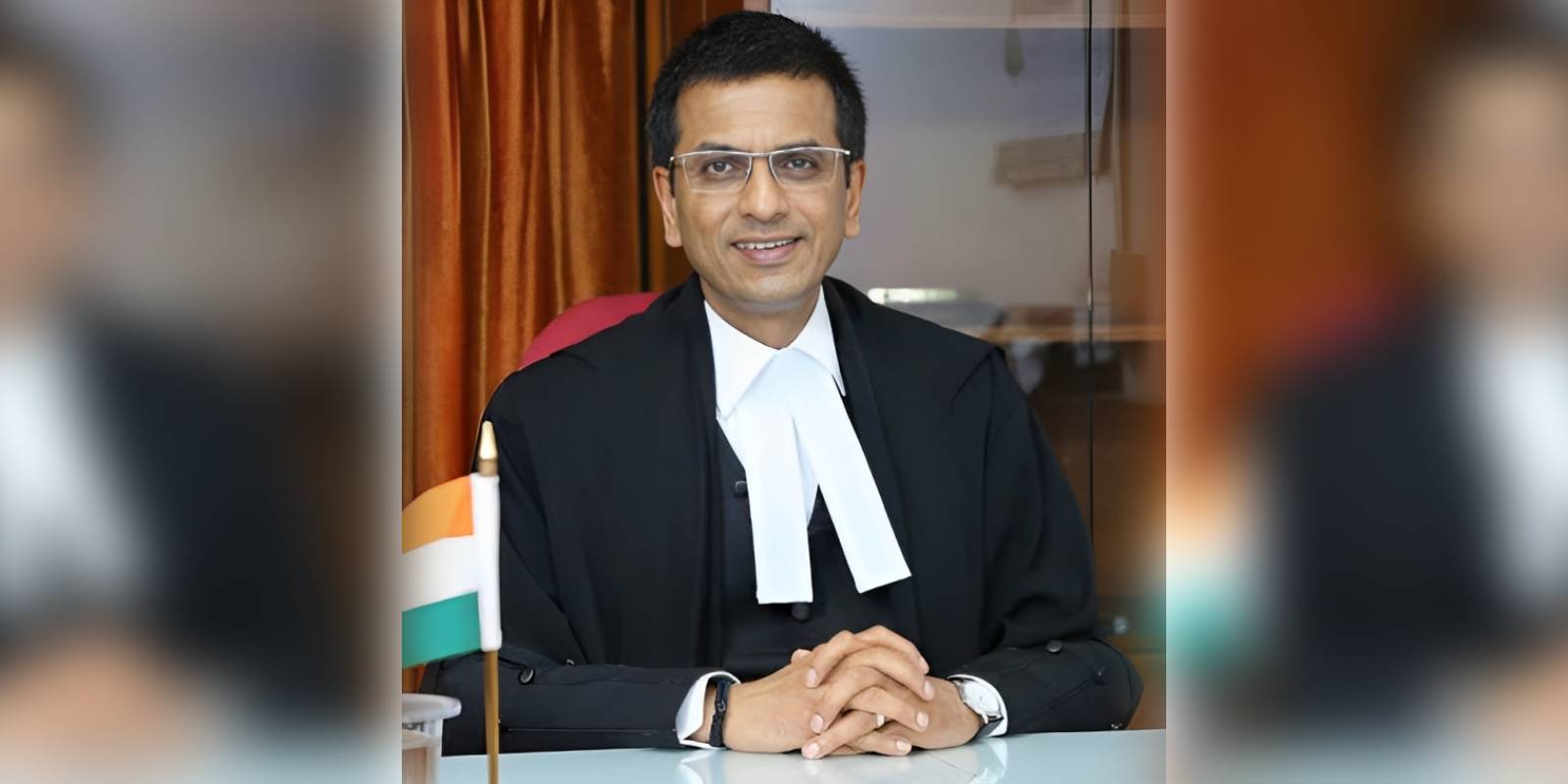
CJI DY Chandrachud. (Wikiemdia)
More than four years after the historic Ayodhya verdict of the Supreme Court, Chief Justice of India DY Chandrachud on Monday, 1 January, said the five judges, who ruled in favour of the construction of a Ram Temple by a trust at the disputed site, had unanimously decided there will be no authorship ascribed to the judgement.
On 9 November, 2019, settling a fractious issue that went back more than a century, a five-judge Bench headed by the then CJI Ranjan Gogoi paved the way for the construction of the temple and ruled that an alternative five-acre plot will be found for a mosque in the holy town in Uttar Pradesh.
In an exclusive interview with PTI, CJI Chandrachud, who was part of the Constitution Bench, candidly spoke on the issue of anonymity and said that when the judges sat together, as they do before a pronouncement, it was unanimously decided that this would be a “judgement of the court”.
He was replying to the query as to why the name of the author judge was not made public.
“When the five-judge Bench sat to deliberate on the judgement as we all do before a Judgement is pronounced, we all decided unanimously that this will be a judgement of the court. And, therefore, there was no authorship ascribed to any individual judge,” the CJI said.
“The case has a long history of conflict, of diverse viewpoints based on the history of the nation and all those who were part of the Bench decided that this will be a judgement of the court. The court will speak through one voice and the idea of doing so was to send a clear message that all of us stood together not only in the ultimate outcome but in the reasons indicated in the judgement,” he said, adding “I will close my answer with that.”
Delivering a unanimous verdict on the case that long polarised the country and frayed the secular tapestry of Indian society, the apex court bench had said in 2019 that the faith of Hindus that Lord Ram was born at the site was undisputed, and he was symbolically the owner of the land.
Yet, it is also clear that the destruction of the 16th century three-domed structure by Hindu kar sevaks, who wanted to build a Ram temple there, was a wrong that “must be remedied,” the court had said.
It said it is not concerned with faith and belief and instead treated the case as a title dispute over land between three parties — the Sunni Muslim Waqf Board, the Nirmohi Akhara, a Hindu group, and the symbolic Lord Rama designated as Ram Lalla Virajman (the deity).
The judgement, running into 1,045 pages, was widely welcomed by Hindu politicians and groups, while the Muslim leadership said they would accept the verdict, even though they described it as flawed. Still, they called for peace and calm, and leaders across the political spectrum had noted that it was now time to move on.
The CJI also defended the collegium system of judges appointing judges to the higher judiciary, asserting that steps have been taken to ensure greater transparency.
“To say that the collegium system is lacking in transparency would not be correct. We have taken steps to ensure that greater transparency is maintained. A sense of objectivity in the decision-making process is maintained. But I must also share something and that’s my caveat. When we consider judges for the appointment in Supreme Court, we are dealing with the careers of the sitting judges of the high court.
“Therefore the deliberations that take place within the collegium can’t be put out in the public realm for a variety of reasons. Many of our discussions are on the privacy of those judges who are under consideration for appointment to the Supreme Court. Those deliberations, if they have to take place in a free and candid atmosphere, can’t be the subject matter of video recording or documentation. That is not the system which the Indian Constitution has adopted,” Chandrachud said.
The CJI said keeping in mind the diverse society, it is also important that we learn to trust our decision-making process.
“It is very easy to criticise the process but now that I have been part of the process for several years I can share with you that every effort is being made by our judges to ensure due process of consultation is made before the appointment of a judge,” he said.
Chandrachud said as the Chief Justice of India he was bound by the Constitution and by the law laid down by the top court interpreting it.
“We have the collegium system for the appointment of judges which has now been part of our jurisprudence since 1993 and that is the system that we implement. But having said that, it is equally our duty as present members of the collegium system to maintain and make it more transparent. To make it more objective. And we have taken steps, decisive steps in that regard.
“All resolutions of the collegium are put on the website so that people know the decisions we take. And that promotes transparency. We have again put in the public realm the parameters which the collegium applies in the selection of judges to the Supreme Court. And many of the parameters apply in high courts,” he said.
Chandrachud said the Supreme Court’s Centre for Research and Planning assists the collegium in compiling data about judges who are in the zone of consideration, and it prepares a comprehensive document which is circulated among members of the collegium which helps them in evaluating judges whose names come up for consideration.
(Disclaimer: The headline, subheads, and intro of this report along with the photos may have been reworked by South First. The rest of the content is from a syndicated feed, and has been edited for style.)


