


Published Dec 20, 2025 | 12:27 AM ⚊ Updated Dec 20, 2025 | 11:06 AM

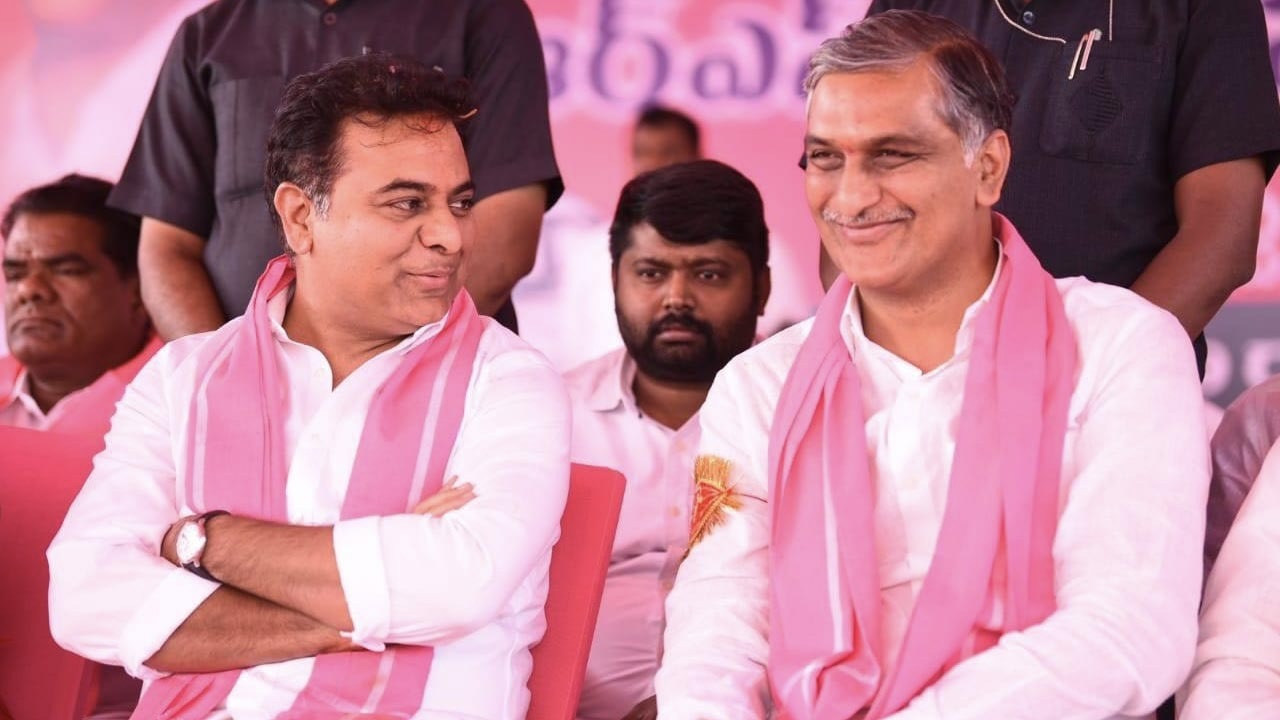
In Sircilla, the home turf of BRS working president KT Rama Rao, the party delivered a crushing verdict.
Synopsis: The Bharat Rashtra Samithi has emerged as the clear winner in the Telangana gram panchayat elections, defeating the ruling Congress across large parts of rural Telangana and reaffirming its strong grassroots presence. The results exposed Congress’s difficulty in translating its state-level power and welfare promises into local support, with the party losing even in the villages and constituencies of several senior leaders and Ministers.
The Bharat Rashtra Samithi (BRS) has emerged from the Telangana gram panchayat elections with its flag flying high. In several districts, it defeated the ruling Congress across multiple constituencies.
The results underline the BRS’s enduring grassroots machinery and expose the Congress’s struggle to convert state-level momentum into local electoral victories.
If the Congress hoped its welfare pitch would ripple effortlessly into rural Telangana, the panchayat polls suggest the wave had lost force before reaching the shore.
Nowhere was this clearer than in northern Telangana, where the BRS swept through its traditional bastions, reaffirming its hold over districts long associated with party heavyweights.
In Sircilla, the home turf of BRS working president KT Rama Rao, the party delivered a crushing verdict, winning 80 of 117 gram panchayats. Congress managed only 24, while the BJP settled for 13. In nearly 50 villages, Congress candidates forfeited their deposits.
It was a similar story in Siddipet, the stronghold of former Finance Minister T Harish Rao. The BRS all but swept the board, bagging 78 of 91 gram panchayats. Congress was reduced to a token presence with just five wins.
In Dubbaka, a constituency that the BJP famously snatched in a 2020 Assembly by-election, the BRS showed recall value, securing 77 of 145 gram panchayats, well ahead of Congress (29) and the BJP (18).
The pattern repeated across Janagaon, Boath and Kagaznagar, where the BRS led with comfortable margins, winning 71 of 131 in Janagaon, 106 of 232 in Boath, and 67 of 142 in Kagaznagar. Congress was kept firmly in second place.
Even in Bhongir, a Congress-held Assembly constituency, the BRS managed to edge past the ruling party, winning 57 of 126 gram panchayats.
Adding to Congress’s embarrassments were defeats in its leaders’ own backyard villages. In Kisannagar, the native village of Telangana Mineral Development Corporation chairman Eravathri Anil, a BRS candidate romped home.
In Burugupalli, adopted by Congress MLA Beerla Ilaiah, and Manayikunta, showcased as an Indiramma Housing pilot village, BRS-backed candidates won comfortably.
Similar reversals were recorded in Toshantanda, the native village of Adilabad DCC president Naresh Jadhav, and Narsayapalli, associated with former MLA Kommuri Pratap Reddy.
Perhaps the most politically symbolic upset came from Pokkur village in Chennur mandal, represented by Minister G Vivek. Despite being selected by the Congress government as a pilot village for its much-touted “Six Guarantees”, voters elected BRS candidate Aitha Swaroopa.
The BRS also captured Mellacheruvu gram panchayat, the largest in Minister Uttam Kumar Reddy’s constituency, defeating Congress by a margin of 800 votes.
Victories followed in Shekhapur (Zaheerabad), Baherampur in Adilabad, voting for the first time in 69 years, and several villages across Ponguleti Srinivas Reddy’s Nelakondapalli belt.
While Congress registered a major haul in constituencies such as Achampet, winning 114 of 178 gram panchayats, the BRS made notable inroads into other Congress-ruled regions.
In Station Ghanpur and Dharamsagar mandals, the BRS flipped multiple gram panchayats.
In Karimnagar district’s Chigurumamidi mandal, part of Minister Ponnam Prabhakar’s constituency, the BRS won nine of 17 gram panchayats. Gains were also recorded in Mudigonda (Madhira) and Kamepalli (Illendu).
Strikingly, the BRS’s localised campaign, built upon community networks and youth candidates, yielded surprise victories.
In Neradigunta village of Sangareddy district, a 30-year-old BRS-backed candidate defeated a senior Congress leader and close aide of Minister Damodar Raja Narasimha by 500 votes.
In Madapur, the native village of Telangana Rajyadhikara Party chief Teenmaar Mallanna, BRS candidate Seetha Raju Yadav prevailed by 96 votes, despite an intense, high-profile campaign.
Taken together, the panchayat verdict suggests a split mandate in Telangana’s polity. While Congress commands the levers of power at the Secretariat, the BRS continues to hold the pulse of rural Telangana, especially in the north and central regions.
Local issues, candidate credibility and organisational muscle appear to have outweighed the allure of welfare guarantees in many villages.
(Edited by Dese Gowda)


